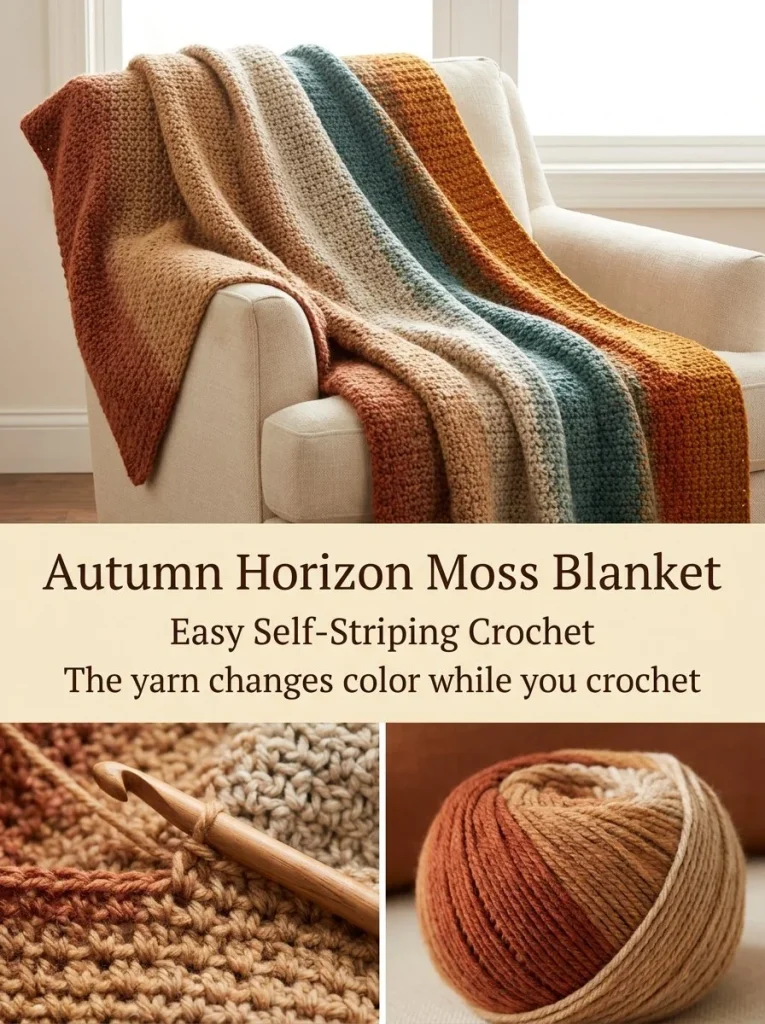
Creating a cozy and visually captivating blanket with a simple yet textured stitch can be incredibly satisfying. This project makes use of a moss stitch worked in a straightforward rectangular shape, allowing the natural beauty of a bulky self-striping yarn to shine through as it transitions through a harmonious autumn palette. The fabric develops a subtle interplay between stitches and colors, giving the finished blanket a gently textured, timeless appeal.
This blanket’s construction hinges on the moss stitch, a versatile and beginner-friendly pattern that combines single crochet and chain stitches to create a pebbly, grid-like surface. Using a bulky yarn not only speeds up the process but also enhances the blanket’s warmth and drape. The use of an autumn gradient in rust, camel, oatmeal, and teal elevates the project by providing a rich color story that unfolds as you work, removing the complexity of manual color changes.
If you admire simple grid textures and warm fall hues, this pattern pairs perfectly with other cozy creations like the Harvest Moss Stitch Blanket, which also celebrates the moss stitch in a distinctive colorway.
Pattern at a Glance
Skill level: Easy – suitable for beginners who have mastered single crochet and chain stitches
Terminology: Standard US crochet terms
Construction: Worked back and forth in rows forming a rectangular moss stitch fabric
Finished size: Approximately 48 inches wide by 60 inches long (adjustable by stitch count and row length)
Yarn weight: Bulky (#5) self-striping yarn in an autumn gradient palette (rust, camel, oatmeal, teal)
Hook: 7 mm (approx. U.S. size K or 10) crochet hook
Main stitch: Moss stitch (also known as linen stitch or granite stitch)
Gauge: Not specifically provided; gauge is flexible due to bulky yarn but can be tested by stitch size observation
Motifs: None, worked as one rectangular piece
Layout: Simple rectangle with color changes driven by the yarn’s self-striping gradient
Joining: None required – worked in one piece
Border: No border; edges are left natural with a relaxed finish
Seaming: None
Materials
- Bulky #5 self-striping yarn featuring an autumn-inspired color gradient of rust, camel, oatmeal, and teal shades, approximately 1500 to 1800 yards total to complete the blanket. This yardage range allows flexibility depending on your preferred blanket length or width adjustments.
- A 7 mm crochet hook provides a balanced stitch size that complements bulky yarn, ensuring the moss stitch texture appears clearly without being too dense or too loose.
- A tapestry needle is essential for neatly weaving in ends as you finish, especially after changing yarn balls to maintain a smooth gradient transition.
Selecting high-quality bulky yarn with good stitch definition will emphasize the moss stitch’s distinctive texture and maximize the beauty of the self-striping gradient.
Yarn and Color Notes
Bulky yarns like #5 weight offer warmth and a pleasant heft to blankets, which is perfect for cozy throws used in cooler months. The self-striping feature relieves you from the task of switching colors manually and helps to create a subtle ombré effect as you crochet.
When choosing yarn colors for a similar project:
- Opt for fibers that have moderate softness and flexibility — acrylic blends or superwash wools with a smooth texture enhance stitch definition.
- Avoid highly fuzzy or halo-type yarns as they may obscure the moss stitch’s crisscross pattern.
- Solid or gently variegated yarns often create a different visual rhythm; however, self-striping gradients produce a natural and smooth color flow that brings the blanket to life, much like the popular Moss Green Oak Leaf Blanket which gracefully utilizes self-striping color progressions.
Finished Measurements
The finished blanket measures approximately 48 inches wide and 60 inches long, making it a generous throw size, suitable for relaxing on a sofa, adding decorative warmth to a bed, or wrapping up on chilly evenings.
These dimensions are based on the suggested foundation chain of 145 loosely chained stitches, which equals an odd number needed for the moss stitch repeat, and the number of rows worked until the desired length is achieved. The size can be adjusted by increasing or decreasing the number of starting chains and rows while maintaining the stitch pattern.
Abbreviations
- ch: chain
- sc: single crochet
- st: stitch
- ch-1 sp: chain 1 space
- tog: together
Important Pattern Notes
- The pattern uses an odd-numbered foundation chain to maintain the moss stitch repeat.
- The turning chain is always ch 1 and does not count as a stitch.
- Single crochet stitches are worked into chain-1 spaces rather than the tops of stitches, ensuring the moss stitch texture.
- Edges should remain relaxed—a tight edge can cause curling or distortion.
- When changing to a new ball of yarn, try to match the color progression point to maintain a smooth gradient.
- No border is required; the blanket’s natural edge finish is designed to remain flat and neat.
Special Stitches and Techniques
Moss Stitch (Linen Stitch / Granite Stitch):
This stitch alternates single crochet and chain stitches to create a lattice-like, textured fabric. The key to the moss stitch is always to work the single crochet into the chain-1 spaces from the previous row, never into the tops of stitches, and to alternate chain-1 spaces between SCs for a stable grid.
Steps:
- Row 1 creates the initial lattice by placing SC into every other chain, skipping chains in between and chaining 1 in those skipped chains.
- Subsequent rows maintain the pattern by working SC into chain spaces and chaining between them to create the fabric’s texture.
This stitch builds a dense yet flexible fabric, ideal for blankets that require warmth without stiffness.
Understanding the Construction
The blanket is constructed as a rectangular panel worked flat in rows. Starting with a long chain foundation, you form the base row by single crocheting and chaining into alternate chains, creating the lattice base. Then you alternate rows of single crochet stitches in chain spaces with chains linking the stitches, which allows the pattern to grow lengthwise.
Colors transition naturally because the chosen bulky yarn is self-striping in a harmonious autumn gradient. This avoids complicated color changes and keeps the focus on the texture and tones.
Since the blanket is worked in one piece and requires no seaming or border, it’s an ideal project for beginner to intermediate crocheters who want a visually engaging outcome without complicated construction.
Foundation
Begin by making a foundation chain loosely with approximately 145 chains, or adjust the count to any odd number that achieves your desired width, aiming for about 48 inches across.
Ensure your chain is not too tight; a loose chain foundation allows the blanket to lay flat and prevents edge puckering.
Row 1
- Work a single crochet (sc) into the second chain from the hook.
- Then, chain 1, skip 1 chain, single crochet in the next chain; repeat this sequence across the entire foundation chain.
- This creates a base row alternating single crochet stitches and chain spaces.
At the end of the row, you should have a series of single crochets separated by chain-1 spaces.
Row 2
- Chain 1 and turn your work.
- Single crochet into the first single crochet from the previous row.
- Then work chain 1, single crochet into the next chain-1 space across the row.
- End with a single crochet in the final single crochet stitch.
This row sets the moss stitch pattern, ensuring all single crochets are worked into chain spaces, not stitch tops.
Subsequent Rows
Repeat Row 2 continuously until the blanket measures approximately 60 inches or your preferred length.
Continue maintaining single crochet stitches in chain-1 spaces and chain-1 between, preserving the stable moss stitch structure.
Color Transition Tips
When you need to start a new ball of yarn, try to start at a similar point in the color pattern to ensure the gradient continues smoothly. This preserves the blanket’s beautiful color flow and avoids abrupt changes.
Maintaining Edges and Stitch Counts
Check your edge stitches frequently to keep them relaxed, which helps prevent curling or distortion along the sides. Also, count your chain-1 spaces periodically to make sure you haven’t accidentally added or dropped stitches, ensuring consistent width throughout the blanket.
Finishing
No border is necessary as the simple edges complement the moss stitch’s natural frame. However, if using an acrylic or synthetic bulky yarn, light steam blocking can help relax the fabric and straighten edges. Avoid direct heat or water immersion; test a swatch first if unfamiliar with the fiber content.
Weave in all ends neatly using a tapestry needle to blend them with the fabric, especially at yarn changes.
How to Resize
Because the moss stitch requires an odd number of chains to maintain the pattern repeat, resizing applies to the multiples of two plus one chain foundation.
- To make the blanket wider or narrower, adjust the foundation chain to an odd number closest to your desired width. For example, chain 125 for a narrower blanket or 165 for a wider one.
- Length adjusts by the number of rows worked—a longer blanket requires more rows while maintaining the full double-row repeat.
- Remember to keep edge tension consistent to avoid waves or ripples.
Useful Variations
- Work the blanket in a solid color for a serene monochromatic effect emphasizing texture.
- Use a different color gradient yarn for seasonal variations, such as winter blues or spring pastels.
- Create a coordinated set by making smaller accessories like cushions or scarves using the same moss stitch technique and yarn family.
- For added warmth, double the yarn held together or use an even bulkier yarn, adjusting hook size accordingly.
- Add a simple crochet border in a complementary color if a framed finish is preferred without changing the stitch pattern.
Troubleshooting
Why Is My Blanket Getting Wider Than Expected?
Usually, wider edges come from tension inconsistencies or accidentally adding stitches along the edge. Make sure to keep your edge stitches relaxed and count chain spaces regularly to confirm stitch count is consistent.
Why Does the Edge Curl or Ripple?
Tension that is too tight on edges causes curling. Crocheting the foundation chain loosely and not pulling the last stitch of each row too tight helps prevent edge distortion.
Why Is My Color Transition Noticeably Jagged?
If color changes appear abrupt, ensure your yarn switch aligns with the color stripe repeating pattern. Overlap short tails inside the fabric and avoid starting new balls in drastically different color sections.
Why Does the Moss Stitch Look Misshapen?
Working the single crochet always into chain-1 spaces (never stitch tops) preserves the pattern. Mixing this up can distort the grid. Carefully follow the instructions for Row 2 and subsequent rows.
How Can I Soften A Stiff Bulky Yarn?
Blocking with steam or gentle wet blocking can relax the fibers, but always check yarn fiber content. Acrylic may respond well to steam; natural fibers may benefit from a light wash and dry flat.
Frequently Asked Questions
Can I Use a Different Yarn Weight?
Yes, you can, but the texture and final size will vary considerably. A lighter weight yarn will produce a finer, less bulky fabric. Adjust your hook size to maintain balanced stitch definition.
Can I Make the Blanket in One Solid Color?
Absolutely. While the gradient yarn enhances visual interest, a solid color moss stitch blanket will emphasize texture beautifully.
Is This Pattern Suitable for Beginners?
Yes, the moss stitch is straightforward, combining basic stitches in a repetitive pattern, making it an excellent project to develop skill and gain confidence.
Can I Add a Border If I Want More Structure?
While no border is necessary, adding a simple single crochet border or crab stitch edge is easy and gives a polished look.
How Should I Block This Blanket?
Light steam blocking is recommended for acrylic or synthetic yarns to relax the fabric and flatten edges. Avoid soaking if the yarn is sensitive to water.
How Do I Maintain the Color Gradient When Changing Yarn Balls?
Start the new ball at a color change point that best matches where the previous ball left off, blending the colors smoothly.
Optional Related Uses
The moss stitch rectangle technique can be adapted for other cozy projects such as:
- Soft scarves or cowls with autumn hues
- Decorative pillow covers that highlight texture and gradient
- Table runners or throws matching seasonal decor
- Baby blankets adjusted to smaller sizes with the same self-striping yarn
These related projects use the same moss stitch pattern to leverage the beauty of yarn gradients.
Final Thoughts
This blanket project distills to a rhythm of alternating single crochet and chain stitches in a simple grid pattern worked into a rectangle that showcases a rich autumn color gradient. Its approachable construction and the natural appeal of the moss stitch make it a rewarding choice for crocheters of all levels who want to create a warm, inviting, and visually engaging piece without fuss or complexity.



