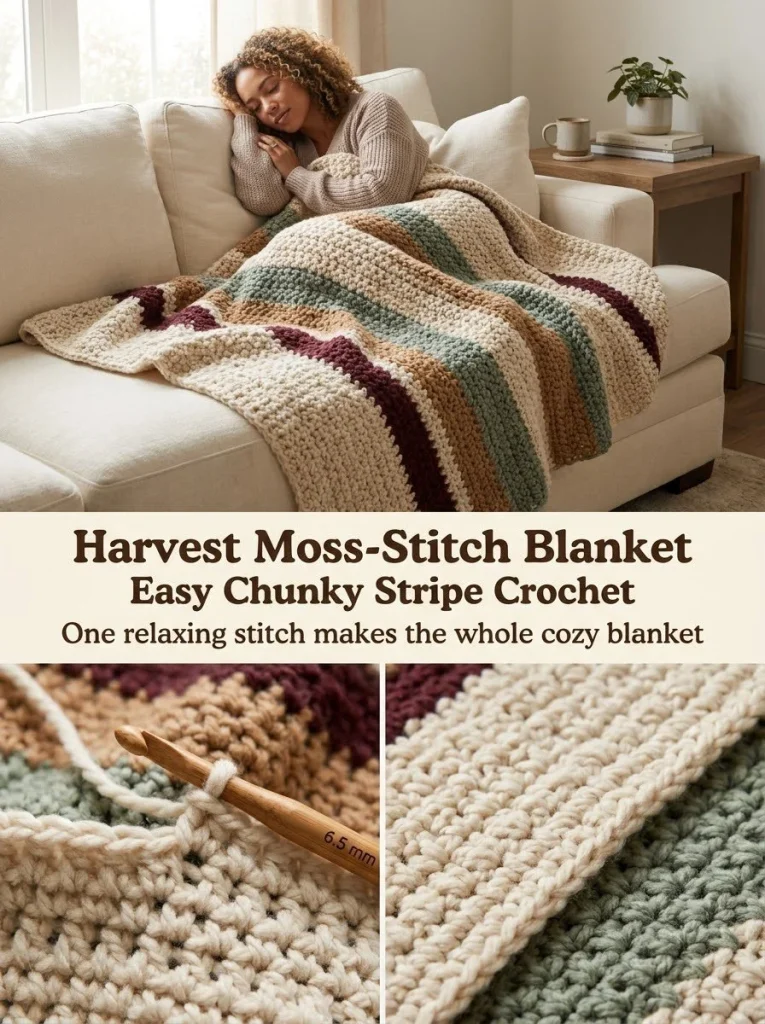
This textured crochet blanket combines cozy warmth with elegant color striping, making it a perfect addition to any living space. Crafted in bulky yarn, its moss stitch fabric offers a soft, closely woven texture that’s both visually appealing and practical. The blanket is worked flat, row by row, with gentle stripes that shift through harmonious shades of cream, sage, burgundy, and camel, providing subtle depth and interest without overwhelming the eye.
The moss stitch, also known as linen stitch, creates a fabric that lies flat and feels substantial, perfect for snuggling on chilly evenings or as a decorative accent draped over your favorite armchair. This stitch pattern, combined with the color transitions, highlights the layered texture while maintaining a simple rhythm that’s satisfying to crochet.
The construction begins with a foundation chain worked in cream and progresses through alternating rows of single crochet and chain stitches, which form the distinctive moss stitch pattern. The color changes are strategically placed at row ends, ensuring clean stripes and a neat overall finish. Maintaining consistent tension and keeping chain spaces loose gives the blanket a flexible drape and helps achieve the specified gauge, critical for the finished size and look. This project is an excellent choice for crochet enthusiasts eager to practice striping and stitch pattern techniques while creating a versatile, enduring accessory for home comfort.
For those inspired by cozy projects, consider exploring the textures of the blush windowpane baby blanket, which also features comforting hues and intricate stitch play.
Pattern at a Glance
Skill level: Intermediate – the moss stitch is straightforward but requires attention to stitch placement and tension, especially with color changes.
Terminology: US crochet terms
Construction: Worked flat in rows, wide rectangular shape from a foundation chain
Finished size: Approximately 50 x 57 inches
Yarn weight: Bulky (#5) yarn
Hook: 6.5 mm crochet hook
Main stitch: Moss stitch (also known as linen stitch), created by alternating single crochet and chain stitches
Gauge: 8 stitches x 12 rows = 4 inches in moss stitch
Motifs: None (continuous fabric)
Layout: Horizontal stripes of varying row counts for colors
Joining: Not applicable (single piece)
Border: No additional border specified
Seaming: Not applicable
Materials
- Bulky weight yarn (#5):
- 900 yards of cream
- 350 yards of sage
- 200 yards of burgundy
- 180 yards of camel
These yarn amounts ensure you have the right quantities for the full color sequence and striping effect. Bulky yarn provides warmth and quick progress due to its heft.
-
Hook: 6.5 mm crochet hook, which complements bulky yarn for a fabric that is dense yet slightly flexible.
-
Tapestry needle: Used for weaving in ends neatly after color changes to maintain a professional look.
Choosing a quality acrylic, wool, or acrylic-wool blend yarn will impart softness and durability. Be mindful that fibers like cotton or silk blends may affect the drape and stretch of the fabric.
Yarn and Color Notes
Bulky yarn yarns give this project a substantial feel and quicker workup time. The moss stitch features alternating single crochet and chain stitches, which reveal the texture best with yarns that have minimal halo—smooth yarns show stitch definition clearly, while fuzzier yarns add a soft, cloudlike appearance.
The color palette combines neutral cream with natural sage and earthy burgundy and camel hues. This color scheme offers an autumnal, cozy warmth appealing in both rustic and modern interiors. Stripes add just enough visual interest without complicating the pattern.
When selecting yarns, keep consistent fiber types and weights for smooth color transitions and consistent gauge throughout the project. Variegated yarns are not recommended for this stitch as they can obscure the distinct moss stitch pattern.
Finished Measurements
The finished blanket measures approximately 50 inches wide by 57 inches tall when completed according to the pattern’s gauge and stitch count.
This size suits a generous throw — ideal for couch snuggling or layering over a bed. As the stitch pattern builds length row by row, final height depends largely on the number of rows worked (171 rows total in the specified sequence).
If your gauge differs, especially in row height, you can adjust the number of final rows in cream slightly to maintain the blanket’s overall proportions.
Gauge
The gauge is a critical component to achieving the correct size and fabric feel.
- Gauge target: 8 stitches by 12 rows = 4 inches in moss stitch.
To check your gauge:
- Use the 6.5 mm hook and bulky yarn.
- Work the moss stitch pattern (explained below) over at least a 4×4 inch square.
- Measure width and height after blocking if possible.
Gauge matters because:
- Fewer stitches/rows per inch make a larger, looser blanket with softer drape.
- More stitches/rows per inch tighten the fabric and reduce the finished size.
For blankets, a small gauge deviation is acceptable. Aim to match if you want exact size and to preserve the striping pattern as planned.
Abbreviations
- ch = chain
- sc = single crochet
- st(s) = stitch(es)
- … = repeat instructions within asterisks
Important Pattern Notes
- The moss stitch involves alternating single crochets and chain stitches in staggered rows for a textured fabric.
- Color changes occur only at row ends to maintain stripe integrity.
- Chain stitches between single crochets must remain loose to avoid a stiff fabric.
- The first row uses the foundation chain; subsequent rows are worked back and forth.
- Chain spaces do not count as stitches but are integral to the pattern.
- Turn your work at the end of each row, starting new rows with a chain 1 that does not count as a stitch.
- The stripe sequence repeats six times for the body striped effect before finishing with cream rows.
Special Stitches and Techniques
Moss Stitch (Linen Stitch) Explained
The moss stitch pattern creates a woven texture using only single crochet and chain stitches as follows:
- Begin with a foundation chain.
- Row 1 inserts single crochets into the chain spaces.
- Subsequent rows alternate chaining and single crocheting into the chain spaces, shifting the placement to build staggered texture.
- The pattern is worked over 149 single crochet positions interspersed with chain-1 spaces.
Because the moss stitch relies on chain spaces between single crochets, maintaining loose chains is crucial for flexibility.
Understanding the Construction
This project is a Large Rectangle Blanket worked flat in rows beginning with a long foundation chain in cream yarn.
Rows are worked in a repeating moss stitch pattern constructing the fabric’s woven texture. The color changes are deliberately stratified, building striped sections with specific row counts for each shade, assembled seamlessly as a single piece.
The stripe pattern sequence totals 27 rows (9 cream, 6 sage, 3 burgundy, 3 camel, 6 cream), repeated six times to build the blanket’s body, followed by a finishing border of nine cream rows to create a harmonious edge.
This clear row-based construction is great for beginners who want to practice maintaining stitch counts and working with multiple colors without complicated shaping.
Complete Pattern Instructions
Foundation
Start by chaining 150 with the cream yarn. This chain length sets the blanket’s width.
Row 1
- Single crochet (sc) into the second chain from the hook.
- Then chain 1, skip 1 chain, single crochet in the next chain.
- Repeat this chain 1, skip 1 chain, single crochet in next sequence across until you reach the end.
- You should have 149 positions, which include both single crochets and chain spaces.
This establishes the moss stitch’s foundational texture.
Row 2
- Chain 1 and turn your work.
- Single crochet in the first single crochet from the previous row.
- Single crochet into the first chain-1 space (between single crochets).
- Then chain 1, skip the next single crochet, single crochet into the next chain-1 space across the row.
- End with a single crochet in the final single crochet.
Row 3
- Chain 1 and turn.
- Single crochet in the first single crochet.
- Then chain 1, skip next single crochet, single crochet into next chain-1 space across.
- Finish with a single crochet in the last single crochet.
Row 4 and Onwards
- Repeat Rows 2 and 3 alternately until completing the full length.
Each pair of rows builds the classic moss stitch grid.
Stripe Pattern Sequence
Work the following sequence of rows in these colors:
- 9 rows cream
- 6 rows sage
- 3 rows burgundy
- 3 rows camel
- 6 rows cream
This completes one 27-row stripe cycle.
Repeat
Repeat this 27-row stripe sequence 6 times to build the bulk of your blanket (totaling 162 rows).
Final Rows
Finish with 9 cream rows to complete the blanket, culminating in 171 rows total.
Color Changes
Change yarn color only at the end of rows to maintain clean stripes. When switching colors, ensure the last stitch of the color is complete before joining the new color.
Maintain Tension
Keep chain stitches consistently loose to avoid puckering.
Finished Size
The finished dimensions will be near 50 x 57 inches. If your gauge differs, adjust the number of final cream rows slightly to maintain the overall height.
Checkpoints
- After foundation chain and the first row, your width should measure approximately 50 inches.
- Every 27 rows, check striped color transitions for smooth changeovers.
- Gauge every 12 rows vertically for accuracy (should be 4 inches).
- The blanket fabric should feel flexible, not stiff; adjust tension if needed.
Assembly
This blanket is made as a single rectangular panel with no seams or joining. After finishing, weave in all yarn ends with a tapestry needle carefully to avoid bulky knots.
Finishing
- Weave in all yarn tails securely.
- Although blocking bulky yarn blankets can be optional, gently wet-blocking your finished piece can even out the stitches and settle the fabric.
- Lay flat to dry, shaping edges gently to keep rectangle shape.
For additional softness and drape, consider pairing this finish with lightly felted yarns or yarns with natural fibers.
How to Resize
To resize this blanket:
- Adjust width: Add or subtract foundation chain stitches in multiples of 2 (to maintain the moss stitch pattern’s repeat of chain spaces and single crochets).
- Adjust length: Increase or decrease the number of rows. Maintain the striping sequence proportionally or customize stripes to your color preference.
- Ensure you adjust yarn quantities accordingly.
If changing the hook size or yarn weight, redo your gauge swatch to maintain correct dimensions.
Useful Variations
- One-color version: Use a single cream or camel yarn for a subtle textured throw.
- Alternate color stripes: Substitute any of the colors for your personal palette; jewel tones or pastels offer fresh seasonal options.
- Baby blanket size: Reduce foundation chain to about 90 chains (or fewer, still respecting the stitch multiple) and shorten length proportionally.
- Edging: Add a simple border around the entire blanket like a single crochet or shell stitch in cream to frame the stripes nicely.
- Reversible version: Maintain consistent tension and stitch placement for a neat reverse side, as moss stitch is naturally reversible.
If you prefer a plush, cloud-like texture similar in spirit, explore the alluring softness and style of the cloud puff baby blanket for complementary crochet projects.
Troubleshooting
Why Are My Edges Wavy?
Wavy edges often result from uneven tension—too tight on one side, too loose on the other—or inconsistent stitch counts. Ensure you crochet every row with the exact stitch placement and maintain loose chain tension for the moss stitch.
Why Does My Blanket Feel Too Stiff?
Bulky yarn combined with tight chains can create a stiff fabric. Loosen your chain stitches, or try a slightly larger hook for more drape.
Why Are My Color Changes Noticeable or Messy?
Changing colors only at the end of rows is key. Make sure to complete the last stitch fully with the old color and start the new row with the new color. Weave in ends neatly and consider a crocheted slip stitch join or an invisible weave to smooth transitions.
Why Is My Stitch Pattern Shifting?
Maintain consistent stitch counts each row. Skipping or adding single crochets will disrupt the moss stitch’s alternating chain spaces.
Why Are My Chain Spaces Too Tight?
Practice keeping yarn loose on the hook when making chain 1 stitches. Crocheting chain spaces too tightly pulls and distorts the fabric.
Frequently Asked Questions
Can I use a different yarn weight?
Using a lighter or heavier yarn will affect blanket size and fabric feel. If choosing a different weight, adjust hook size and make a gauge swatch to match or accept a new size.
Can I use cotton yarn?
Cotton can be used but tends to make fabric less stretchy and more rigid, so keep chains loose and consider a slightly larger hook.
Can I make the blanket larger?
Yes, increase the foundation chain by multiples of 2 to maintain the moss stitch pattern, and add rows to lengthen.
Can beginners make this?
Intermediate beginners comfortable with single crochet, chain stitches, and color changes will find this a rewarding project.
How should I care for the finished blanket?
Check your yarn label. Most bulky acrylic or blends are machine washable on gentle cycles. Lay flat to dry to keep edges straight.
Is this pattern reversible?
Yes, the moss stitch creates a nearly identical texture on both sides, ideal for reversible blankets.
Optional Related Uses
The moss stitch fabric and its striping effect adapt well to various home projects such as:
- A cozy throw pillow cover
- A warm lapghan or baby blanket sized smaller with fewer chains and rows
- A textured scarf using the same stitch sequence adjusted for width and length
- A table runner for rustic autumn decor with subtle striping
Each project benefits from the moss stitch’s well-balanced texture and color striping charm.
Final Thoughts
This blanket’s construction involves three main elements: establishing a foundation chain for width, mastering the alternating-row moss stitch pattern for texture, and carefully managing color changes to create harmonious stripes. Using bulky yarn and a moderately sized hook balances warmth and work speed, making this blanket both a practical and satisfying project. Its straightforward stitch pattern combined with intentional, thoughtful color striping offers an inviting tactile and visual experience, ideal for crocheters looking for a cozy yet elegant accessory for any home.



