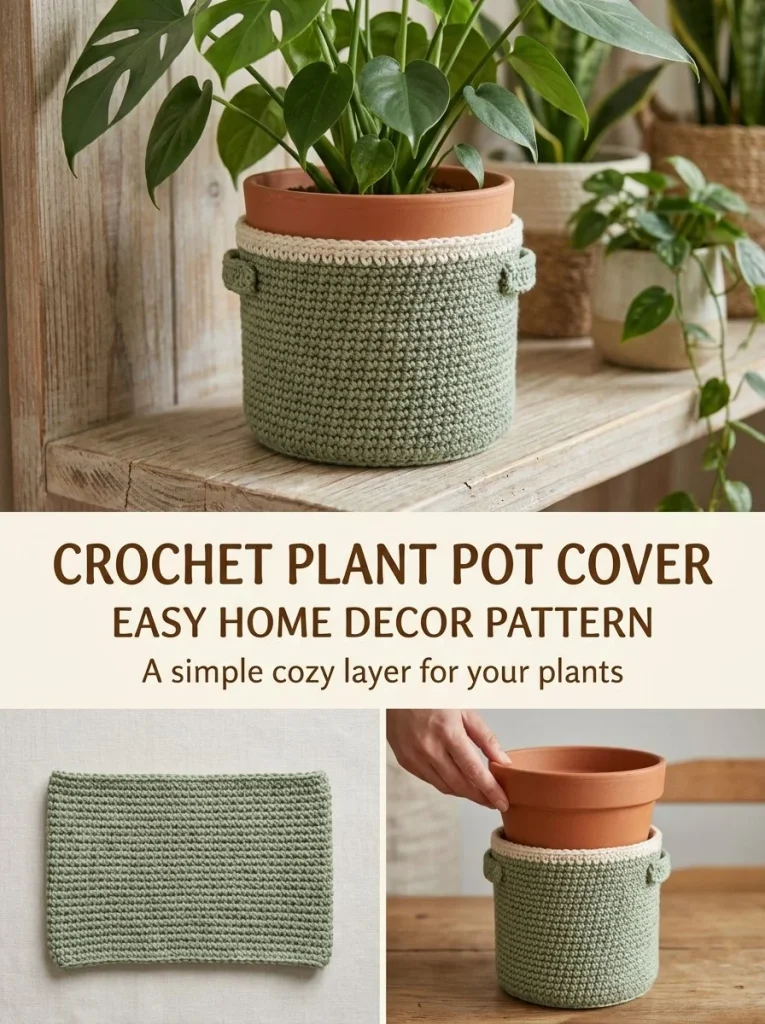
Creating a beautiful and functional crochet plant pot cover is a delightful project that adds a touch of green and style to your indoor spaces. The Sage Crochet Plant Pot Cover not only enhances the visual appeal of a pot but also serves a practical purpose by providing a cozy fit around your plant container. This easy-to-make removable planter cozy is perfect for using with a variety of pots, allowing you to change up your décor effortlessly. You may also find Blue Crochet Bun Cover Easy Mesh Hair Accessory useful.
The main technique employed in this pattern is crochet, where you will create a snug, cylindrical covering using simple stitches. You will want to use a waterproof plant pot inside the cover to protect your yarn from moisture and soil. This project is ideal for both beginners and experienced crocheters, as it uses straightforward stitches like single crochet (sc) and half double crochet (hdc) to create texture. You may also find Cozy Tissue Box Cover Simple Crochet Pattern useful.
Pattern at a Glance
Skill level: Easy
Terminology: US crochet terms
Construction: Seamless cylinder
Finished size: Customized to pot dimensions
Yarn weight: Worsted-weight #4
Hook: 5mm
Main stitch: Single crochet (sc) and half double crochet (hdc)
Gauge: Not critical for this project
Motifs: None
Layout: Rectangular to circular transition
Joining: Seam at first and last rows
Materials
To create your crochet plant pot cover, you will need the following materials:
- Worsted-weight #4 cotton or cotton-blend yarn in sage: This will serve as the main color for your pot cover.
- Small amount of cream yarn: For decorative edges or tabs.
- 5mm crochet hook: The size needed to create the fabric density you want.
- Tapestry needle: For weaving in yarn ends and sewing decorative tabs if you choose to include them.
- Measuring tape: Essential for measuring your pot to ensure a snug fit.
Yarn and Color Notes
Choosing the right yarn for your project can significantly affect the finished product. Cotton or cotton-blend yarn is ideal for this plant pot cover due to its durability and ease of cleaning. The sage color offers a fresh, natural aesthetic that complements indoor plants well. Additionally, using a contrasting color, like cream, for accents can enhance visual interest without overwhelming the design.
Finished Measurements
The final dimensions of your pot cover depend on the size of your plant pot. Make sure to measure the pot’s circumference at its widest point and height before starting. Typically, you will want your crocheted rectangle to be about 0.5-1 inch narrower than the pot’s circumference to ensure a snug fit once it’s seamed into a cylinder.
Gauge
As this project is not dependent on specific gauge measurements, precise gauge is not critical. However, if you wish to achieve a consistent look, check your tension by crocheting a small swatch before starting.
Abbreviations
- ch: chain
- sc: single crochet
- hdc: half double crochet
Important Pattern Notes
- When chaining to start, the chain may not count as a stitch unless specified.
- Be mindful of the right side and wrong side of your work, especially when adding accents or seaming.
- Always ensure that you seam the rectangle tightly to prevent it from unraveling.
Special Stitches and Techniques
This pattern primarily utilizes basic crochet stitches. The tension in your stitches will affect how snugly the cover fits your pot. The use of half double crochets allows for a pleasing texture that complements the simplicity of single crochets.
Understanding the Construction
The construction process involves crocheting a rectangular piece of fabric that wraps around your plant pot to create a cylinder. After crocheting, you will seam the ends of the rectangle together, and optionally, add an edge in a contrasting color for a decorative finish.
Complete Pattern Instructions
Foundation
- Use a separate waterproof plant pot inside your finished crochet cover; do not plant directly into yarn.
- Measure the pot’s circumference at the widest point and height.
Starting the Rectangle
- Chain enough stitches to reach the pot’s height minus about 0.5 inches.
- Row 1: sc in 2nd ch from the hook and across.
- Row 2: ch 1, turn, alternate sc and hdc across for simple texture.
- Repeat Rows 1-2 until the rectangle wraps snugly around the pot.
Seaming the Cylinder
- Seam the first and last rows of your rectangle to form a cylinder.
Finishing Touches
- Join the cream yarn at the upper edge and work 2 rounds of sc.
- Optional side tabs: make 2 by chaining 7, sc back across the chain, and sew each short tab flat to opposite sides as decorative grip tabs (not load-bearing handles).
- Finally, slide a clean waterproof pot inside the cover.
Checkpoints
- Your rectangle should measure approximately the height of the pot.
- When you seam the rows together, ensure there are no gaps.
- The cover should fit snugly over the pot without being overly tight.
Assembly
Assembly is straightforward since the main finishing step involves seaming the ends of your crocheted rectangle. Ensure that the right sides are facing outward when you seam together the first and last rows. This helps keep the seam neat and allows the texture to show on the outer surface.
Finishing
After completing your crochet pot cover, make sure to weave in any loose ends using your tapestry needle. Consider blocking the piece lightly if needed, though cotton yarn will often hold its shape well.
Resizing
If you wish to resize the plant pot cover for different pots:
- Simply adjust the initial chain length based on the heights of the new pots.
- For wider pots, measure the circumference and modify the starting rectangle width accordingly, ensuring it remains snug.
Useful Variations
You can modify your pot cover in various ways to create unique designs:
- One-color version: Use only sage yarn for a minimalist look.
- Pillow version: Scale up the pattern to make a decorative pillow cover.
- Seasonal palette: Experiment with festive colors or patterns for different occasions.
Troubleshooting
Why Is My Project Getting Wider?
Adjust your tension while crocheting. If you find your stitches are too loose, consider using a smaller hook.
Why Is My Edge Wavy?
Ensure you are maintaining a consistent tension throughout your work, and check that you are not skipping stitches.
Can I use a different yarn weight?
While a worsted-weight yarn is recommended, you can use a lighter or heavier yarn by adjusting the hook size and initial chains accordingly.
Frequently Asked Questions
Can a beginner make this?
Absolutely! This pattern is designed to be beginner-friendly with its straightforward stitches and techniques.
How should I block it?
For cotton yarns, a light steam blocking can help shape your pot cover neatly after completion.
Is the pattern reversible?
The texture is more prominent on one side; thus, it is not truly reversible.
This sage crochet plant pot cover project combines functionality and aesthetic charm for any plant lover. With its simple construction and customization options, it welcomes a range of personal styles while being a delightful addition to your home décor. Happy crocheting!