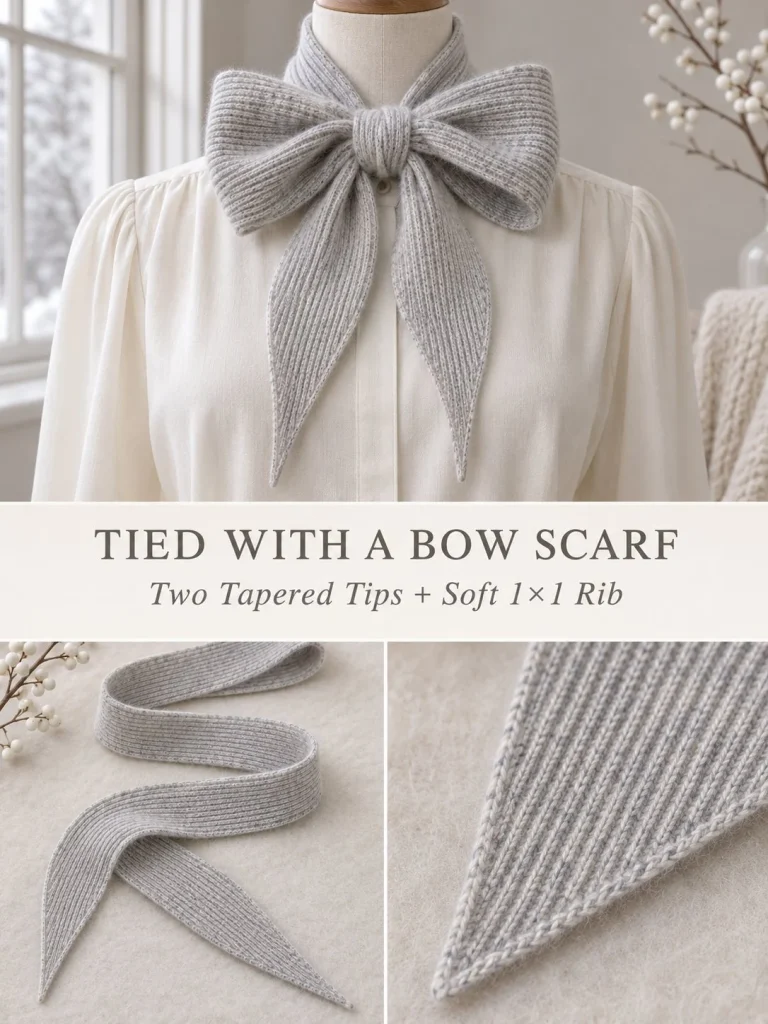
Crafting an elegant, extra-long scarf with tapered tips and a reversible ribbed pattern offers a sleek and versatile accessory that harmoniously blends style and functionality. This scarf is designed to be knit flat, showcasing a narrow-to-narrow ribbon shape that tapers delicately on each end, allowing it to be worn casually or tied in a chic bow around the neck. Its slender dimensions and gracefully tapered tips differentiate it from typical bulky winter wraps, making it an intentional fashion statement. The reversible 1×1 rib stitch lends a textured fabric that looks equally beautiful on both sides, perfect for occasions when you want both warmth and polished style.
This scarf’s construction begins with casting on just a few stitches to form the initial narrow tip. Selected rows then increase stitches gradually to widen the scarf to the desired breadth while keeping neat slipped selvedge edges and smoothly developing the rib pattern. Once the targeted width is achieved, the main body is knit evenly in rib for the scarf’s length, before mirroring the increase sequence to taper back to a matching narrow tip. The process concludes by securing the final stitches and giving the piece a gentle block to retain elasticity. The shape lends itself perfectly to being tied into a soft bow, enhancing the scarf’s delicate aesthetic.
For knitters eager to explore detailed shaping combined with a timeless stitch pattern, this project is an excellent choice and offers an engaging experience in working with incremental increases and decreases while maintaining a reversible rib texture. To see variations in bow-tie style scarves and delicate rib textures, consider exploring the sister patterns like the Tied With A Bow Scarf Knitting Pattern with Reversible Rib which offers detailed insights into reversible rib work.
Pattern at a Glance
Skill level: Intermediate – requires familiarity with knitting increases, decreases, and working rib patterns
Terminology: Standard American knitting terms
Construction: Flat knitting, top-down with tapered increases and decreases shaping the scarf
Finished size: Small approx. 3.5" x 61.5" (width x length); Large approx. 5" x 65"
Yarn weight: Fingering/Sport weight yarn
Needle size: US 1 (2.5 mm) straight or circular needles (flat knitting)
Main stitch: Reversible 1×1 rib (knit 1, purl 1 rib)
Gauge: 40 sts x 42 rows = 4" unstretched in 1×1 rib
Motifs: None; single rectangular rib fabric with tapered shaping
Layout: Long ribbon with tapered pointed tips
Joining: None, knit in one piece
Border: No separate border; edges finished with slipped selvedge stitches
Seaming: None
Materials
To knit this refined scarf, use approximately 2 balls of Purl Soho Echo Cashmere yarn in Silver Dust, either for the small or large size. This yarn is a luxurious blend made from 95% recycled cashmere with 5% other natural fibers, providing exceptional softness and warmth while being eco-conscious.
- Yarn weight: Fingering/sport weight, providing a lightweight but warm fabric
- Yardage: About 320 yards (293 meters) needed for the small size, or 470 yards (430 meters) for the large version
- Needles: US 1 (2.5 mm) straight or circular needles suitable for knitting flat
- Notions: Tapestry needle for weaving in ends and finishing
- Gauge: Achieve 40 stitches and 42 rows per 4 inches in unstretched 1×1 rib for best results
- Additional: Stitch markers can help track increases and shaping points, though optional
This high-quality yarn and fine gauge needles yield a delicate, softly elastic fabric that drapes beautifully and maintains a neat rib texture on both sides.
Yarn and Color Notes
Opt for yarns with similar fiber content and weight for comparable softness and rib definition. Fibers with a good elastic recovery like cashmere blends, merino wool, or soft alpaca will help maintain the rib’s elasticity and the scarf’s slender shape. Smooth yarns best reveal the neat reversed ribs, while fuzzy or boucle yarns may obscure pattern texture.
Choosing a solid, gentle color such as Silver Dust emphasizes the clean, textural knit ribs and tapered form. Variegated or striped yarns are usable but might camouflage the rib detail and shaping. For a personal flair, subtle tonal gradients or soft pastels complement this sophisticated design.
Finished Measurements
- Small scarf: Approximately 3.5 inches wide at the center and 61.5 inches long
- Large scarf: Approximately 5 inches wide at the center and 65 inches long
These measurements reflect the finished dimensions after blocking, measured flat and unstretched. The scarf’s tapered ends gradually narrow from the center width down to a narrow point, perfect for tying comfortably without bulkiness.
Gauge
The gauge of 40 stitches and 42 rows per 4 inches in unstretched 1×1 rib is critical to achieve the specified finished size and fabric characteristics.
- To check gauge, knit a 4"x4" swatch in 1×1 rib, allowing the fabric to relax unstretched before measuring
- If your gauge shows more stitches per inch (denser fabric), your scarf will be narrower and shorter; adjust needle size upward to compensate
- If your gauge shows fewer stitches per inch (looser fabric), scarf dimensions may be larger and fabric less structured; consider smaller needles
- The ribbed fabric has considerable stretch and elasticity, so slight differences in gauge can be tolerated for scarves but may affect the look of shaping
Consistent gauge ensures the shaping using increases and decreases matches the intended pointed tips and smooth transitions.
Abbreviations
- K: knit
- P: purl
- sts: stitches
- RS: right side (knitting side)
- WS: wrong side
- CO: cast on
- inc: increase (details specified in instructions)
- dec: decrease (details specified in instructions)
- selvedge: slipped edge stitch for neat edges
Important Pattern Notes
- The scarf is knit flat, back and forth, starting at one narrow tip and progressing to the full width at center before tapering down the opposite tip
- The reversible 1×1 rib stitch is knit 1, purl 1 across and on every row, maintaining stitch pattern even at increases and decreases
- Slipped selvedges on both edges keep a clean, tidy border and help the scarf lay flat
- Increases and decreases occur on predetermined rows to shape the taper symmetrically
- Each increase or decrease should align with the rib pattern to maintain its reversibility and neat appearance
- Blocking at the end is important to even out the rib texture and retain the scarf’s elasticity and shape
Special Techniques and Stitches
- Reversible 1×1 Rib: Knit 1 stitch, purl 1 stitch across each row; on WS rows, this is purl 1, knit 1 to mirror the pattern and keep ribs reversible
- Slipped Selvedges: Slip the first stitch of every row purlwise with yarn in back to create an even edge that prevents curling
- Incremental Increases: Techniques such as “make 1” (M1), yarn over, or knitting into the front and back of a stitch, placed strategically in the rib pattern for smooth expansion
- Mirror Decreases: Perform decreases (such as k2tog or ssk) that reverse the increases to recreate tapered pointed ends, aligned with the ribbing
Maintaining the rib pattern through shaping is essential for the scarf’s reversible effect and polished look.
Understanding the Construction
The scarf’s design is a singularly knitted piece starting at a narrow point tip formed by casting on a minimal number of stitches. The fabric gradually widens with increases at both edges to form the center full width, then maintains that width for a prescribed length, before tapering back to a narrow opposite tip through symmetrical decreases.
This tapered ribbon-like shape emphasizes a visual flow from point to point, making the scarf light, elegant, and perfect for tying into a bow. The reversible 1×1 rib stitch ensures texture is present on both sides, avoiding a “wrong” side.
The selvedge stitches on edges keep the scarf’s boundaries crisp and professional, preventing rolling and curling common with rib knits.
Pattern Instructions
Foundation: Cast On and First Tip
- Cast on a small number of stitches (for example, around 3 to 6 stitches) to form the narrow pointed tip of the scarf
- Ensure the first stitch of each row is slipped to form a neat selvedge edge
Tapered Increase Section
- On selected right-side rows, increase one stitch at each selvedge edge to widen the scarf gradually
- Use increases aligned with the 1×1 rib pattern to maintain reversibility and avoid distorting rib texture
- Continue these increases until the scarf width matches either the small (approx. 3.5" wide) or large size (approx. 5" wide)
- Maintain slipping the first stitch and knitting the rest in 1×1 rib
Even Central Rib Section
- Once the target width is reached, stop increasing
- Work even in reversible 1×1 rib for the full length you desire — about 61.5 inches for small, 65 inches for large sizes including tapered tips
- Slipped selvedges are continued to maintain clean edges
Tapered Decrease Section
- Begin the symmetrical decrease sequence, mirroring increases on opposite end to taper gradually back down to a narrow tip
- Decrease one stitch at each edge on selected wrong-side rows, aligned with rib pattern
- Maintain 1×1 rib and slipped selvedge edges to keep the rib pattern reversible and edges tidy
Finishing
- Bind off the remaining stitches once the tapered end is completed
- Weave in all ends using a tapestry needle, pulling threads snugly but not distorting fabric
- Block lightly by steaming or wet blocking to relax fibers and define elasticity, maintaining the rib’s textured beauty and smooth shape
The completed scarf can then be tied into a refined bow at the neck, creating an intentional, stylish look with its balanced proportions and tapered ends.
Construction Checkpoint
At the wide center section, your scarf should measure roughly the specified width (3.5" or 5") and have noticeably tapered narrow ends on both sides. The rib pattern should be continuous and consistent. Edges should remain smooth, with no curling or distortion.
Assembly
This scarf is knitted as a single piece and requires no assembly or seams. Finishing mostly involves weaving in yarn ends and light blocking to give shape and softness.
Finishing Tips
- After weaving in ends, lightly block your scarf flat to even out stitches and maintain elasticity
- Use pins and a damp cloth or steam to set shape, focusing on keeping tapered ends smooth and edges straight
- Avoid heavy stretching while blocking to preserve rib elasticity
- Regularly gently reshape the bow by tying loosely to avoid fabric distortion
To discover how texture and structure can vary in bow-tied scarves, you might explore the Bow Tie Scarf Knitting Pattern in Garter Stitch, which offers a complementary but distinct stitch and fabric feel.
How to Resize
To adjust length:
- Add or subtract rows in the central even rib section to gain or reduce overall length without altering tapered tips
To adjust width:
- Modify the number of increase rows at the tapered section to widen or narrow the scarf’s center width
- Keep increases and decreases symmetrical for consistent tapering
Remember gauge and yarn choice impact final size, so swatching before project start is advisable.
Useful Variations
- Knit in a contrasting color for ribbing to highlight pattern texture
- Use a gradient or ombré yarn for a subtle color transition along the length
- Substitute similar fingering-weight or sport-weight yarns, adjusting needles for gauge
- Create an extra-long version by extending the plain center rib section for a dramatic bow effect
- Pair this ribbed scarf with matching accessories featuring the reversible rib, inspired by patterns like similar rib stitch scarves
Troubleshooting
Why Is My Edge Uneven or Flared?
Ensure you are consistently slipping the first stitch of every row purlwise with yarn in back. This slipped selvedge prevents rolling and creates a neat border.
Why Does My Rib Pattern Look Distorted at Increases?
Check placement of increases: they must align with the 1×1 knit and purl rib pattern to maintain reversibility. Use make-one increases that fit the rib structure.
Why Does My Scarf Curl?
Reversible rib generally lies flat, but avoid heavy blocking or stretching. Ensure slipped selvedges are worked correctly to combat edge curling.
How Can I Achieve Symmetrical Tapering?
Count rows carefully during increases and decreases to mirror shaping exactly. Place markers if needed at increase/decrease rows for accuracy.
Frequently Asked Questions
Can I Use a Different Yarn Weight?
Using heavier or lighter yarn will change gauge and finished size. Adjust needle size and length of rib section accordingly, but stick with similarly elastic fibers for reversible rib texture.
Is This Scarf Fully Reversible?
Yes, the 1×1 rib is reversible and looks neat on both sides due to its knit-purl balance and slipped selvedge edges.
Can Beginners Attempt This Pattern?
A confident beginner comfortable with increases, decreases, and 1×1 rib should find this pattern manageable with attention to shaping instructions.
How Should I Block This Scarf?
Block gently by steam or wet blocking, laying flat to avoid distortion. Light blocking retains elasticity and evens stitches without flattening rib texture.
Can I Make the Scarf Longer?
Absolutely. Extend the central rib section by knitting more rows before beginning the tapered decrease section.
Do I Need Special Needles for This Project?
Standard straight or circular needles sized US 1 / 2.5 mm suffice for flat knitting in this fine ribbed scarf.
Final Thoughts
This elegantly tapered, reversible rib scarf merges refined shaping with a timeless stitch pattern. Starting from a narrow tip and incrementally increasing to a slender width, it then returns symmetrically to a pointed tip. The use of a high-quality fingering weight cashmere blend offers softness and warmth in a lightweight accessory designed for style and versatility. Careful attention to slipped selvedges and rib consistency ensures a lack of curling and professional finish. Its slender silhouette invites tying into a soft bow, offering an intentional and chic alternative to conventional winter scarves. With clear shaping sequences and flexible length adjustments, this scarf is a satisfying project that beautifully balances classic knit design with modern elegance.



