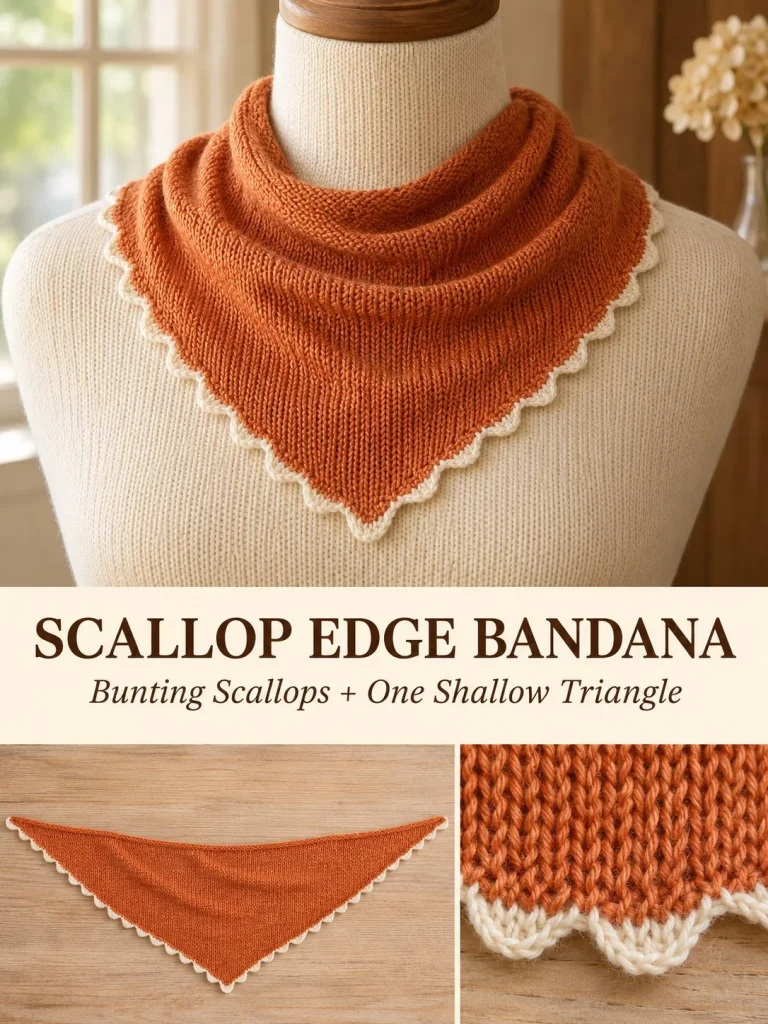
This delicate knitting project creates a charming bandana featuring a scalloped edge reminiscent of festive bunting, paired with a gently shaped shallow triangle body. Designed for both style and subtle structure, this piece combines elegant design elements and sophisticated knitting techniques for a rewarding crafting experience. The standout visual comes from the contrast-color scalloped border, which lends a whimsical touch to the simple yet stylish triangular silhouette.
The construction centers around a few key techniques: beginning with a unique scalloped-edge cast-on in a complementary color that frames the bandana beautifully, then forming these scallops through a controlled drop-and-pick-up method developed by the designer. After this decorative border is established, the main color takes over, and short-row knitting builds out the bandana’s shallow triangle shape. This particular shaping provides a flattering drape and a comfortable fit, perfect for casual wear or layering. Importantly, the pattern instructs not to substitute the short-row shaping for conventional increases, preserving the characteristic contour and fabric quality.
This project appeals to knitters looking for a compact accessory that adds a refined accent to their wardrobe. The organic cotton yarn ensures breathability and softness, making it ideal for transitional seasons. Its manageable size and moderate complexity offer a satisfying challenge for knitters familiar with short rows and colorwork, while the elegant scalloped edge showcases craftsmanship in an understated way.
Pattern at a Glance
Skill Level: Intermediate
Terminology: Standard knitting terms
Construction: Begin with contrast-color scalloped-edge cast-on, scallop formation via drop-and-pick-up, transition to main color short-row knitting shaping one shallow triangle, finishing with source bind-off
Finished Size: Shallow triangular bandana—dimensions dependent on yarn gauge and tension
Yarn Weight: Sport weight (Purl Soho Cotton Pure)
Needles: 3.25 mm / US 3 circular knitting needles, 32 inches long
Main Stitch: Stockinette with scalloped edge and short-row shaping
Gauge: Not explicitly provided; knitters should swatch to desired density
Motifs: Single triangle panel edged in scallops
Layout: One-piece knitting from edge to center
Joining: None required; seamless
Border: Contrast-color scalloped-edge
Seaming: None needed
Materials
You will need:
- Purl Soho Cotton Pure sport-weight organic cotton
- Main Color (MC): Apple Cider, approximately 279 yards (one skein)
- Contrast Color (CC): Alabaster Cream, approximately 35 yards
- Knitting Needles: 3.25 mm / US 3 circular needles, 32-inch cable length recommended for ease of handling
- Tapestry Needle: For weaving in ends
The chosen yarn is organic cotton sport weight, offering a soft, breathable fabric that knits up cleanly and shows stitch definition well. The moderate yardage ensures you have enough for the scalloped edging in contrast and the main body in MC without running short.
Yarn and Color Notes
Sport weight cotton yarn is ideal for this bandana because it combines lightweight warmth with breathability and washability. Organic cotton adds an eco-friendly and gentle texture next to the skin. It’s important to select yarns that maintain stitch definition to highlight the scalloped edge and short-row shaping distinctly.
The contrast color’s limited yardage (35 yards) is intended for the scalloped edge only, making it perfect for a subtle but striking border. Solid colors work best to emphasize the texture and shape, though slight heathering or tonal variation is acceptable as long as it doesn’t interfere with the scallops’ visibility or short-row transitions.
Finished Measurements
The bandana forms a shallow triangle edged with scallops along the longest side. Although specific finished dimensions are not detailed in the source, typical shallow bandanas of this nature range approximately 18–22 inches across the top scalloped edge, tapering down in depth to form a gentle point.
Final size depends on your gauge and yarn tension. Blocking will help even out the scallops and the short-row shape, ensuring a neat, polished finish.
Gauge
The original pattern source does not specify exact gauge measurements; however, knitting a swatch in the sport-weight cotton yarn with the 3.25 mm needles before beginning is recommended. This helps ensure your fabric will behave as expected — smooth, even, and with good stitch definition.
- Measure gauge over stockinette stitch, as this is the main fabric used.
- Gauge is important for fit and drape in this project; if your gauge is too loose, the bandana may be larger and looser in shape, compromising the neat scalloped edge.
- If gauge is tighter, the fabric will be denser, and the bandana’s size reduced.
Abbreviations
This pattern employs standard knitting terminology; key abbreviations you should be comfortable with include:
- MC: Main Color
- CC: Contrast Color
- K: Knit
- P: Purl
- St(s): Stitch(es)
- CO: Cast On
- BO: Bind Off
Important Pattern Notes
- The bandana begins with a contrast-color scalloped edge cast-on using a specialized technique known for a decorative and textured finish.
- Scallops are formed by a unique “drop-and-pick-up” stitch movement that controls the fabric curvature—this method should be followed precisely to recreate the design effect.
- The central body of the bandana is knit with short rows to create a shallow triangular shape without using standard increases; this maintains smooth shaping and consistent fabric tension.
- The pattern uses circular needles to accommodate the fabric’s growing size and keep the stitches comfortable to work, not for knitting in the round.
- Ends are woven in after bind-off, then the piece is blocked to set shape and relax fabric.
Special Stitches and Techniques
Scalloped-Edge Cast-On and Drop-and-Pick-Up Movement
The bandana begins with an official contrast-color scalloped-edge cast-on that gives a fine, decorative edge along one side. This cast-on creates multiple loops and scallops rather than a standard straight edge, introducing delicate texture from the outset.
Following the initial purl/knit rows in CC, the scallops are formed using a designer-controlled drop-and-pick-up method, akin to dropping a stitch deliberately and then lifting it back in a controlled manner to shape fabric curves. This technique controls how the fabric stretches and folds at the edges, creating clean, crisp scallops reminiscent of festive bunting.
Short-Row Shaping
Switching to the main color, the body of the bandana is shaped with alternating knit and purl short rows worked across the center. Short rows allow partial-row knitting, producing a gradual triangular shape without visible seams or obvious increases.
This shaping method is essential to maintaining the bandana’s elegant shallow form, enhancing comfort and aesthetic flow.
Understanding the Construction
This bandana has a simple one-piece knit construction but relies on thoughtful shaping techniques for its character. You begin by establishing the border in a contrast color with a scalloped cast-on, which remains as a foundational edge that frames the entire piece.
Next, the short-row knitting in MC grows the fabric inward, producing a shallow triangle that rests smoothly when worn. The short-row method is preferred over standard increases because it produces a more balanced and visually pleasing fabric, without irregular stitch count changes disrupting the scalloped perimeter.
There is no seaming or piecing—everything is worked top-down and seamlessly.
Complete Pattern Instructions
Foundation: Contrast-Color Scalloped-Edge Cast-On and Initial Rows
Begin by casting on your stitches using the official contrast color scalloped-edge cast-on. This specialized method creates loops and curves essential to the scalloped border.
After the cast-on:
-
Work one or more purl and knit rows in the CC to set your base fabric, maintaining the established stitch count and ensuring tension is even.
-
Use the designer’s drop-and-pick-up stitch movement to form the scallops along the edge. This involves deliberately dropping a stitch and then carefully picking it back up in a controlled fashion to form each scallop.
Follow detailed instructions for this technique precisely to create beautiful, well-defined scallops.
Transition to Main Color and Short-Row Body
After completing the scalloped edge in CC, switch to Apple Cider MC for the main portion.
- Work short rows knit and purl across the center of the piece, alternating as necessary to shape the shallow triangular form.
- The short rows are worked carefully so only portions of each row are knit before turning, creating a gradual shaping effect.
- Do not replace these short rows with standard increases, as that would change shaping balance and fabric tension.
Finishing
- Finish by working the official source bind-off to maintain edge consistency.
- Weave in all ends carefully with the tapestry needle so no loose yarn is visible.
- Block gently to relax and set the scalloped edges and the shaped triangle body, allowing the bandana to lie flat and drape naturally.
Checkpoints
- After forming the scalloped edge, confirm that your scallops are evenly spaced and firm but flexible.
- While working short rows, periodically check that your shallow triangle shape is forming symmetrically.
- On completion, ensure bind-off edge remains consistent in tension with the scalloped side.
- Final blocking should result in smooth scallops and a gently tapered triangle, free of curling or puckering.
Assembly and Joining
This project is worked seamlessly as a single piece. No assembly or seaming is necessary. The circular needle length supports working the full fabric comfortably without restricting movement.
Finishing
Finishing involves a careful bind-off to maintain the scalloped aesthetic and preventing edge distortion. After weaving in ends securely, block the bandana by laying it flat and gently stretching to open the scallops and smooth the short-row shaping.
Blocking brings out the scalloped texture and smooths the triangle shape, resulting in professional polish.
How to Resize
This pattern is designed as a fixed-size accessory based on the specified yarn and needle size. However, you can adjust size mainly by modifying gauge and yarn choice.
- Using thicker yarn and correspondingly larger needles will increase size but may affect scallop formation and short-row shaping texture.
- Conversely, thinner yarn and smaller needles result in a smaller, more delicate bandana.
- To make the bandana larger without changing yarn weight, you would theoretically add more short rows in the main body; however, this is not explicitly supported by the pattern and should be done cautiously to maintain proper shaping.
For knitters interested in a similar project with more ruffles, a related textural edge knitting pattern can be explored, such as the ruffle-edged shawl pattern, which offers more volume and a different edge aesthetic.
Useful Variations
- One-Color Version: Omit the contrast color and work the entire piece in Apple Cider for a minimalistic look. Note: you will lose the defined scalloped contrast edge.
- Alternate Color Combinations: Swap the CC and MC colors for high contrast or tonal variations to match personal style.
- Textured Yarn: Substitute the smooth sport-weight cotton with a soft wool blend to add warmth and subtle texture change.
- Longer Triangle: Increase the number of short rows slightly to make the triangle deeper for more coverage.
Troubleshooting
Why Are My Scallops Not Forming Evenly?
Uneven tension when dropping and picking up stitches can cause irregular scallops. Maintain consistent yarn tension and follow the drop-and-pick-up sequence carefully.
Why Is My Short-Row Shaping Creating Points?
If short rows are knit or purled incorrectly, the shallow triangle shape may become too angular. Be sure to work short rows across the center as instructed, and turn exactly where directed.
Why Does the Edge Curl?
Cotton stockinette tends to curl naturally. The scalloped border helps counteract this, but lack of blocking or uneven stitch tension can increase curling. Always block the finished piece.
How Can I Avoid Gaps in Short Rows?
Use proper short-row techniques like wraps and turns or the slip-stitch method to prevent holes. The pattern assumes standard short-row shaping, so follow those techniques precisely.
How Do I Keep the Edges From Being Too Tight?
Avoid pulling stitches tightly when casting on and binding off; this will affect the scalloped edge flow and overall drape.
Frequently Asked Questions
Can I Use a Different Yarn Weight?
You can experiment, but changing yarn weight will alter size and fabric behavior. Adjust needle size accordingly and test gauge.
Can a Beginner Knit This Bandana?
This pattern requires intermediate skills, especially for the scalloped-edge cast-on and short-row shaping. Beginners may want practice with similar techniques first.
Do I Need Circular Needles?
Yes, 32-inch circular needles accommodate the stitch count comfortably, even though the piece is knit flat.
Is This Pattern Suitable for Warm Weather?
Yes, the cotton sport weight yarn and lightweight design make it comfortable for transitional seasons.
Can I Wear This Bandana in Different Styles?
Absolutely—wear it tied at the neck, over shoulders, or styled creatively as a headwrap.
How Should I Block This Project?
Gently wet or steam block, laying the bandana flat and shaping the scallops and triangle carefully to dry.
Optional Related Uses
The scalloped-edge technique and short-row shaping employed here can work beautifully for other accessories like lightweight neckerchiefs, kerchiefs, or decorative collar scarves. Similarly, the scalloped edge could frame small shawls or wraps, offering festive texture.
Final Thoughts
This knitting project elegantly merges a playful scalloped edge with subtle short-row shaping to create a stylish, shallow triangle bandana. Starting with a specialty cast-on and forming scallops set the tone for a unique accessory, while the short-row center shaping maintains a flattering yet simple silhouette. With mindful attention to yarn choice, stitch tension, and finishing techniques like blocking, the resulting bandana is a sophisticated, wearable showcase of texture and form—ideal for knitters who appreciate clean design couched in traditional techniques.



