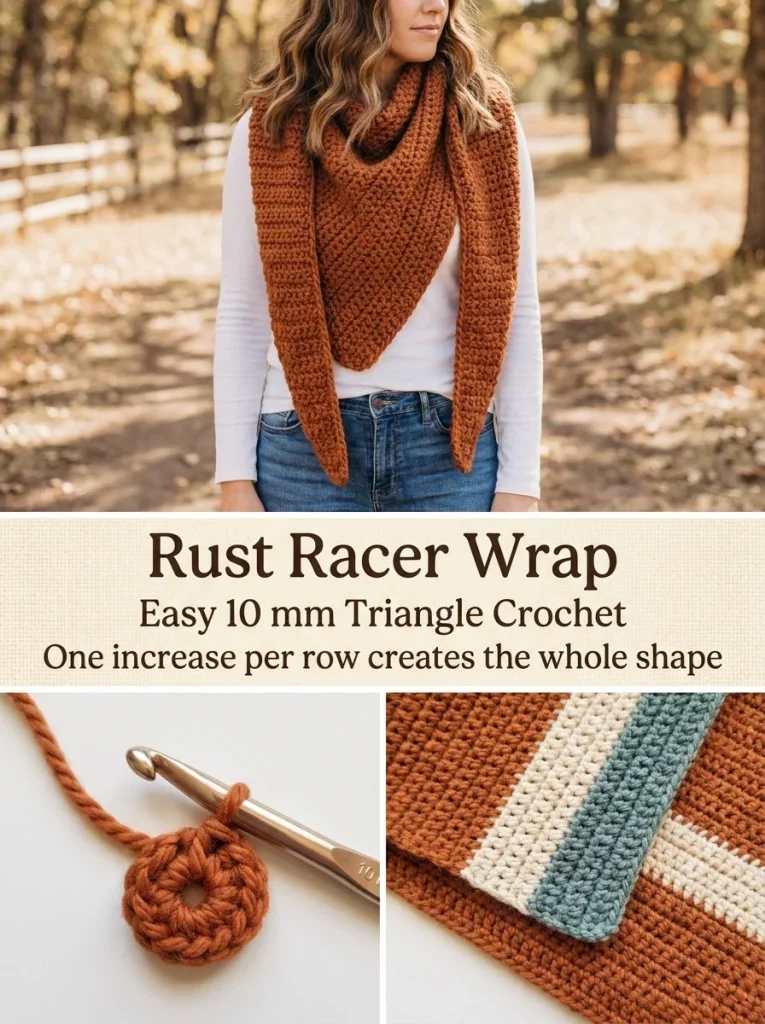
Creating a cozy and visually captivating wrap involves careful consideration of stitch patterns, color changes, and construction techniques. This crochet wrap showcases a striking asymmetrical design with gradual increases, using bulky yarn to enhance texture and drape. The combination of rust, cream, and muted teal colors creates an earthy, harmonious palette perfect for cool-weather layering.
The wrap is built entirely in rows, starting from a small foundation that steadily grows wider, resulting in a large triangular shape with a beautifully angled edge. By alternating rows with subtle stitch increases and color transitions, the piece achieves a dynamic striped effect combined with interesting stitch texture through half double crochet. This project emphasizes both the skill of shaping with increases and the artistry of color blocking. For inspiration on styling layered crochet wraps, consider how similar shaping and textures appear in popular garments like the ballet wrap crochet cardigan.
Pattern at a Glance
- Skill level: Intermediate (basic stitches with shaping technique)
- Terminology: US crochet terms
- Construction: Worked flat in rows, starting narrow and increasing to a triangle
- Finished size: Approximately 62 inches wide by 30 inches from top edge to point
- Yarn weight: Bulky (#5)
- Hook: 10 mm crochet hook
- Main stitch: Half double crochet (hdc)
- Gauge: 7 hdc x 6 rows = 4 inches after blocking
- Motifs: Solid fabric with increasing row edges, no separate motifs
- Layout: Single piece worked from base upward with color changes at specified rows
- Border: Single crochet edging along angled top edge
- Seaming: None (single piece)
Materials
To complete this project, you will need:
- Bulky weight (#5) yarn in three colors:
- Rust: approximately 411 yards
- Cream: approximately 137 yards
- Muted teal: approximately 137 yards
- Crochet hook size 10 mm: suitable for bulky yarn to create a plush fabric with good drape
- Tapestry needle: for weaving in ends after color changes and finishing
- Blocking tools: blocking mats and pins for shaping the final wrap
Using bulky yarn offers both warmth and a quick-to-work effect, with the hook size creating a balanced fabric tension that is neither too stiff nor too loose. Because the project changes colors multiple times, having extra skeins in the mentioned shades ensures uninterrupted work.
Yarn and Color Notes
Choosing yarn with good stitch definition is essential here since the half double crochet stitch and the gradual increase pattern are key to the texture. Smooth, plied yarn will highlight the stitch pattern, while too fuzzy or haloed yarn might obscure details. The selected color pattern moves from a warm rust to a soft cream, then to muted teal, and back to rust, providing a sophisticated subdued palette suitable for many wardrobes.
Solid colors are ideal for this project to emphasize the shaping and stitch texture. However, you can experiment with yarns that have subtle heathering or tonal variations, but avoid heavily variegated yarns that may distract from the clean color blocks.
Finished Measurements
After blocking, the wrap should measure approximately:
- Width: 62 inches across the top angled edge
- Length: 30 inches from the top edge to the pointed bottom tip
These measurements were achieved based on the provided gauge and stitch/increase counts. The triangular shape means the width is the longest dimension, intended to comfortably drape over shoulders, with the pointed end adding flow and style.
Gauge
The gauge is critical to achieving the intended size and fabric behavior:
- Gauge: 7 half double crochet (hdc) stitches and 6 rows = 4 inches after blocking
To check gauge:
- Work a swatch using the rust yarn, crochet at least 20 stitches wide and 12 rows high.
- Block the swatch as you would the finished piece for accurate measurement.
- Measure the stitch and row count across a 4-inch square.
If your gauge shows fewer stitches per 4 inches (larger stitches), your wrap will be larger and looser, potentially affecting drape and stitch definition. Conversely, a tighter gauge will produce a smaller, denser wrap.
Gauge is especially important for garments or wearable accessories to ensure correct fit and aesthetic flow.
Abbreviations
- ch: chain
- hdc: half double crochet
- sc: single crochet
- st(s): stitch(es)
- approx: approximately
Important Pattern Notes
- The pattern uses a consistent increase technique located on one edge, which creates the angled triangular shape.
- Turning chains consist of 2 chains before starting each new row (counts as the first half double crochet).
- The increases alternate between two row types to maintain the stitch count increment.
- Color changes occur at defined rows to create horizontal stripes.
- The final crochet row is not turned but worked across the angled edge for a neat single crochet finish.
- Blocking the finished wrap is essential to open the fabric and even out stitches.
Special Stitches and Techniques
This pattern primarily uses the half double crochet stitch — a versatile medium-height stitch that balances structure and softness. The key shaping technique in this project is increasing exactly one stitch at one edge every row.
- Half Double Crochet (hdc): yarn over, insert hook into stitch, yarn over, pull through stitch, yarn over and pull through all three loops on hook.
- Increasing at the edge: worked by placing 2 hdc in the designated first or last stitch of the row, gradually expanding the width of the piece.
Additional basic techniques include turning chains, color changes, and an unconventional finishing row worked along the angled edge without turning.
Understanding the Construction
The entire wrap is worked flat from the bottom corner upward with gradual, uniform increases to build the triangular shape. Each row adds exactly one stitch on the same edge by working 2 half double crochets into the first or last stitch.
The pattern begins with rust yarn, then switches to cream, muted teal, and back to rust in sections to create color stripes. The finishing step involves crocheting single crochet stitches evenly across the long, angled top edge without turning the piece.
This straightforward yet visually effective construction method provides a modern wrap perfect for layering.
Complete Pattern Instructions
Foundation
Begin with rust yarn.
- Chain 3.
Row 1
- Work 2 half double crochet (hdc) stitches into the 3rd chain from the hook.
- You will have 2 stitches at the end of this row.
Row 2
- Chain 2, turn your work.
- Work 1 hdc in the first stitch.
- Work 2 hdc into the last stitch of the row.
- You will now have 3 stitches.
Row 3
- Chain 2, turn.
- Work 2 hdc into the first stitch.
- Work 1 hdc across each remaining stitch.
- You will now have 4 stitches.
Row 4
- Chain 2, turn.
- Work hdc across all stitches until the last stitch.
- Work 2 hdc in the last stitch.
- You will have 5 stitches.
Rows 5–50
- Continue alternating Rows 3 and 4, increasing exactly one stitch at the same edge every row.
- This means on odd-numbered rows (similar to Row 3), increase by working 2 hdc in the first stitch; on even-numbered rows (similar to Row 4), increase by working 2 hdc in the last stitch.
- Continue this sequence until Row 50.
- By Row 50, you will have 51 stitches.
Color Change to Cream (Rows 51–58)
- Switch to cream yarn.
- Continue the same increase pattern alternating Rows 3 and 4.
- Work Rows 51 through 58, increasing one stitch per row.
- By Row 58, you will have 59 stitches.
Color Change to Muted Teal (Rows 59–64)
- Switch to muted teal yarn.
- Continue alternating Rows 3 and 4 increases as before.
- Work Rows 59 through 64.
- At Row 64, you will have 65 stitches.
Color Change Back to Rust (Rows 65–68)
- Switch back to rust yarn.
- Continue the increase sequence as above on Rows 65 through 68.
- By Row 68, you will have 69 stitches.
Final Row (Single Crochet Edge)
- After completing Row 68, do NOT turn your work.
- Chain 1.
- Working along the long angled top edge of the wrap, evenly single crochet approximately 3 single crochet stitches for every 2 row ends.
- This edge finish creates a clean, stable border for the wrap.
- Fasten off.
Blocking
- Wet block or steam block your wrap.
- Shape to the finished measurements of approximately 62 inches wide and 30 inches from top edge to point.
- Blocking opens the stitches, evens out tension, and smooths the angle.
Checkpoints
- After Row 50, you should have 51 stitches.
- By the end of Row 58 (cream section), you should have 59 stitches.
- Rows 59 to 64 (muted teal) will bring stitch count to 65.
- The final rust section (Rows 65-68) should end with 69 stitches.
- The dimensions after blocking are roughly 62 inches wide and 30 inches long to the point.
Assembly
This wrap is constructed as a single piece and requires no assembly or seaming. Weaving in ends from color changes is best done throughout the process or after finishing to keep the reverse neat.
For inspiration on similar wrap styles that combine shaping with elegant fastening options, the burgundy buttoned crochet shoulder wrap offers ideas on adding functional closures that can transform the style.
Finishing
- Weave in all ends securely with a tapestry needle.
- Pay special attention to ends from color changes.
- Block the wrap carefully to measurements, pinning edges evenly.
- The single crochet border on the angled edge provides a stable finish with no curling.
- Optional embellishments or edging treatments can be added but are not necessary for clean lines.
How to Resize
Resizing this wrap involves adjusting the number of increase rows:
- To make the wrap wider and longer, add more increase rows by continuing the established pattern of alternating increases at the same edge.
- Increasing the number of rows in each color section proportionally keeps the color blocks balanced.
- To make it smaller, reduce the number of increase rows similarly.
- Adjust yarn quantities accordingly.
- Maintaining gauge with bulky yarn and a 10 mm hook is important for the size to hold.
- For a narrower wrap with less drape, consider using a smaller hook or thinner yarn, but recalculate gauge and rows needed for desired dimensions.
Useful Variations
- Single Color Version: Omit color changes for a solid, modern look.
- Alternate Color Blocks: Reverse the order of cream and teal or introduce additional colors using the same increase pattern.
- Extended Wrap: Add extra rows beyond Row 68 to create a dramatically larger wrap.
- Border Variation: Add a decorative scalloped or shell stitch border instead of the single crochet edge for visual interest.
- Use different fibers such as superwash wool blends or alpaca for specific warmth or softness.
Troubleshooting
Why Is My Wrap Not Increasing Correctly?
Ensure you are increasing exactly one stitch at the same edge every row by placing two half double crochets into the first or last stitch as indicated on each row type. Missing increases can narrow your wrap, and extra increases can distort shape.
Why Does the Edge Look Uneven?
Follow the alternating pattern of increases carefully. On odd-numbered rows, increase at the first stitch; on even-numbered rows, increase at the last stitch. This keeps the shape balanced and edges straight.
My Color Changes Are Messy. How Can I Improve?
- Utilize the "invisible join" or carry yarn up the side to reduce ends.
- Weave in ends as you go.
- Change yarn at the beginning of the row for clean transitions.
The Fabric Feels Too Stiff or Too Loose
Gauge can vary with yarn and hook size. Blocking can soften and open the fabric. Try a swatch first and adjust hook size if necessary.
Frequently Asked Questions
Can I use a different yarn weight?
A different weight will affect size and drape significantly. For best results, use bulky (#5) yarn or adjust hook size and stitch count to maintain gauge.
Can a beginner make this wrap?
Basic knowledge of half double crochet and increasing stitches is needed. The pattern is straightforward with repeated row types, making it suitable for adventurous beginners.
Is blocking necessary?
Yes, blocking ensures the wrap reaches proper size and smooths out the fabric.
Can I work this wrap in the round?
No, the wrap is designed to work flat with turning rows to shape the triangle.
How do I carry yarn when changing colors?
Cut yarn and weave in ends or carry yarn loosely along the side depending on preference.
Can I add buttons or ties?
Yes, adding closures can transform this wrap into a shawl or cardigan-like garment easily.
Optional Related Uses
The shaping and stitch pattern used here can also inspire:
- A triangular shawl in lighter yarns for summer
- A large scarf with more rows and less drastic increases
- A cozy lap blanket in monochrome color
These options maximize the versatility of the shaping technique and bulky yarn choice.
Final Thoughts
This wrap is crafted by starting small and methodically increasing a single stitch per row on one edge, creating a beautiful triangular form with soft stripes of color. The half double crochet stitch offers polish and texture while maintaining warmth thanks to bulky yarn. Blocking is vital to bring the final dimensions and shape to life.
This piece blends practical wearable warmth with artistic color blocking and shaping, making it a satisfying and stylish crochet project perfect for layering in cooler seasons.



