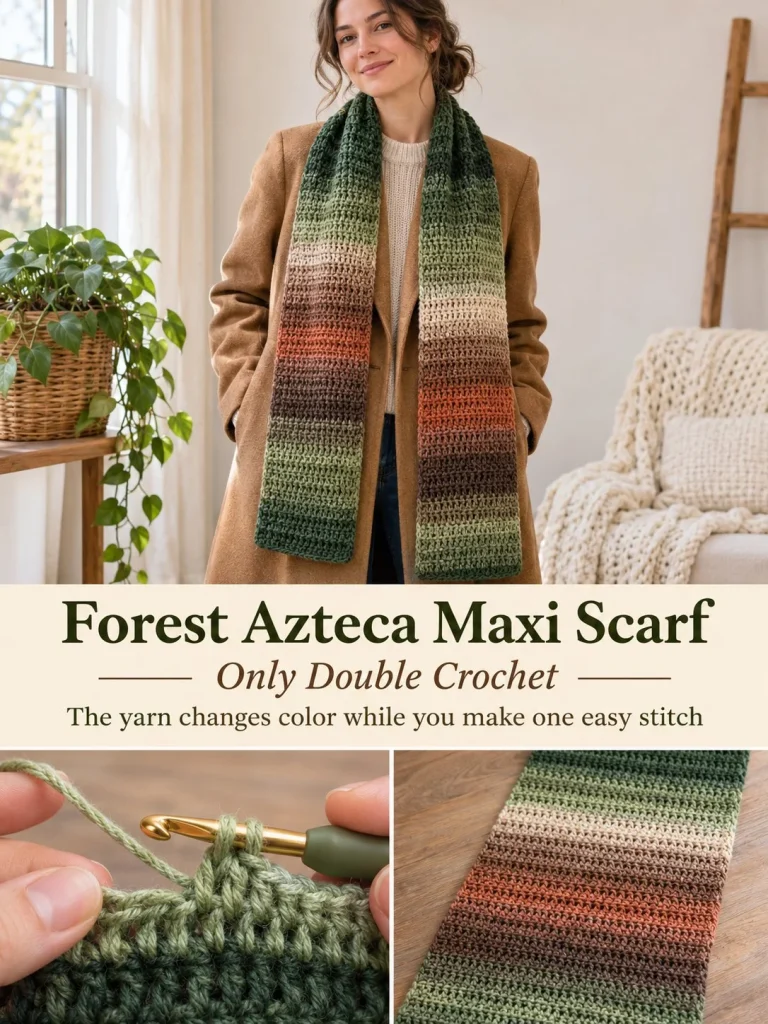
This inviting maxi scarf is designed to showcase long, sweeping color transitions through self-striping yarn in an earthy palette of forest, sage, oatmeal, cocoa, and rust. The construction is straightforward, creating a wide, generous rectangle worked entirely in double crochet rows. This simple stitch choice allows the gradual color changes inherent in the yarn to shine without interruption. The result is a versatile accessory that pairs beautifully with a range of outfits, offering warmth and subtle texture through classic crochet techniques.
Using a 5 mm hook and DK/light-worsted weight self-striping yarn, this scarf is perfect for intermediate and confident beginners who want a relaxing project with an eye-catching gradient effect. The scarf’s construction is worked flat in rows, emphasizing length and width that drape elegantly. Because the color changes flow naturally in the yarn, there’s no need for frequent color changes or complicated joins, simplifying the crafting process while maintaining a sophisticated look. This project is ideal for those seeking a soothing crochet experience with a polished, wearable outcome.
The pattern leverages the appeal of natural gradient yarns, which provide a seamless shift in color without cutting or joining. For crafters wanting to explore more ways to incorporate self-striping yarns in varied textures or shapes, exploring complementary patterns like this chunky textured scarf may provide inspiring ideas.
Pattern at a Glance
Skill level: Intermediate to confident beginner
Terminology: US crochet terms
Construction: Worked flat in rows
Finished size: Approximately 72–76 inches long by 11 inches wide
Yarn weight: DK/light-worsted self-striping yarn
Hook: 5 mm (H-8) crochet hook
Main stitch: Double crochet (dc)
Gauge: About 14 dc = 4 inches
Motifs: None – continuous rows
Layout: Rectangular, worked lengthwise from foundation chain
Joining: None (single piece)
Border: None (edges remain as is)
Seaming: Not applicable
Materials
To create this scarf, gather the following materials:
- Approximately 750-900 yards of DK/light-worsted weight self-striping yarn featuring colors like forest green, sage, oatmeal, cocoa, and rust, creating naturally transitioning gradients. The yardage accommodates the scarf length and width without the need for cutting between color sections unless desired.
- A 5 mm (H-8) crochet hook, ideal for DK/light-worsted yarn, achieving the intended gauge and fabric drape.
- A tapestry needle for weaving in ends smoothly.
Using the correct hook size relative to the yarn weight will ensure a balanced fabric that is both flexible and warm without being overly dense or flimsy.
Yarn and Color Notes
This pattern benefits greatly from using self-striping yarn that seamlessly transitions through a palette of calming, earthy tones. Selecting yarn with a smooth texture amplifies the stitch definition of the classic double crochet, letting the colors stand out crisply. Avoid highly fuzzy or textured yarns that may obscure the stitch pattern.
Choosing a DK/light-worsted yarn provides enough thickness for warmth while maintaining flexibility and relatively quick progress compared to bulkier weights. The gentle color shifts inherent in the yarn eliminate the need for manually changing colors and weaving many ends, simplifying construction and finishing.
For crafters looking to experiment with similar colorways but different scales or textures, check out this forest green pointed mini scarf pattern which explores complementary color placement and shaping in scarf design.
Finished Measurements
The completed scarf measures approximately:
- Length: 72 to 76 inches (dependent on foundation chain length)
- Width: Approximately 11 inches
These dimensions provide a generous, wrap-around scarf that suits a range of styling options from casual looping to elegant draping. The length is determined by crocheting a foundation chain loosely measuring around 72 to 76 inches. The width develops by repeating double crochet rows until the piece measures 11 inches across.
Gauge
The stitch gauge for this project is:
- About 14 double crochet stitches = 4 inches
Gauge is measured in the main body fabric — specifically counting double crochet stitches across a flat section.
Maintaining correct gauge is important for achieving the intended scarf width and stitch tension:
- If your gauge is smaller (tighter stitches), your scarf will end up narrower than planned unless you adjust by chaining more stitches initially.
- If your gauge is larger (looser stitches), the scarf may become wider or fabric drape too loose.
Given the scarf’s accessory nature, slight variations in gauge are not critical but can influence final size and fabric feel.
Abbreviations
- ch = chain
- dc = double crochet
- st(s) = stitch(es)
- tog = together
- sk = skip
Important Pattern Notes
- The starting chain is worked loosely to achieve the correct foundation length and fabric stretch.
- The turning chain is 3 chains and counts as the first double crochet of each row.
- The yarn transitions naturally; do not cut or break the yarn at color changes to maintain a smooth gradient.
- When switching skeins, start the new skein at a color transition matching the previous skein for continuity.
- The scarf is worked flat, turning at the end of each row.
- No fringe or additional edging is added; the edges remain cleanly finished from the double crochet rows.
- Ends are woven in securely upon completion and the scarf is blocked lightly to even out stitches and fabric.
Special Stitches and Techniques
This scarf uses only the classic double crochet (dc) stitch, making it approachable for most crocheters comfortable with basic stitches. The emphasis is on even stitch tension and smooth color transitions rather than complex stitch patterns.
If you’re new to double crochet or need a refresher, remember:
- Yarn over (yo), insert hook into stitch, yarn over, pull up a loop (3 loops on hook),
- Yarn over, pull through 2 loops, yarn over again, pull through last 2 loops.
This stitch creates a soft, slightly open fabric with good drape.
Understanding the Construction
The scarf is worked in a simple rectangular panel constructed entirely in double crochet rows. It begins with a long foundation chain — approximately 253 chains or enough to loosely measure 72-76 inches, depending on your yarn and tension. The first row establishes the base by working double crochet stitches into the fourth chain from the hook and continuing across.
Subsequent rows consist of chaining 3 to turn (acting as the first dc for the next row), then working a double crochet into every stitch across. This creates a uniform fabric with consistent width and height growth only in length.
The self-striping yarn provides an organic color gradient without cutting or changing yarn manually, lending the scarf a continuous flow of colors with minimal effort.
The lack of a border or fringe focuses attention on the fabric’s natural texture and color.
Full Pattern Instructions
Foundation
Chain loosely 253 times, or enough chains to measure approximately 72 to 76 inches in length. Being loose will help maintain proper drape and prevent the chain from being too tight when the first row is worked.
Row 1
- Starting in the 4th chain from the hook, work 1 double crochet (dc).
- Continue working 1 double crochet in every chain stitch across the row until the end.
- At the end of the row, you should have approximately 250 dc stitches, matching the initial chain minus the 3 chains skipped.
Row 2
- Chain 3 (this counts as the first double crochet of the row), then turn your work.
- Work 1 double crochet into every stitch across the row, including the top of the turning chain from the previous row.
- Maintain consistent tension; be careful not to add or skip stitches.
Repeat Row 2
Continue repeating Row 2 — chaining 3, turning, and double crocheting every stitch across — until your work measures approximately 11 inches wide from edge to edge.
Color Transitions & Yarn Management
- Allow the self-striping yarn to change colors naturally without cutting or joining.
- If you need to introduce a new skein, do so by matching the new yarn start to a similar color point on the previous yarn to maintain a continuous gradient effect.
Finishing
- Fasten off once desired width is reached.
- Use a tapestry needle to weave in all ends securely.
- Block lightly to smooth the fabric and shape edges without stretching excessively.
- Do not add fringe or other embellishments to preserve the scarf’s clean edges.
Helpful Checkpoints
- After completing Row 1, ensure your stitch count matches the chain length minus the initial skipped chains (about 250 stitches).
- Measure frequently during Row repeats to verify that the scarf width reaches approximately 11 inches.
- Maintain consistent tension throughout to avoid uneven edges or width fluctuations.
Finishing and Blocking
Blocking gently flattens the fabric, opens up the stitches slightly, and shapes the scarf into its final dimensions. Use blocking mats and pins to pin the scarf gently to the target dimensions, paying attention not to stretch the edges. Air dry completely before unpinning.
Weaving in ends carefully at color changes ensures durability and a polished look, especially where skeins are joined.
How to Resize
To adjust the scarf length:
- Increase or decrease starting chains proportionally to your preferred length, ensuring you maintain a loosely worked foundation chain to keep fabric flexibility.
To adjust the width:
- Continue the double crochet row repeats beyond or below 11 inches until you reach your desired width.
Keep in mind that resizing may require adjusting yarn quantity accordingly to avoid running out before completion.
Useful Variations
- Try using a different self-striping yarn with contrasting colorways for a bolder look.
- Work this same pattern with a heavier or lighter yarn, adjusting hook size and foundation chain length to maintain gauge and fabric drape.
- Add a fringe or simple border if you prefer a decorative finishing touch.
- For a thicker scarf, work with a 6 mm hook and bulky yarn while maintaining stitch count, adjusting length accordingly.
- Combine with more textured stitch projects, such as the forest chunky texture scarf, to expand your crochet accessory wardrobe.
Troubleshooting
Why is my scarf too narrow or too wide?
Check your gauge. If your stitches are tighter than the pattern gauge, your scarf will be narrower—try using a larger hook or loosening your tension. If it’s too wide, try a smaller hook or tightening tension.
Why are my edges uneven or wavy?
Loose or inconsistent tension at row edges can cause waviness. Try to keep uniform tension especially when turning your work and consider blocking to even out edges.
Why do color transitions seem abrupt?
Self-striping yarn color transitions vary by manufacturer. To ensure smooth gradients, avoid cutting yarn at color changes. If new skeins become necessary, match color starts carefully.
Why does the scarf curl at the edges?
Double crochet fabric tends to lie flat, but very tight tension or uneven stitches may cause curling. Blocking and consistent tension help prevent this.
How do I prevent skipped stitches at the beginning of rows?
Always remember to count turning chains as your first stitch where indicated, and start the first dc in the first stitch of the row, not the turning chain itself.
Frequently Asked Questions
Can I use a different yarn weight?
Yes, but you will need to adjust hook size and foundation chain length to keep size and gauge consistent. The project is designed for DK/light-worsted yarn for balanced drape.
Can I make the scarf longer or wider?
Absolutely! Simply add more chains for length or more rows for width, measuring to your preferred dimensions.
Is this a beginner-friendly pattern?
The stitches are basic double crochet, but attention to gauge and color transitions may require some experience with yarn management.
Do I need to block the scarf?
Light blocking is recommended to smooth the scarves’ shape and even out the fabric. It improves the overall appearance and drape.
Can I add fringe if I want to?
The original design specifies no fringe for a clean edge, but adding a fringe is a customizable option if you prefer more visual interest.
Can I substitute yarn brands?
Yes, as long as the substituted yarn is DK/light-worsted weight with self-striping colorways, but always check gauge and adjust chain length accordingly.
Optional Related Uses
The simple, beautiful double crochet panel created in this scarf could be adapted to:
- Wrap-around shawls by increasing width.
- Table runners showcasing natural yarn gradients.
- Quick cowls by joining short scarf ends.
- Wide headscarves or turbans for stylish layering during cooler months.
Its versatile construction encourages adaptation to various accessories with minimal pattern modification.
Final Thoughts
This scarf comes down to two main steps: creating a long, loose foundation chain to determine length and working uniform double crochet rows to build width. Its strength lies in the minimalistic stitch pattern paired with self-striping yarn that ensures visual appeal without requiring complex stitches or colorwork. The thoughtful choice of materials, gauge, and construction makes this a relaxing yet satisfying project for anyone wanting a classic, cozy scarf with a gentle color gradient.



