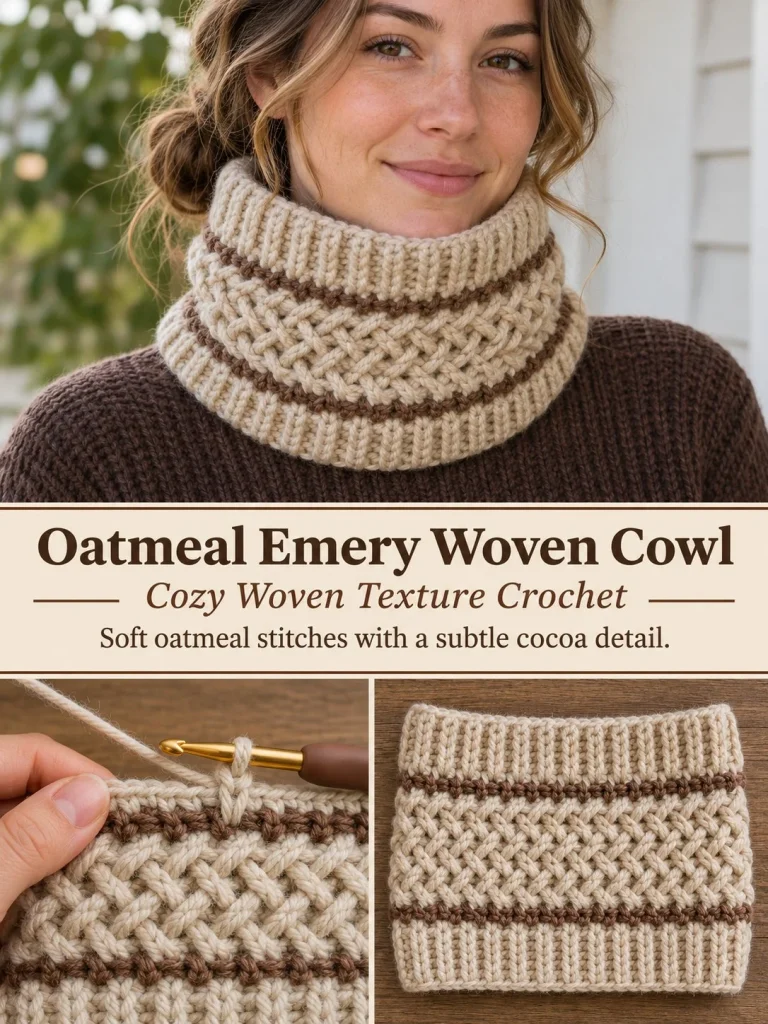
This woven cowl blends subtle textures with a sophisticated interplay of yarn colors, creating an accessory that’s both stylish and versatile. Constructed in the round with a rich oatmeal base and cocoa accents, its woven-like stitch pattern is achieved through alternating front and back post double crochet ribs combined with delicate elongated spike stitches. This technique produces a fabric with visual depth that stands out from typical crochet cowls while maintaining a cozy, dense structure ideal for cooler weather.
The design wraps comfortably around the neck with its approximately 24-inch circumference and drapes about 9 inches tall, making it a snug yet breathable layer. The project’s circular construction starts with a foundational chain joined seamlessly to avoid twisting, and builds both ribbed borders and a central textured panel through rounds of carefully placed posts and single crochet variations. Using worsted weight yarn and a moderately sized 5 mm hook, this cowl offers substantial warmth without excessive bulk.
Whether you’re looking to enhance your winter wardrobe or gift a handcrafted accessory, this cowl combines practical wearability with an elegant finish. Its alternating spike rows and offset textures add an artistic flair that elevates it beyond ordinary crochet cowls. For those interested in exploring similar textured projects, patterns such as the Alias Bandana Cowl offer creative variations on stretchy, ribbed fabrics ideal for layering.
Pattern at a Glance
Skill level: Intermediate
Terminology: US crochet terms
Construction: Worked in joined rounds, starting from foundation chain
Finished size: Approximately 24 inches circumference × 9 inches tall
Yarn weight: Worsted weight (#4)
Hook: 5 mm crochet hook
Main stitch: Combination of double crochet (dc), front post double crochet (fpdc), back post double crochet (bpdc), single crochet (sc), and elongated spike stitches
Gauge: Not explicitly specified, but stitch density should match worsted yarn on 5 mm hook
Motifs: None (continuous fabric)
Layout: Circular tube with textured center panel and ribbed borders
Joining: Joined rounds (no twisting at foundation)
Border: Ribbed edges with alternating fpdc and bpdc
Materials
To bring this project to life, you will need:
- Worsted #4 yarn in two colors:
- Approximately 230 yards in oatmeal (main color)
- 50–60 yards in cocoa (accent color for narrow spike rounds)
- 5 mm crochet hook (US size H-8) for balanced fabric density
- Tapestry needle to weave in ends and finish
- Scissors for cutting yarn cleanly
The main oatmeal color provides a warm, neutral base, while the cocoa adds subtle contrast in select textured spike rounds. The choice of worsted weight yarn ensures the fabric stays warm and retains stitch definition for the post and spike details.
Yarn and Color Notes
Selecting yarn for texture projects like this one benefits from fibers with good stitch definition. A smooth worsted weight yarn such as wool, wool blends, or high-quality acrylics will highlight the ribbing and spike stitches effectively. Avoid overly fuzzy or loosely spun yarns that could obscure the stitch pattern.
The oatmeal base promotes versatility, coordinating well with many outfits, while the cocoa accent rounds add visual interest without overpowering the piece. This approach encourages experimenting with subtle two-color contrasts in textured crochet. If desired, you could swap the cocoa for a different complementary shade to customize the color palette.
Finished Measurements
The finished cowl is designed to have:
- Circumference: Approximately 24 inches, allowing it to fit comfortably around most adult necks.
- Height: Around 9 inches tall, providing adequate coverage and warmth without excessive bulk.
These dimensions result from the stitch count and pattern repeat, gauged for worsted yarn on a 5 mm hook. Variations in personal tension or yarn substitution can slightly affect final size.
Gauge
While no specific gauge is provided, the stitch density should be consistent with standard worsted weight yarn worked with a 5 mm hook. Gauge is important for ensuring the cowl fits as intended:
- Measure gauge by crocheting a small swatch of the featured stitch pattern (fpdc and bpdc ribbing combined with the elongated spike stitch section).
- Adjust hook size if swatch is too dense or loose to achieve similar fabric elasticity and thickness.
Accurate gauge helps the cowl retain shape and size after wear, especially as post stitches and elongated spike stitches affect fabric tension and drape.
Abbreviations
- ch: chain
- dc: double crochet
- fpdc: front post double crochet
- bpdc: back post double crochet
- sc: single crochet
- spike/stitch: elongated single crochet worked into corresponding stitch in previous round, loop pulled up to current row height
All abbreviations follow standard US crochet terminology.
Important Pattern Notes
- The foundation chain of 88 stitches is joined carefully without twisting, ensuring a smooth, seamless round.
- Joined rounds: Each round ends with a slip stitch join, then ch2 or ch1 as specified to maintain stitch height.
- Front post and back post double crochets alternate to create a reversible ribbed texture similar to knitting ribbing.
- The spike rounds are worked with elongated single crochets stretched from previous rounds, adding vertical woven texture.
- Color changes to cocoa yarn are used sparingly for narrow spike rounds to enhance visual texture without dominating the overall oatmeal tone.
- Consistency in tension is key when working elongated spike stitches to achieve uniform height and stitch size.
Special Stitches and Techniques
Front Post Double Crochet (fpdc)
Worked by inserting the hook around the front of the post (body) of the stitch beneath, instead of into the top loops, creating a raised ridge that pops out on the fabric’s front side.
Back Post Double Crochet (bpdc)
Similar to fpdc, but the hook is inserted around the post from the back, creating a ridge that appears raised on the fabric’s reverse side. Alternating fpdc and bpdc creates a ribbed effect.
Elongated Spike Stitch
A distinctive stitch in this pattern, the spike stitch is a single crochet worked into a stitch one round below the current round, with the loop pulled up to the current round’s height before completing the stitch. This creates an elongated vertical stitch resembling a woven spike, imparting depth and texture.
Understanding the Construction
This cowl is worked entirely in joined rounds, starting with a foundation chain of 88 stitches joined carefully to form a smooth loop without twisting. The construction proceeds from the bottom ribbed edge upward through a central textured woven pattern panel, capped by an identical ribbed edge matching the base.
The lower and upper ribbing sections set the structural frame using alternating front and back post double crochets to mimic ribbing knit patterns. Between these, the main panel integrates rounds of traditional single crochet interrupted by offset spike stitch rounds. The spike stitches are alternated to land between spikes of previous rounds, creating a woven lattice effect, enhanced with strategic use of cocoa yarn for subtle narrow spikes.
The color-changing technique, stitch placement, and offset arrangement result in a dynamic yet consistent texture that replicates a woven appearance in crochet.
Complete Pattern Instructions
Foundation
Begin by creating a foundation chain of 88 chains. Be sure to count carefully.
Join the chain with a slip stitch to the first chain to form a ring—make certain not to twist the chain, as this would affect the stitch alignment throughout the project.
Round 1
- Ch 2 (counts as first dc), then work 1 double crochet in each chain around (88 dc total).
- Join with a slip stitch to the top of the beginning ch 2 to close the round.
Rounds 2–4: Lower Ribbing
- These rounds form the ribbed border at the bottom edge.
- Alternate front post double crochet (fpdc) and back post double crochet (bpdc) stitches around the previous round’s double crochet posts.
- For example, start with an fpdc around the first dc post, then bpdc around the next, repeating until the round ends.
- Join each round and maintain consistent tension to form a stable ribbed edge.
Transition to Oatmeal Single Crochet Texture
- Change yarn color to oatmeal.
- Work one full round of regular single crochet (sc) stitches around the previous ribbing ring.
Spike Round
- This special round integrates textured spikes:
- For each stitch:
- Work 1 sc in the next stitch on the current round.
- Then, work 1 elongated single crochet into the corresponding stitch one round below, pulling the loop up to the current round’s height before completing the sc.
- Repeat this sequence around the entire round.
This produces tall, vertical spike-like stitches paired with regular sc stitches.
Next Round: Normal Single Crochet Round
- Work one round of normal single crochet unevenly distributed around all stitches, maintaining continuous fabric.
Next Spike Round (Offset)
- Work another spike round as above, but offset the elongated spike stitches so that each spike falls in-between the spikes of the previous spike round rather than directly above.
- This alternating offset placement enhances the woven, interlaced appearance.
Incorporating Cocoa Color
- Occasionally replace some oatmeal spike rounds with narrow spike rounds in cocoa yarn to create subtle, contrasting vertical lines amid the oatmeal base.
- Keep oatmeal as the dominant color to maintain overall warmth and neutrality.
Repeat Texture Sequence
- Continue to alternate normal sc rounds and offset spike rounds (switching between oatmeal and occasional cocoa spike rounds) until the textured center panel measures approximately 5 to 6 inches tall.
Upper Ribbing Edge
- Finish the cowl with 3 rounds of alternating fpdc and bpdc ribbing, mirroring the lower ribbed edge pattern worked at the beginning.
- Join each round carefully to maintain consistent rib texture.
Final Measurements and Finishing
- The finished cowl should measure close to 24 inches around in circumference and approximately 9 inches tall overall.
- Use a tapestry needle to weave in all loose ends securely.
- Block gently if desired to shape fabric and even out stitches.
A similar approach to ribbed, fitted accessories can be seen in knitted projects like the Alize Shoulder Cowl pattern, which coins comparable rib techniques for edging and texture transitions.
Helpful Checkpoints
- After joining the foundation chain, ensure the loop is not twisted to achieve even stitches in rounds.
- Upon completing Rounds 2-4, your ribbing edge should show uniform alternating ridges.
- After the first spike round, check that elongated spike stitches are pulling evenly from the previous round’s stitches without tightness or loops too loose.
- Measure the center panel periodically to confirm the 5–6 inch target height before proceeding to upper ribbing.
- Confirm ribbing rounds match at upper and lower edges in texture and number for a balanced finish.
Assembly and Joining
No separate assembly is required as this cowl is made in one continuous circular piece. Just ensure all joins and color changes are neat and ends are woven in to preserve appearance and wearability.
Finishing
- Weave in ends thoroughly with a tapestry needle to prevent unraveling.
- Consider gentle blocking to smooth stitches and shape the cowl if the fabric feels stiff or uneven.
- Store folded or hung to retain shape without stretching.
How to Resize
To adjust the cowl’s circumference or height, modify the foundation chain and repetitions accordingly:
- Circumference: Chain a multiple that matches the stitch pattern repeat (88 chains in the original) and join without twisting. Increasing by multiples of 2 or 4 chains can maintain pattern integrity while expanding size.
- Height: Adjust the number of spike and sc rounds in the center panel before finishing ribbing edges. Add or reduce rounds proportionally to lengthen or shorten the cowl.
Always swatch new sizes first and check gauge with the selected yarn.
Useful Variations
- Convert the design to a single-color cowl for a more minimalist, monochrome effect.
- Increase the frequency of cocoa spike rounds for a bolder contrast pattern.
- Use a bulky weight yarn with a larger hook to create a chunkier, warmer cowl.
- Adapt the technique to smaller constructs such as a headband or wrist cowl by adjusting circumference.
Troubleshooting
Why Are My Spike Stitches Uneven?
Ensure you are pulling the elongated loop up to the current round’s height before completing each spike stitch. Uneven lengths can cause wavy texture or gaps.
Why Is My Ribbing Not Lying Flat?
Check for consistent tension in front post and back post double crochets. Too tight stitches cause puckering, too loose will ripple. Blocking can also help even them out.
How Do I Avoid Twisting the Foundation Chain?
Lay the chain flat on a surface before joining. Point where the starting chain meets should be the first stitch, not flipping the chain over by mistake.
Why Is My Color Change Noticeable?
Carry yarn wraps loosely inside the work when switching between oatmeal and cocoa, or fasten off and start a new ball for cleaner joins.
Frequently Asked Questions
Can I use a different yarn weight?
Yes, but adjust the hook size and foundation chain starting length accordingly to maintain fabric elasticity and size.
Is this cowl reversible?
The ribbing edges are reversible, but the spike stitch texture is one-sided due to the elongated stitches pulled from lower rounds.
Can beginners make this cowl?
This pattern is best suited for crocheters comfortable with post stitches and working in the round.
Do I need special skills for the spike stitch?
The elongated spike stitch requires working into a previous round’s stitch and drawing the loop up—a technique that may take practice but is straightforward once understood.
How should I wash the finished cowl?
Block and wash the cowl gently by hand or on a delicate cycle according to the yarn fiber recommendations.
Can I make this cowl longer?
Yes, simply add more textured spike and single crochet rounds in the center panel before finishing with upper ribbing.
Optional Related Uses
The woven spike and ribbing combination used here can inspire other cozy accessories such as hats, fingerless gloves, or even shoulderWarmers. The interplay between spikes and post stitches offers dynamic textures suited for layered wardrobe pieces.
Final Thoughts
This textured woven cowl combines traditional post stitch ribbing with creative spike stitches to produce a unique fabric visually reminiscent of woven textiles. Its circular, seamless construction and balanced use of neutral and accent colors make it a versatile handmade accessory. Following the step-by-step pattern and tips ensures a beautiful, well-fitting cowl that showcases modern crochet techniques with practical warmth and style.



