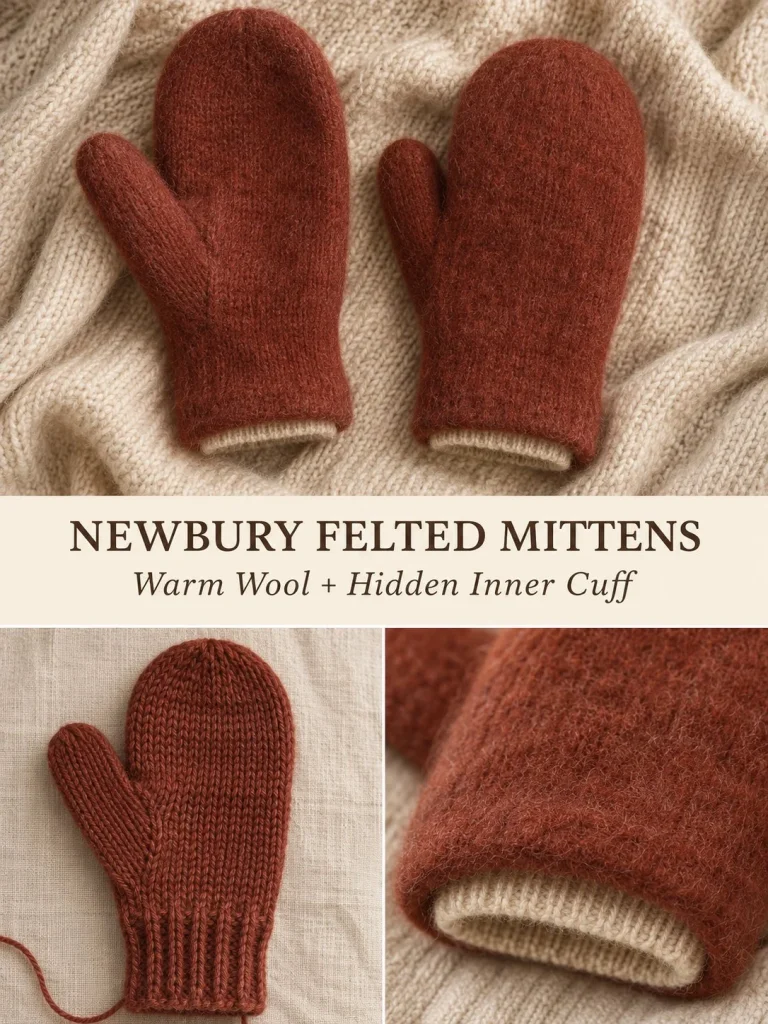
Warm, durable, and stylish, felted mittens hold a special place in cold-weather wardrobes. The Newbury Felted Mittens knitting pattern offers adult-medium size mittens crafted seamlessly in the round, featuring a classic mitten shape enhanced by a thumb gusset and an optional inner cuff layer. Constructed using woolen-spun DK weight yarn, this pattern invites knitters to create mittens that are both functional and beautifully textured after felting.
The technique focuses on felting the outer mitten manually to achieve a dense, spongy fabric that molds comfortably to the hand. Alongside the main mittens, an optional snug inner cuff made with finer fingering weight yarn can be added to provide extra warmth and a secure fit at the wrist. This approach incorporates traditional mitten shaping with modern knitting techniques to yield a highly wearable and versatile accessory.
The mittens are knit using a specific construction known as the Newbury mitten construction, which ensures a smooth, seamless finish. Attention to detail such as the contrast color placement detail adds a charming visual effect that can personalize the project. The inclusion of an inner cuff option makes these mittens adaptable for varying winter temperatures and user preferences. If you’re exploring comprehensive knitting projects, this pattern complements other textured winter accessories and blankets like those described in the Alpine Tweed Bouclé Blanket Knitting Pattern for Beginners.
Pattern at a Glance
Skill level: Intermediate knitters familiar with knitting in the round and thumb gusset shaping
Terminology: Standard knitting terms (English)
Construction: Seamless mitten, knit in the round with thumb gusset, optional inner cuff worked separately
Finished size: Adult Medium (adjustable)
Yarn weight: DK 100% wool for outer mitten; fingering weight wool for inner cuff (optional)
Needles: 6.5 mm circular or double-pointed needles for small circumference; 2-2.5 mm needles for inner cuffs
Main stitch: Stockinette stitch (knit in the round)
Gauge: Presumed consistent with woolen-spun DK wool on 6.5 mm needles; felting affects final size
Motifs: None (solid knit construction)
Layout: Worked seamlessly in the round from cuff to finger tip
Joining: Thumb stitches held and joined later; optional contrast detail added per source pattern
Border: Optional inner cuff knit on smaller needles to ensure snug fit post-felting
Seaming: Minimal or none; finishing with tapestry needle to weave in ends and shape
Materials
To complete the Newbury Felted Mittens, gather reliable materials designed to perform well in felting projects:
- Main Yarn: About 91-97 grams of Ewetopia Folk or a similar woolen-spun double knitting (DK) weight 100% wool yarn for the main color (MC).
- Contrast Color Yarn: Approximately 5 grams or 15-20 yards of contrast color (CC) wool yarn if you wish to include the optional decorative detail as per source.
- Optional Inner Cuffs: For enhanced warmth and fit, about 70 yards of fingering-weight sock yarn in your choice of wool fiber. Fingering weight enables a finer, denser cuff that grips the wrist effectively after felting.
- Needles: 6.5 mm circular or double-pointed needles to accommodate the mitten’s small circumference. For the inner cuffs, use smaller 2 to 2.5 mm needles to achieve a tighter fabric that holds shape post-felting.
- Notions: Waste yarn for holding stitches, stitch markers for thumb gusset shaping, and a tapestry needle for weaving in tails and finishing.
- Felting Supplies: Manual felting requires access to warm/hot water, some agitation method (hand scrubbing, sink felting technique), and a flat surface or form to shape the mittens while drying.
Each material is carefully selected to contribute to the final dense, warm felted fabric that defines this mitten style.
Yarn and Color Notes
This pattern works best with woolen-spun 100% wool DK weight yarn. The woolen-spun characteristic imparts a lofty, airy texture which contributes to an even and spongy felted fabric after the finishing process. Avoid smooth, tightly spun, or synthetic fibers as these may not felt well or may yield less durable mittens.
Selecting colors provides an opportunity to customize. A solid main color serves as a great backdrop for optional contrast details such as subtle bobbles or cuffs. Variegated or tweed yarns can add visual interest but be mindful they may obscure intricate shaping or detailing.
If you decide to use contrast details, integrate them as indicated in the source pattern to enhance the mitten’s aesthetic without complicating the structure.
Finished Measurements
The mittens are primarily designed to fit an adult medium size. Due to the felting process, final dimensions will be smaller than the knitted size but will conform snugly to the wearer’s hand.
- Circumference: Sized to fit comfortably after felting; typically around 7.5 to 8 inches (19-20 cm).
- Length: Follows the hand length from cuff to fingertip, approximately 9 to 10 inches (23-25 cm), including the thumb.
- Thumb Gusset: Adjusted for standard adult sizing per published gusset shaping instructions.
Because felting shrinks and thickens the fabric, always perform a test mitt to confirm sizing before commencing the full project. The optional inner cuffs fit snugly around the wrist to prevent drafts, adding approximately 2-3 inches (5-7.5 cm) in length before felting.
Gauge
Exact stitch gauge is not strictly defined in the source, but knitters should aim for a dense, consistent fabric using the recommended 6.5 mm needles and DK wool yarn.
- Aim for a tight enough gauge that the resulting fabric will felt without becoming too thin or fragile.
- Gauge is measured over stockinette stitch in the round prior to felting. After felting, the fabric will shrink and become denser, improving insulation.
- Too loose a gauge may result in thin mittens that felt unevenly; too tight a gauge can make knitting difficult and reduce the degree of felting shrinkage.
Since felting alters both size and texture, swatching and felting a small test square or sample mitten portion is highly recommended.
Abbreviations
- MC: Main Color yarn
- CC: Contrast Color yarn
- St(s): Stitch(es)
- Rnd(s): Round(s)
- K: Knit
- P: Purl
- Dpns: Double-pointed needles
- W&t: Wrap and turn (for shaping)
- Yo: Yarn over (if used in gusset shaping)
- TBL: Through the back loop (if used in decreases)
Important Pattern Notes
- The mittens are worked seamlessly in the round, avoiding seaming for a comfortable, neat interior.
- Thumb shaping uses a gusset method, where stitches are increased gradually to form a triangular shaping and then placed on hold to be worked later.
- Contrast details, if used, should be integrated according to the original source placement for best visual results.
- The optional inner cuff is knit independently in the round on smaller needles, creating a firmer, snug fit. It’s intended to be worn inside the felted mitten.
- Felting must be controlled carefully; manual felting in warm water with agitation achieves best results with frequent wet fit checks.
- The woolen-spun yarn and knit construction yield an even, spongy fabric that blocks wind and moisture effectively when felted.
- Adjustments for different sizes can be made by changing cast-on stitch count and thumb gusset shaping, following principles in the source pattern.
Special Techniques and Construction
Seamless Knitting in the Round
The mittens are knit continuously in the round, beginning at the wrist cuff and working upward. This seamless construction eliminates fabric edges that could cause irritation and enhances warmth retention.
Thumb Gusset Shaping
The thumb gusset is created by gradually increasing stitches on the side of the mitten to form a triangular wedge. These stitches represent the thumb’s portion and are placed on hold with waste yarn when the mitten hand portion is completed. They are then picked up and knit to shape the thumb.
Optional Contrast Detail
The pattern permits a contrast motif detail as per the original source. This could be a band or bobble pattern around the cuff or hand, adding character and personalization.
Optional Inner Cuff
A snug inner cuff is knit on smaller needles using fingering-weight sock yarn. This cuff is intended to grip the wrist tightly to prevent cold air from entering the mitten. The technique requires picking up stitches inside the mitten’s cuff area or knitting separately and then layering inside.
Manual Felting Technique
After knitting, the mitten is felted in warm to hot water with gentle agitation. This manual felting process condensed the wool fibers, creating a dense, warm, and durable fabric. Frequent checks monitor fit and fabric density, stopping the process once the desired size and texture are reached. Following felting, shaping the mitten while damp and allowing it to dry preserves the form.
Understanding the Construction
The mittens are constructed top-down from the cuff upwards. The key stages are:
- Knitting the wrist cuff and lower hand seamlessly in the round.
- Shaping the thumb gusset with increases on the side.
- Setting aside the thumb stitches when reached.
- Continuing the hand to the fingertips without disruption.
- Knitting the thumb separately after completing the hand.
- Optionally adding contrast color details at designated points.
- Knitting the optional inner cuff independently to fit snugly underneath post-felting.
- Felting the outer mitten to shrink and firm up the fabric, enhancing warmth and wearability.
This structure allows for a smooth, clean finish with minimal bulk at the join points.
Full Pattern Instructions
Foundation
Cast on the required number of stitches for the adult medium size using woolen-spun DK wool on 6.5 mm needles. Join carefully to avoid twisting and begin knitting in the round.
Knitting the Cuff and Lower Hand
Work the ribbing or stockinette according to desired texture for the cuff section. Continue in stockinette stitch, knitting every round, maintaining consistent tension and stitch count.
Thumb Gusset Shaping
Begin increasing at the designated thumb gusset position:
- Follow the published gusset increase instructions to add stitches incrementally, creating a triangular wedge.
- Place markers to track increases and placement within the round.
- Once the gusset reaches the specified size, place the thumb stitches on waste yarn to hold.
Finishing the Hand
Continue knitting the hand portion of the mitten past the thumb opening, maintaining stitch consistency and shaping as per source.
Completing the Thumb
Pick up the held thumb stitches and knit in the round to shape the thumb to the correct length. Decrease as recommended to close the tip neatly.
Contrast Detail Placement
If using contrast yarn, incorporate it in the specified areas such as around the cuff or hand as per the source instructions, taking care to maintain smooth color transitions.
Optional Inner Cuff
Using fingering-weight sock yarn and 2-2.5 mm needles, pick up stitches inside the bottom cuff area or knit a separate cuff. Knit a snug cuff that will grip the wrist once felted, providing extra insulation.
Felting Process
- Submerge the mittens in warm/hot water and agitate manually, either by hand or using a sink felting technique.
- Agitate continuously but gently to encourage wool fibers to mat and shrink.
- Regularly check the mitten for size and fabric density to avoid over-felting.
- Shape the mitten while damp by hand or on a mold to achieve the desired form.
- Allow the mittens to dry thoroughly in final shape before wearing.
Checkpoints
- After thumb gusset completion, ensure thumb stitches are neat and properly secured on waste yarn.
- Confirm hand length matches desired measurement before proceeding to thumb.
- After felting, check that mittens fit snugly but comfortably, especially at wrist and fingers.
- Inner cuffs should fit tightly enough to stay in place without restricting circulation.
Assembly and Finishing
No seaming is required due to seamless knitting construction. Weave in all yarn ends neatly with tapestry needle. Block mittens after felting, if necessary, shaping them for an even finish. The optional inner cuffs are worn beneath the outer mittens for layered warmth.
How to Resize
The pattern is primarily adult medium size but can be adjusted with these guidelines:
- Increase or decrease the cast-on stitch count for wrist cuff to adjust overall circumference.
- Modify thumb gusset increases proportionally to thumb size.
- Lengthen or shorten hand and thumb knitting rounds to fit according to personal hand measurements.
- Always test with a swatch and felt sample to estimate shrinkage and final fit.
- Adjust needle sizes accordingly to maintain appropriate gauge and fabric density.
Useful Variations
- One-color mittens: Omit the contrast color detail for a classic, minimalist look.
- Color blocks or stripes: Introduce broader stripes or bands using the CC yarn for a bolder, modern flair.
- Longer cuffs: Extend the cuff length for extra wrist coverage and warmth.
- Lining: Add a soft fleece lining for additional insulation.
- Child sizes: Modify stitch counts and gauge to accommodate smaller hand sizes using similar felting principles.
If you appreciate layered knitting projects, mittens like these pair well with detailed knitting accessories such as the Snowberry Mittens with Bobble Flowers and Contrast Cuffs where similar shaping and wool handling techniques are explored.
Troubleshooting
Why Is My Mitten Too Loose After Felting?
Felting may be incomplete or gauge too loose initially. Use tighter gauge or felt longer with more agitation.
Why Is My Felting Uneven?
This usually results from inconsistent agitation or yarn variations. Keep agitation uniform and swatch yarn before starting.
Why Is the Thumb Gusset Uncomfortable?
Check thumb gusset increases for even spacing and correct stitch count. You can adjust shaping by adding/removing increases to better fit.
Why Is the Inner Cuff Not Snug?
Ensure you are using smaller needles for the cuff and fingering weight yarn, which allows tighter fabric post-felting.
How Do I Avoid Shrinking Too Much?
Control felting temperature and agitation carefully; remove mittens early if fabric becomes too dense.
Frequently Asked Questions
Can I use a non-wool yarn?
This pattern relies heavily on felting properties unique to wool; non-wool yarns will not felt and won’t produce desired results.
Can I knit these mittens flat and seam them later?
The pattern is designed for seamless knitting in the round for comfort and fit; flat knitting would change the construction and appearance.
How do I maintain the lint-free appearance after felting?
Avoid aggressive felting to reduce fuzz. Use combed wool yarns to minimize pilling.
Can I skip the inner cuff?
Yes, the inner cuff is optional but recommended for extra warmth and to prevent drafts.
Is felting necessary?
Felting transforms the knit fabric into a dense, durable mitten vital for this project’s performance.
How do I adjust the pattern for larger hands?
Increase cast-on stitches and thumb gusset size proportionally, and lengthen knitting rounds.
Can I use circular needles or DPNs?
Both work; circular needles are preferred for small circumference knitting with the magic loop technique or DPNs for traditional knitting in the round.
Optional Related Uses
The knitting and felting techniques used here can inspire additional projects such as felted slippers, hats, or cozy mitt liners. The same principles of seamless knitting and controlled felting translate well to other winter accessories requiring thick, insulating fabric.
Final Thoughts
This pattern leverages classical mitten construction with modern needle techniques and felting craft to deliver sturdy, warm, and elegantly simple wool mittens. The seamless knitting approach combined with thumb gusset shaping creates a comfortable fit tailored to medium adult hands. By felting carefully and optionally adding a snug inner cuff, knitters can produce mittens that provide protection against harsh cold while showcasing a tactile, spongy texture unique to wool felting. Remember to swatch, size, and felt judiciously to achieve the perfect fit and structure for your unique hands.



