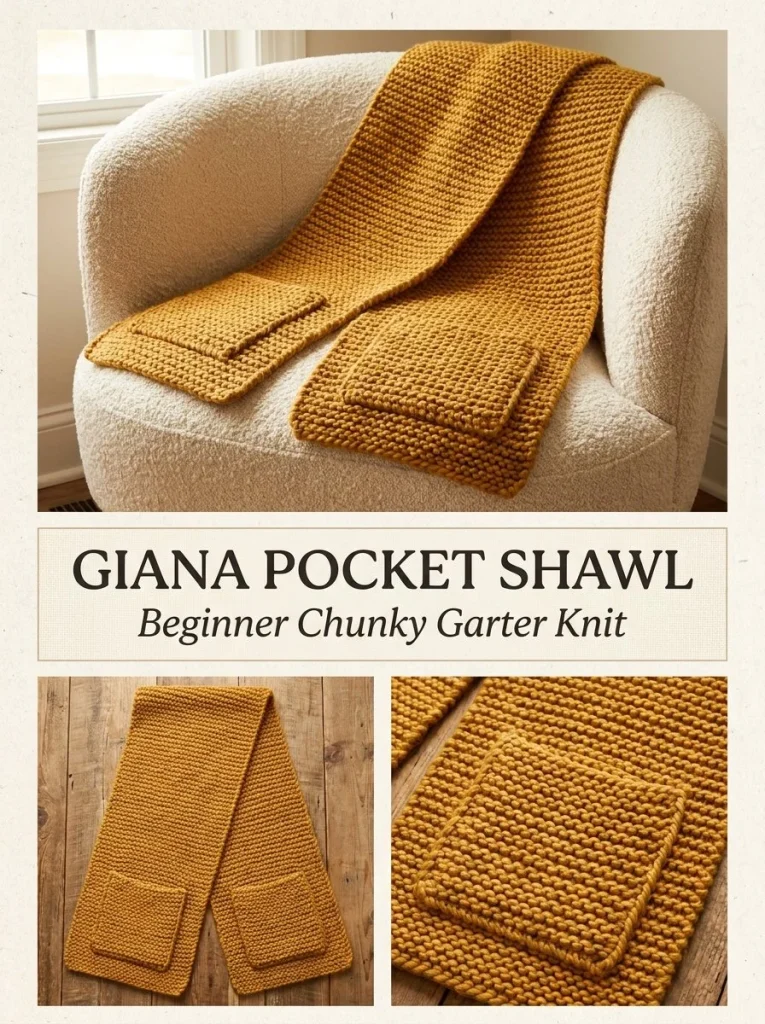
This cozy shawl design merges simplicity with functionality, featuring generously sized pockets integrated into a classic garter stitch fabric. Crafted using bulky yarn and straightforward knitting techniques, this piece offers both warmth and practical storage, perfect for chilly days when you want your hands toasty or need a spot to tuck essentials. The garter stitch texture adds a charming casual appeal while ensuring a stretchy, absorbent fabric that lies flat without curling.
The construction centers around two rectangular components—the main shawl body and the matching pocket panels—made entirely in garter stitch. This approach makes it an accessible project for knitters of all skill levels, including confident beginners. A noteworthy aspect is the customizable length of the shawl and positioning of the pockets to ensure a personalized fit without complex shaping. This project shares themes of utility and comfort similar to those found in other easy garter stitch accessories such as an easy hooded scarf knitting pattern, emphasizing how simple textures and shapes can yield versatile wardrobe additions.
Pattern at a Glance
Skill level: Beginner to intermediate
Terminology: Standard US knitting terms
Construction: Simple rectangular panels knit flat, then seamed
Finished size: Approx. 60 inches long by 16 inches wide for shawl; two 8 x 8 inch pockets
Yarn weight: Bulky (#5)
Needles: US 11 (8 mm) straight knitting needles
Main stitch: Garter stitch (knit every row)
Gauge: About 10 stitches x 22 rows = 4 inches in garter stitch
Motifs: None; whole project is solid garter rectangles
Layout: One long rectangular shawl with two small square pockets sewn near ends
Joining: Pockets sewn onto shawl edges, leaving top pocket edges open
Border: None beyond garter stitch fabric edges
Seaming: Hand-sewn with yarn needle
Materials
For this project, you will need bulky weight (#5) yarn, approximately between 635 and 889 yards depending on your shawl length preference. Choose a yarn that feels soft and warm next to skin, such as wool, wool blends, or cozy synthetic yarns designed for bulky knitting projects.
Use US 11 (8 mm) knitting needles to achieve the proper gauge and fabric texture, which ensures the piece is thick enough for warmth yet flexible for comfortable wear.
Additional supplies include a yarn needle for weaving in ends and hand-sewing the pocket panels to the shawl body. Pins or stitch markers help hold pocket placement during assembly to ensure neat, precise sewing.
Yarn and Color Notes
Bulky yarns create a quicker knit and produce a dense, squishy fabric ideal for outer layers like shawls and accessories. Smooth yarns highlight stitch definition in garter stitch, making the simple ridged texture stand out clearly. However, a slightly fuzzy or brushed bulky yarn can yield a softer, more diffused, and cozy appearance.
Choosing a solid color or subtle heathered yarn emphasizes texture, while variegated or multicolored bulky yarns could visually compete with the simple garter pattern and distract from the clean lines of the pockets.
This shawl’s minimalist design serves as a perfect canvas for experimenting with tonal or neutral hues that complement your wardrobe basics.
Finished Measurements
The shawl measures approximately 60 inches long by 16 inches wide, providing ample wrap coverage around the shoulders and torso. The pockets each measure about 8 inches square, offering enough space for hands, keys, or smartphone.
These dimensions produce a generously sized wearable piece, but the pattern’s simplicity allows you to adjust size by either knitting a longer or shorter main shawl rectangle or repositioning pockets to fit your arm length comfortably.
Gauge
The gauge for this pattern is about 10 stitches and 22 rows per 4 inches in garter stitch using bulky yarn on US 11 (8 mm) needles.
It is important to check your gauge before starting because this affects the final size of your shawl and pockets. To measure gauge, knit a small swatch in garter stitch and block it gently as you would the finished piece. Then measure stitch and row count per 4 inches.
If your gauge is larger (tighter stitches), your shawl and pockets will be smaller than intended. Conversely, a looser gauge (smaller stitches) will create a bigger shawl. Adjust needle size accordingly or accept the altered dimensions.
For this accessory, perfect gauge is helpful but not critical since the basic construction and fit are easy to modify.
Abbreviations
This pattern uses standard US knitting abbreviations:
- K: Knit
- CO: Cast on
- BO: Bind off
- St(s): Stitch(es)
No special stitch abbreviations are required since the entire project utilizes garter stitch.
Important Pattern Notes
- The shawl and pockets are knitted entirely in garter stitch, which means knitting every row, creating reversible ridges with no wrong side.
- There are no shaping increases or decreases; fit comes from pocket placement and overall shawl length.
- Pockets are rectangular squares, sewn onto the shawl edges with the pocket opening facing inward toward the center for ease of access when worn.
- Assembly is done after knitting all pieces, ensuring clean finishing with hand-sewing. Using pins to secure positions is highly recommended.
Special Techniques and Tips
No advanced knitting techniques are necessary beyond basic garter stitch knitting and simple seaming.
- Garter Stitch: Knit every row. This is a great stitch for beginners; it produces a squishy, stretchy fabric that lies flat naturally.
- Hand Sewing: Use a yarn needle and matching yarn to sew the pockets along three edges—bottom and sides—leaving the top open. A neat mattress stitch or whip stitch works well here.
- Pocket Placement: Try on the shawl before sewing pockets in, marking where they feel natural and comfortable based on your arm length and preferred hand position.
Understanding the Construction
This shawl features two main components: one long rectangular panel that wraps around the shoulders and torso, and two smaller square pockets sewn onto either end.
- The shawl body is a larger rectangle knit entirely in garter stitch.
- The pockets are smaller rectangles, also knit in garter stitch, which are later positioned and sewn onto the shawl.
This modular construction enables easy fit adjustments by extending or shortening the main rectangle or repositioning the pockets. It also makes the pattern straightforward and ideal for knitters looking to practice simple shaping and seaming.
Full Pattern Instructions
Pockets – Make 2
Cast on 20 stitches.
Work in garter stitch by knitting every row until the pocket measures approximately 8 inches square. Measure your pocket length by laying it flat on a ruler with the right side facing. Once the square reaches 8 inches, bind off all stitches loosely to maintain edge elasticity.
Repeat this process to make a second identical pocket square.
Shawl Body
Cast on 40 stitches.
Knit every row in garter stitch, creating a long rectangle. Continue knitting until the piece measures your preferred length. The sample is about 60 inches long, resulting in a finished width of about 16 inches since garter stitch creates a fabric roughly twice as long as it is wide for this stitch count and gauge.
When you have reached the desired length, bind off all stitches loosely.
Assembly
- Weave in all loose ends neatly using a yarn needle, ensuring no tails are left dangling.
- Try on the shawl and wear it as you will to determine the best placement for your pockets. Mark the spots with pins or stitch markers near each end of the shawl, adjusting for your arm length and comfort.
- Place each pocket panel on the right side of the shawl with the pocket opening facing toward the center of the shawl (not outward). Pin the edges securely along the bottom and two sides of the pocket squares.
- Using a yarn needle and matching yarn, sew the pinned edges of the pockets to the shawl body with a neat seam, leaving the top edge of each pocket open to slide your hands in.
- Weave in any remaining yarn tails from seaming.
Your shawl is now complete and ready to wear!
Checkpoint
At this stage, ensure your pockets are securely attached with no gaps, and that the shawl comfortably wraps around your shoulders with the pockets positioned ideally for your hands.
Assembly and Joining
Assembly is straightforward because the pattern comprises plain rectangular pieces. The key pointers for a polished finish are:
- Position pockets on the right side of the fabric, aligning edges carefully.
- Pocket openings must face inward to allow easy access.
- Use pins or stitch markers for an even seam before sewing.
- Hand-sew with small, consistent stitches to avoid gaps and reinforce durability.
This straightforward assembly keeps the shawl sleek without bulky seams or complicated shaping.
Finishing
Post-assembly, gently weave in all yarn ends using your yarn needle. Blocking is optional; garter stitch usually lies flat and blocks well, but because of the bulky yarn and the shawl’s functional nature, light blocking or simply steam shaping can be enough to tidy the piece.
If desired, gently steam block the shawl to nudge the pockets and main panel into smooth alignment without stretching excessively.
How to Resize
To adjust the shawl for different body sizes or preferences:
- Lengthen or shorten the shawl: Cast on the same 40 stitches widthwise and knit until the length suits you. The pattern is flexible to accommodate any desired length.
- Adjust pocket size: Cast on more or fewer stitches for wider or narrower pockets, and knit longer or shorter to achieve larger or smaller squares. Maintain the pocket square shape for visual balance.
- Pocket placement: Feel free to move pockets closer or further from the ends to fit your arm length comfortably.
Since all pieces are simple rectangles in garter stitch, resizing is mostly a matter of changing how long you knit each segment.
Useful Variations
- Create a striped or color-blocked version by changing yarn colors every few inches for pockets or body sections.
- Use a different bulky yarn texture, like a boucle or a boucle blend, for extra softness and an artisan look.
- Experiment with complementary accessories that use the same stitch, such as the Birdhouse Wide Shawl with a twisted stitch for statement layering.
- Make a matching set with mitts or a hat in bulky garter stitch to coordinate.
Troubleshooting
Why Are My Edges Uneven?
Garter stitch creates natural ridges but uneven tension can cause waviness at edges. Maintain consistent tension, and consider slipping the first stitch of each row to create neat selvage edges.
Why Are My Pockets Crooked or Misaligned?
Always try on the shawl before sewing pockets in. Use pins to secure pocket position and check alignment from both sides to avoid skewed seams.
Why Is the Fabric Too Loose or Too Tight?
Check your gauge carefully before starting. If your work feels too tight, try larger needles; if too loose, smaller needles may help achieve the correct density and drape.
How Can I Make the Seams Less Visible?
Use yarn that closely matches your project color and sew with a small mattress stitch or whip stitch. Keep stitches even and tight but not puckering.
My Shawl Doesn’t Lie Flat – What Can I Do?
Garter stitch typically lies flat. If the fabric curls or waves excessively, consider blocking or lightly steaming the piece and gently shaping it as it dries.
Frequently Asked Questions
Can I use a thinner yarn or smaller needles?
You can substitute yarn weight but keep in mind the finished size and fabric density will change. Gauge swatching is essential for successful adjustments.
Can I make one big pocket instead of two?
Yes, you can knit one rectangular pocket panel and sew it centrally on the shawl if you prefer a different style.
Is this pattern suitable for beginners?
Absolutely. Garter stitch is the simplest stitch for knitters and no shaping or complex techniques are required.
Should I block the shawl after finishing?
Light blocking or steaming can help smooth stitches and even out the fabric, but it’s optional given the bulky yarn and casual style.
Can I wash this shawl in a machine?
Follow yarn care instructions. Many bulky yarns require hand washing to avoid felting or distortion.
How do I carry the yarn to avoid tangling when working the pockets and body?
Since pieces are knit separately and seamed, you only need to manage one yarn ball per piece, reducing tangling concerns.
Optional Related Uses
This garter stitch rectangular construction lends itself well to related projects like:
- Simple scarves in bulky yarn for quick cozy accessories
- Pockets added to plain wraps or cowls for hands-free warmth
- Easy blanket edges or throws composed of rectangles sewn together
The straightforward garter stitch texture and shape versatility offer numerous cozy layering options.
Final Thoughts
At its core, this shawl is built from three simple knitted rectangles—two smaller pockets and one larger body piece—all in the classic garter stitch. This minimal design maximizes comfort, utility, and ease of knitting, with a beauty that comes from simplicity and thoughtful functionality.
By tailoring pocket placement and shawl length, you create a perfect fit without complicated shaping. Whether you’re new to knitting or seeking a quick project with practical benefits, this shawl offers a satisfying blend of warmth and convenience you’ll reach for every chilly day.



