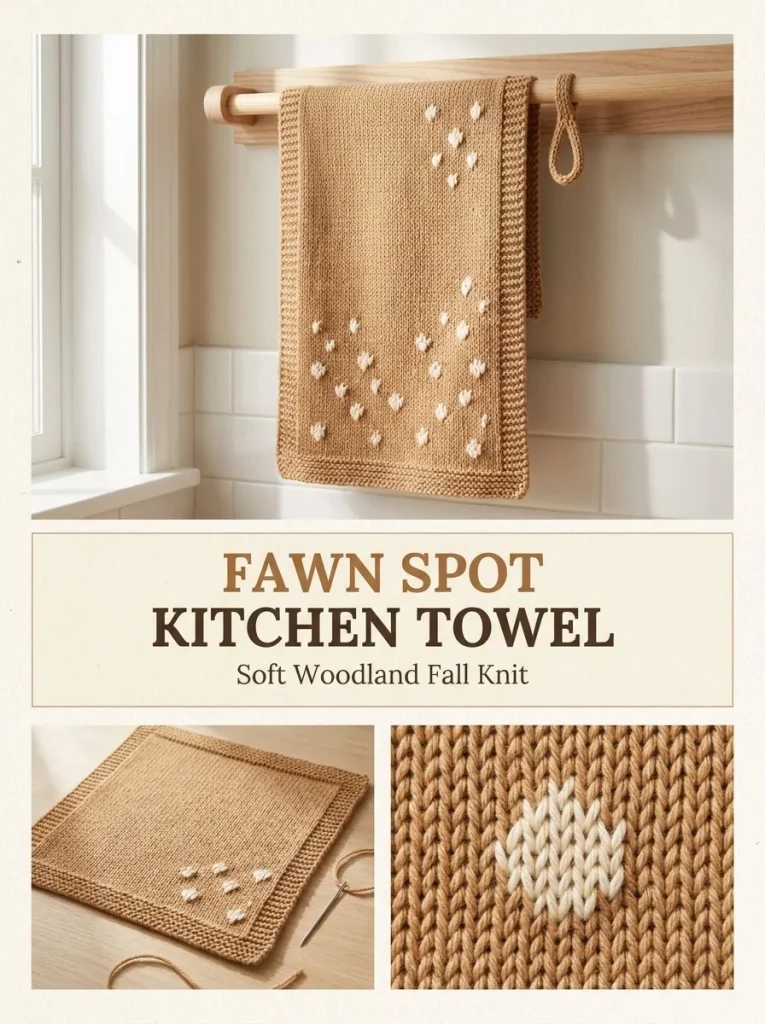
This beautifully crafted knit kitchen towel combines functionality with artistic flair, making it a perfect addition to any home kitchen. The warm camel color accentuated by scattered cream spots gives it a cozy and inviting look. Not only does it serve a practical purpose in drying dishes, but it also adds a touch of charm to your kitchen decor. The construction relies on simple techniques that cater to both novice and experienced knitters.
Made with worsted-weight 100% cotton, the towel is durable and absorbent, allowing it to tackle everyday kitchen tasks. The main technique employed here is stockinette stitch, framed by a garter stitch border that adds texture and stability. Additionally, the unique hanging loop makes it easy to display, ensuring it’s always at reach.
Pattern at a Glance
Skill level: Intermediate
Terminology: US knitting terms
Construction: Flat knitting, worked in rows
Finished size: About 16 x 24 in (41 x 61 cm)
Yarn weight: Worsted weight 100% cotton
Needles: US 7 (4.5 mm) needles
Main stitch: Stockinette stitch
Gauge: About 18 sts and 25 rows = 4 in (10 cm) in stockinette after washing/blocking
Motifs: Approximately 20 cream spots
Layout: Single piece
Joining: Not applicable
Border: Garter stitch
Materials
To create your Fawn Spot Knit Kitchen Towel, gather the following materials:
- Yarn: About 300 yards (275 m) of warm camel/tan and 35 yards (32 m) of cream, both in worsted weight 100% cotton.
- Needles: US 7 (4.5 mm) knitting needles for the main body.
- Notions: Tapestry needle for weaving in ends and scissors for trimming excess yarn.
The use of cotton yarn is vital as it ensures that the towel is absorbent and can withstand repeated washing.
Yarn and Color Notes
Choosing the right yarn can significantly affect the finished project. Worsted weight yarn provides a balance between thickness and softness, making it perfect for kitchen towels that require durability without compromising on tactile qualities. Cotton yarn absorbs moisture well, which is ideal for a kitchen setting.
For color, the combination of warm camel and cream offers a rustic appeal. You can experiment with a variety of colors to match your personal décor.
Finished Measurements
The finished size of the towel should be approximately 16 x 24 in (41 x 61 cm). The size may vary slightly based on individual knitting tension and blocking methods. Blocking is recommended to achieve the final dimensions accurately.
Gauge
Getting the correct gauge is essential for achieving the desired size and drape. The gauge for this pattern is about 18 stitches and 25 rows = 4 inches (10 cm) in stockinette stitch after washing and blocking. To check the gauge, knit a swatch of at least 4 x 4 inches and measure your stitch count.
If your gauge is larger than specified, your towel will be bigger than intended; if smaller, it may turn out smaller. Adjust needle sizes accordingly to achieve the correct gauge.
Abbreviations
Here’s a quick reference for common abbreviations used in this pattern:
- sts = stitches
- k = knit
- p = purl
- RS = right side
- WS = wrong side
Important Pattern Notes
- The first and last five stitches of each row are knitted in garter stitch to create a border.
- When working on the right side (RS) of the fabric, remember to knit the first five and the last five stitches while the remainder is done in stockinette.
- For the wrong side (WS), purl in the same way.
- Always count your stitches to maintain the correct stitch count.
Special Stitches and Techniques
This pattern primarily utilizes the stockinette stitch, which is created by alternating between knitting and purling rows. The addition of the cream "fawn spots" is done through duplicate stitch, which gives a delightful touch without altering the overall texture of the fabric.
Understanding the Construction
The towel is knitted as one flat piece, starting with a bottom border, followed by the main body, which features a unique design element: the fawn spots. The construction is straightforward, and understanding the placement of stitches will help during the creation of the decorative features.
Full Pattern Instructions
Foundation
Begin with the camel color yarn:
1. Cast on 74 stitches.
Bottom Border
2. Knit 8 rows.
Body
3. Begin body of the towel:
- Keep 5 stitches at each edge in garter stitch.
- On right-side rows (RS): k5, knit to the last 5 stitches, k5.
- On wrong-side rows (WS): k5, purl to the last 5 stitches, k5.
- Continue this pattern until the piece measures about 22.75 inches (58 cm).
Top Border
4. Knit 8 rows.
5. Bind off.
Hanging Loop
6. For the hanging loop:
- Cast on 3 stitches with camel color on a double-pointed needle.
- Work 3-stitch I-cord for 3 inches (7.5 cm).
- Bind off, then fold into a loop and securely sew both ends to the top corner.
Fawn Spots
7. To add the cream fawn spots:
- Use cream yarn and duplicate stitch to create about 20 small irregular spots across the stockinette center.
- Mix it up with 2-stitch, 3-stitch, and 4-stitch ovals.
- Keep 3–5 background stitches between spots and avoid having them arranged in straight rows.
- Do not place spots on the 5-stitch garter borders.
Finishing
8. Weave in all ends.
9. Wash gently and lay flat, smoothing to 16 x 24 inches.
- Ensure the spots look scattered and organic, not like polka dots.
Checkpoints
- After completing the bottom border, ensure your piece measures about 8 rows tall.
- When finished with the body, it should measure approximately 22.75 inches.
- After adding the fawn spots, review your work to ensure randomness and spacing are maintained.
Assembly
This project does not require assembly, as the entire towel is created in one piece. However, securing the hanging loop and ensuring it is evenly placed is necessary to maintain functionality.
Finishing
To finish, gently wash and block your towel to achieve the desired final dimensions. Weaving in ends thoroughly will also ensure that the piece maintains its integrity and presents well in your kitchen.
Resizing
To resize your towel, adjust the initial stitch count. For example, if you want a narrower towel, cast on a lesser number of stitches while maintaining the garter stitch edges.
Useful Variations
- One-color version: For a minimalist look, consider knitting the towel in a single solid color.
- Larger towel: By increasing your cast-on stitches, you can create a larger towel for broader applications in the kitchen.
- Scrap-yarn version: Use leftover yarn in any combination for a fun, colorful twist that’s perfect for a playful kitchen aesthetic.
Troubleshooting
Why is my project curling?
The stockinette stitch tends to curl at the edges. Consider increasing the number of garter stitches to help mitigate this.
How do I prevent the edges from being uneven?
Always count your stitches and make sure to knit the garter stitch edges correctly throughout the project.
Frequently Asked Questions
Can I use different yarn?
Yes, but ensure the yarn weight is similar to maintain the correct gauge.
Is this project suitable for beginners?
This project is categorized as intermediate; however, confident beginners can successfully learn from it with some dedication.
How should I block the towel?
Gently wash and lay flat on a clean surface, smoothing out to the desired dimensions while it dries.
Final Thoughts
This project consists of simple techniques that culminate in a charming and functional kitchen towel. By mastering the stockinette stitch and enhancing the design with playful fawn spots, you can create a beautiful item that enhances your kitchen aesthetic. Whether for personal use or as a thoughtful gift, the Fawn Spot Knit Kitchen Towel is sure to impress while fulfilling a practical purpose. For other creative projects, you might also enjoy making an olive hanging crochet kitchen towel or explore more patterns like the acorn brown keyhole scarf knitting pattern.



