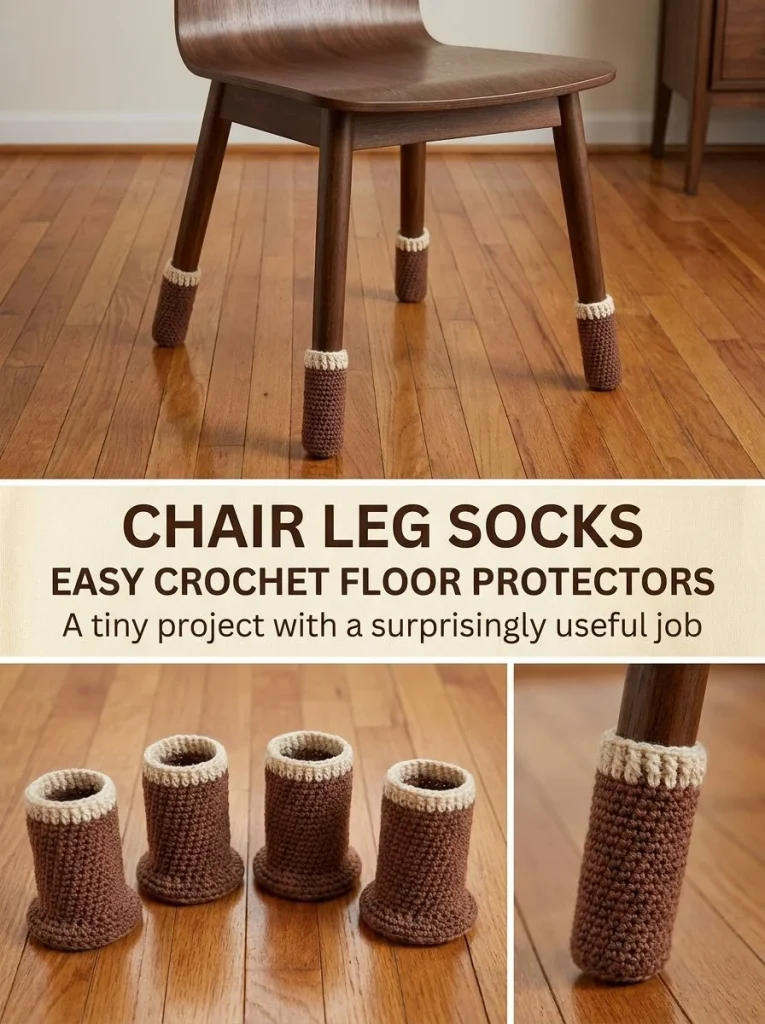
Keeping furniture feet protected and floor surfaces pristine can sometimes be a challenge in busy homes. A practical and charming solution to this is crafting small crochet covers, often called chair leg socks, designed to slip snugly over chair legs. These cozy protectors offer both functional and aesthetic benefits, cushioning hard surfaces and preventing scratches or scuffs on delicate floors. Constructed in rounds with simple stitches and color accents, they add a touch of handmade warmth to your home décor.
This project uses a straightforward crochet technique starting from a magic ring and worked upwards in rounds. The main body is created using single crochet stitches, emphasizing a flat, circular base that fits precisely over the chair leg’s bottom. By switching yarn colors near the cuff, an attractive edge is formed that secures the sock and enhances its visual appeal. Such a project can be an excellent way to practice circular crochet and back loop stitch variations, often encountered in making cozy accessories. For inspiration on similar cozy wearable crochet patterns, you might enjoy exploring a lovely cozy house sock pattern with a pearl edge that shares the snug fit concept applied here to furniture.
Pattern at a Glance
Skill level: Easy to Intermediate
Terminology: US Crochet terms
Construction: Worked in continuous rounds starting from the base circle to the cuff
Finished size: Fits standard chair legs approximately 2.5-3 inches tall
Yarn weight: Worsted-weight #4 cotton or wool-blend
Hook: 4mm crochet hook
Main stitch: Single Crochet (sc)
Gauge: Not critically specified, but circle diameter matches chair leg diameter
Motifs: 4 identical small socks
Layout: Four separate socks, one for each chair leg
Joining: None — each sock is made individually
Border: 2 rounds of single crochet in cream yarn for cuff
Seaming: None required
Materials
To complete these chair leg socks, gather the following materials:
- Worsted-weight #4 cotton or wool-blend yarn in cocoa brown: This will form the main body of the sock, providing durability and softness.
- Cream yarn: Used for the contrasting cuff edge, creating visual interest and a neat finish.
- 4mm crochet hook: The recommended hook size for standard gauge with worsted-weight yarn, ensuring stitch consistency.
- Tapestry needle: Essential for weaving in yarn ends once the socks are complete.
- Measuring tape: Used to accurately measure chair leg circumference and diameter for a perfect fit.
Each of these materials plays a critical role in the overall function and look of the socks. Cotton blends add sturdiness and washability, while wool blends offer slight elasticity and warmth. The contrasting cream yarn not only brightens the edge but helps the sock grip the chair leg snugly.
Yarn and Color Notes
Choosing the right yarn fiber impacts both durability and floor protection. Cotton yarn tends to be sturdy, less likely to shed lint or trap dirt, which makes it ideal for furniture applications, especially on delicate floors. Wool blends provide slight stretch for fitting tapered chair legs more easily but might trap debris if not kept clean.
Color selection can depend on your home décor. The cocoa brown main color is neutral and blends well with wooden furniture. The cream cuff highlights the sock’s edge without overpowering the design. A similarly effective method is explored in the espresso ribbed leg warmers crochet pattern, which uses color and texture to create cozy fittings for limbs, analogous to furniture protectors.
Consider using solid colors to avoid confusing patterns that may disrupt the rounded shape. Variegated yarns could obscure the neatness of the single crochet rounds but might add playful character if preferred.
Finished Measurements
Each sock is designed to cover a chair leg approximately:
- Height: 2.5 to 3 inches tall, ideal for most standard chair legs.
- Base circumference and diameter: Custom fitted to the exact chair leg by matching the crochet circle diameter during increases.
Proper measurement of your chair legs before crocheting ensures that the socks fit snugly and stay in place without slipping off during movement.
Gauge
This project is worked in rounds starting from a magic ring, increasing until the flat circle matches the chair leg’s diameter. Gauge is not explicitly stated in stitches per inch but is controlled visually and by measurement.
Precise gauge is less critical than fit: the inner diameter of the sock base must match your chair leg’s bottom dimension to avoid a loose or overly tight fit.
If your stitches are too tight (smaller gauge), the sock might not stretch enough to fit over the leg. Conversely, if too loose, the sock could slip off. Adjust hook size slightly or add/subtract rounds during increases to compensate.
Abbreviations
- ch: Chain
- sc: Single Crochet
- BLO: Back Loop Only
- st(s): Stitch(es)
- Rnd: Round
Important Pattern Notes
- The socks work in continuous joined rounds starting with a magic ring base to create a perfectly rounded bottom.
- Increases are spaced evenly to maintain a flat circle that matches the chair leg diameter.
- One complete side round is worked in the back loops only to create a subtle ridge, helping the sock grip the leg better.
- The color switch to cream for the cuff adds both function and style.
- Chains do not count as stitches except when beginning rounds.
- The slipperiness of the yarn and the floor surface affects how securely the socks stay on, so fit testing is critical.
Special Stitches and Techniques
- Magic Ring: Used to start the project, allowing the base to be tightly closed without a hole in the center.
- Single Crochet (sc): The fundamental dense stitch providing a sturdy fabric.
- Back Loop Only (BLO): Working into the back loop of stitches creates slight texture and elasticity, essential for the side round and cuff stability.
These techniques are widely used in crochet but are detailed here to ensure clarity.
Understanding the Construction
The chair leg socks start from the bottom center and expand outward with increases to create a flat circle exactly the size of the chair leg’s base. From that circle, the fabric continues upward, working solely on the outer edge stitches to build the sock’s height.
A single round worked in the back loop only forms a subtle ridge around the sock, acting like a gripping band. Following this, the fabric continues with single crochet rounds without increases to build the vertical height.
Finally, the yarn color is switched to cream for two final rounds, which form the cuff. This cuff not only looks attractive but helps with keeping the sock in place by providing a slightly elastic edge.
All four socks are made identically to outfit the chair legs uniformly.
Full Pattern Instructions
Prepare
- Measure the circumference and diameter of each chair leg foot where the sock will fit. Accuracy here determines the sock’s fit.
Foundation (Round 1)
- Start with a magic ring, ch 1 (does not count as stitch).
- Work 6 single crochet (sc) into the magic ring.
- Pull the ring tight to close.
- This forms a tight, closed base circle.
Round 2
- Work 2 single crochets (sc) in each stitch around (increase in each stitch) for a total of 12 stitches.
- This evenly expands the base.
Rounds 3 and onwards: Increasing Base
- Continue advancing rounds, increasing evenly spaced to maintain a flat circle.
- Add increases spaced to avoid ruffling or cupping until the flat crochet circle matches the diameter of the chair leg bottom.
Side Round: Back Loop Only (BLO)
- Work a round of single crochet in back loop only (BLO) around once.
- This creates a ridge for gripping the chair leg and a subtle texture change.
Body: Straight Sides
- Work single crochet rounds without increases until the sock measures approximately 2.5 to 3 inches tall from the base.
- This fabric forms the sock’s side, covering the chair leg securely.
Cuff Color Change
- Switch to cream yarn.
- Work 2 rounds of single crochet (either standard stitches or BLO for elasticity).
- This forms the cuff edge.
Finishing
- Fasten off securely.
- Use the tapestry needle to weave in ends neatly inside the sock.
Test Fit
- Slip the sock onto the chair leg. It should fit snugly and stay securely in place when the chair is moved.
- If the sock is loose, consider adjusting the stitch count for the base or adding an extra round.
- For tapered or unusually shaped chair legs, modify increases or body rounds accordingly for a custom fit.
Assembly
Each sock is made individually, so no joining or seaming is required. Placement is simply sliding each finished sock over the corresponding chair leg.
Finishing Tips
- Ensure all yarn ends are securely woven in to avoid unraveling.
- Keep the socks clean and free from debris to protect delicate floor surfaces.
- Wash the socks gently when needed to avoid stretching or felting, especially with wool blends.
- If desired, a fabric-friendly adhesive pad can be applied inside the cuff for extra grip.
How to Resize
To customize fit for different chair leg sizes:
- Measure circumference and diameter precisely.
- Increase rounds continue until the base circle matches the exact diameter measured.
- Add or subtract rounds in the straight side section to adjust height as needed.
- For tapered legs, stop increases when the base matches the widest part and add shaping rounds if necessary.
- Adjust hook size or tension if needed to fine-tune fit.
Useful Variations
- Use a single color throughout for a minimalist look.
- Add a decorative edge using picot or shell stitches for a fancier finish.
- Substitute yarn textures such as fuzzy or chenille for softer floor padding.
- Create longer leg warmers for furniture with taller legs or stools.
- Work in stripes for color contrast beyond the cuff.
Troubleshooting
Why Is My Sock Too Loose?
If the sock slips off easily, either your gauge is too loose or your base circle diameter is larger than the chair leg. Tighten stitches by using a smaller hook or reduce increases.
Why Is the Base Ruffling?
Unevenly spaced increases can cause ruffles. Ensure increases are evenly spaced each round to maintain a smooth, flat circle.
Why Is My Sock Too Tight?
If it’s hard to fit over the leg, your base circle may be too small. Add an extra round of increases for a slightly bigger base.
Why Won’t the Sock Stay on?
A lost BLO round or an overly stretchy cuff might reduce grip. Ensure the back loop round is done correctly and consider using BLO stitches for the cuff.
How Do I Keep the Socks Clean?
Regularly vacuum or shake the socks to remove trapped debris. Wash occasionally following the yarn’s care instructions.
Frequently Asked Questions
Can I use a different yarn weight?
It’s best to stick with worsted-weight #4 yarn or similar to maintain the pattern’s size and structure. Using lighter yarns may require resizing.
Can I use acrylic yarn?
Yes, acrylic can be used but it may not provide as much grip and can be slippery on some floor types.
How many socks do I need?
Usually, four socks are needed—one for each leg of your chair.
Is this pattern suitable for beginners?
Yes, with basic knowledge of single crochet, magic ring, and simple increases, beginners can complete this project.
Can the socks be washed?
Yes, but follow the yarn’s care instructions. Cotton blends are generally machine washable while wool blends may require hand washing.
How do I adjust for a tapered chair leg?
Measure the widest part of the leg for the base and adjust stitch counts accordingly. You may need to add or subtract side rounds to accommodate tapering.
What if my chair legs are square?
You can still crochet the circular sock, but adjusting the width might be necessary for a snug fit on flat sides.
Related Uses
The same circular crochet technique and BLO rounds are adaptable to making other cozy accessories such as:
- Small booties or slippers for adults
- Cozy covers for household item handles
- Decorative jar or vase cozies
- Crochet leg warmers for pets or small furniture legs
These projects share the comfort and protection benefits of the chair leg socks.
Final Thoughts
This project is a practical application of simple crochet techniques to protect floors and furniture while adding a handmade touch to your home. The construction focuses on forming a flat base circle perfectly matched to the leg diameter, followed by building up straight sides and a secure contrasting cuff. Adjustments for unique shapes and sizes make the project versatile, with a snug fit being the ultimate goal. The inclusion of subtle texture changes through back loop stitches enhances the sock’s grip and design. With just a few materials and basic skills, these functional crochet socks provide a rewarding, useful craft that blends utility with cozy charm.



