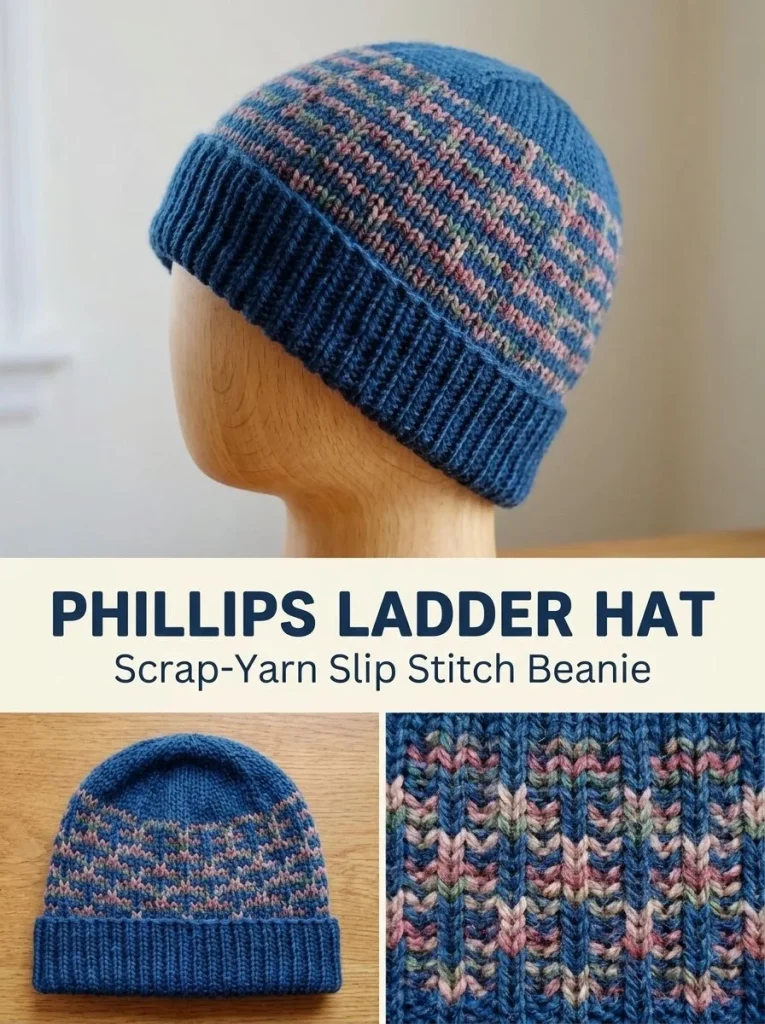
Creating a warm, stylish hat that efficiently uses your scrap yarn stash is a rewarding project for knitters of all skill levels. This medium-sized slip-stitch hat combines functional design with striking textural detail. Using a combination of DK-weight wool in a main color punctuated by colorful scrap yarn accents, the design showcases a classic ribbed brim and a distinctive ladder stitch pattern that highlights contrasting yarn colors in an appealing sequence.
The design employs circular knitting techniques and a top-down crown shaping, making it seamless and comfortable to wear. The ladder stitch pattern creates subtle slipped stitches alternating with knits that reveal the scrap yarn colors, adding visual interest without complicating the knitting process. This pattern captures a balance between practical warmth and creative expression, perfect for transforming leftover yarn bits into a cozy accessory.
Knitting this hat introduces you to color transitions using scrap yarns and the ladder stitch technique, both of which can extend to other projects like scarves or cowls. For example, those interested could explore complementary patterns such as the autumn plaid slip-stitch cowl knitting pattern, which uses a similar slip-stitch approach for a stylish winter accessory.
Pattern at a Glance
Skill Level: Intermediate (experience with circular knitting and slip stitches recommended)
Terminology: Standard American knitting terms
Construction: Top-down seamless circular knit with folded ribbed brim
Finished Size: Medium adult hat with approximately 18 in / 46 cm circumference, designed for about 3 in / 7.5 cm negative ease
Yarn Weight: DK-weight, 2-ply wool with good elasticity
Needles: US 3 / 3.25 mm 16-inch circular needle for ribbing; US 5 / 3.75 mm circular needle plus DPNs or magic loop for crown shaping
Main Stitch: Ladder stitch pattern with slipped stitches
Gauge: 22 stitches x 36 rounds = 4 in / 10 cm in ladder stitch
Motifs: Ladder stitch pattern worked in 4-round multiples
Color Use: Main color (MC) with multiple contrast scrap colors for ladder stitch patterning
Finishing: Wet blocking without stretching ribbing; weaving in ends; folded brim
Materials
To achieve the best results for this hat, gather the following materials:
-
Yarn: Approximately 125 yards (114 meters) of DK-weight 2-ply wool yarn in a main color. The fiber should have good elasticity to ensure a comfortable fit. Small amounts of various scrap yarns in contrasting colors are also needed to create the ladder stitch pattern’s pops of color. The source version uses multiple contrast colors for a vibrant effect.
-
Needles:
- US 3 / 3.25 mm 16-inch circular needle: Used to knit the folded ribbed brim with a stretchy cast-on.
- US 5 / 3.75 mm circular needle: Larger needle used for the hat body and crown shaping; this needle size accommodates looser stitches needed for ladder stitch texture.
- Double-pointed needles (DPNs) or magic loop method on a circular needle: For workable decreases on the crown when fewer stitches remain.
-
Notions:
- Stitch marker: To mark the round beginning and help track decreases.
- Yarn needle: For weaving in contrasting yarn ends and finishing.
The selection of slightly elastic wool yarn allows the hat to snugly fit a variety of head sizes with the intended negative ease, providing cozy warmth without overpowering tightness.
Yarn and Color Notes
The choice of DK-weight wool is critical for balancing warmth, elasticity, and stitch definition in this pattern. Wool’s natural crimp and memory ensure the hat retains its shape, while its elasticity accommodates the top-down decreases and the ribbed brim fold-up.
Because the design prominently features slip stitches using scrap yarns, it’s best to select contrast colors that provide visible differentiation from the main color to highlight the ladder stitch texture. Scraps in bright or complementary hues sharpen the visual interest of the repetitive slipped stitch rows, and alternating the contrasting yarn color for each 4-round ladder stitch repeat adds dynamic variety.
When working with scrap yarns, avoid overly fuzzy or loosely spun fibers for the contrast strands to prevent tangling or slipping off the needle during slipped stitch rounds. Similarly, if you prefer a subtler look, choose contrast scraps in muted or tonal shades close to the main color.
The ladder stitch technique used here also appears in textured scarf patterns such as the forest chunky texture scarf knitting pattern, which employs bold slipped stitches to create a cozy textured fabric.
Finished Measurements
The medium adult version of this hat has:
-
Finished Circumference: About 18 inches (46 cm), which is approximately 3 inches (7.5 cm) less than typical head circumference to provide negative ease for a snug fit.
-
Brim Length: 6 inches (15 cm), intended to be folded upward, doubling the fabric in this section for warmth and elasticity.
-
Body Length (Patterned Section): Approximately 5.5 inches (14 cm) from the end of the brim to the start of crown decreases.
-
Gauge: 22 stitches and 36 rounds equal 4 inches (10 cm) in ladder stitch, important for achieving these measurements.
These dimensions ensure a modern medium-sized beanie with stretch that conforms comfortably to the wearer’s head shape.
Gauge
Gauge is a crucial factor for hat fit, especially for a pattern with negative ease. Here, the gauge is:
22 stitches x 36 rounds = 4 inches (10 cm) in ladder stitch pattern on US 5 / 3.75 mm needles.
You should measure your gauge on the ladder stitch pattern, not the ribbing, using the same yarn and needles indicated. Knitting a swatch at least 4 by 4 inches (10 by 10 cm) will allow you to accurately count stitches and rows.
-
If your gauge is looser: The hat will be larger and may fit more loosely than intended; consider going down a needle size or adjusting your knitting tension.
-
If your gauge is tighter: The hat will be smaller and could fit snugly or uncomfortably tight; use larger needles or knit more loosely.
Because of the hat’s close fit, getting the correct gauge is more important than for looser garments or blankets.
Abbreviations
- MC — Main Color (the primary yarn throughout the pattern)
- CC — Contrast Color (scrap yarn used for ladder stitch pattern)
- K — Knit
- P — Purl
- K2tog — Knit two stitches together (a decrease)
- Sts — Stitches
- Rnd(s) — Round(s)
- DPNs — Double-pointed needles
- YO — Yarn over (not used here, but common knitting abbreviation)
- Purlwise Slip — Slip stitch as if to purl, carrying yarn in the back
Important Pattern Notes
-
The pattern is worked entirely in the round using circular needles and DPNs for crown shaping.
-
The brim is worked in K1, P1 ribbing for a stretchy, foldable edge.
-
Stretchy cast-on is essential to allow comfortable pulling-on of the hat.
-
The ladder stitch pattern requires a multiple of 6 stitches, established after increasing from the brim to set the pattern width.
-
Each ladder stitch repeat is 4 rounds, alternating between contrast color rounds (Rounds 1-2) and main color rounds (Rounds 3-4), creating a slip stitch ladder effect.
-
Scrap contrast yarn colors can be changed at the start of each 4-round repeat, adding colorful horizontal stripes.
-
The crown decreases are worked in the main color alone, alternating rounds of decreases with plain knit rounds to taper the hat neatly.
-
Centered double decreases should be evenly spaced to maintain the stitch count and shape during crown shaping.
-
The folded brim adds warmth and a classic beanie look, so be sure not to stretch the ribbing during blocking.
Special Stitches and Techniques
-
Slip 1 Purlwise with Yarn in Back: Slide the stitch from the left to right needle purlwise without knitting it, carrying the yarn behind the work to create the ladder spacing effect.
-
Stretchy Cast-On: A flexible method of casting on stitches that allows the brim to stretch without breaking the yarn or being too tight when putting on the hat. The long-tail cast-on or tubular cast-on methods work well.
-
Centered Double Decrease (CDD): A decrease where two stitches are decreased in a centered manner, often worked as slip 2 together knitwise, knit 1, pass slipped stitches over.
-
Magic Loop or DPNs: Techniques for knitting small circumferences in the round when the number of remaining stitches is too few for standard circular needles.
Understanding the Construction
This hat is constructed in a seamless, top-down manner:
-
Brim: Worked first using smaller needles (US 3 / 3.25 mm) in a stretchy cast-on and K1, P1 ribbing. The brim is long enough to be folded upwards, doubling the fabric at the edge for insulation and stability.
-
Increasing for Body: After the brim, the stitch count increases evenly to accommodate the main hat body and the ladder stitch pattern multiples.
-
Body: The patterned body is created with the ladder stitch motif involving slipped stitches alternating with knit stitches, using contrast scrap yarns for a striped, textured look.
-
Color Changes: The ladder stitch uses brief rounds of contrast color interspersed with the main color rounds, and changes of contrast color at the start of each 4-round repeat encourage creative scrap usage.
-
Crown: After the body reaches the target height, the hat’s shape is formed through alternating decrease and plain knit rounds—all worked in the main color.
-
Finishing: The remaining stitches are gathered at the top, the brim is folded upward, ends are woven in, and the project is wet blocked to soften the fabric and finish the piece.
This construction ensures a smooth, well-fitted hat with attractive textural interest from contrasting slipped stitches.
Full Pattern Instructions
Foundation and Brim
-
Using the main color (MC) and US 3 / 3.25 mm circular needle (16-inch length), cast on 90 stitches with a stretchy cast-on technique. This will create a comfortable, elastic edge to fit various head sizes.
-
Join to knit in the round, being careful not to twist the stitches.
-
Place a stitch marker to indicate the beginning of the round.
-
Work K1, P1 ribbing for 6 inches (15 cm). This ribbing will form the folded brim of the hat, adding warmth and a neat finish.
Increasing for Body
-
Switch to US 5 / 3.75 mm circular needle.
-
Knit 1 round with the main color to loosen the fabric.
-
Increase evenly across the round from 90 stitches to 108 stitches. Increase methods may vary (e.g., knit front and back, yarn over, or make one); choose a method that is not too loose or tight to maintain gauge.
The stitch multiple of 6 established here is important to create the ladder stitch pattern below.
Ladder Stitch Pattern Body
The ladder stitch pattern is worked over multiples of 6 stitches in a repeating 4-round sequence involving slip stitches with contrast yarn and main color rounds.
-
Rounds 1 and 2 (with Contrast Color):
Pattern: K4, slip 1 stitch purlwise with yarn held in back, K1; repeat around the round. -
Rounds 3 and 4 (with Main Color):
Pattern: K1, slip 1 stitch purlwise with yarn held in back, K4; repeat around. -
Repeat this sequence of 4 rounds continuously until the hat body measures approximately 5.5 inches (14 cm), finishing at the end of Round 4.
-
For added visual interest, change to a different scrap contrast color at the start of each 4-round repeat as desired.
-
Once the patterned body is complete, break the contrast yarn and carry on with the crown shaping in the main color only.
Crown Shaping
-
Work the crown decreases using main color yarn only on US 5 / 3.75 mm needles.
-
The crown is shaped by alternating rounds of decreases with plain knit rounds to gradually taper the hat.
-
Use centered double decreases (CDD) evenly spaced around to reduce the stitch count as follows:
- First decrease round reduces to approximately 90 stitches
- Subsequent decreases reduce to about 72 stitches
- Then to 54 stitches
- Next to 36 stitches
- Then to 18 stitches
-
When you reach 18 stitches, finish with K2tog (knit two together) all around to decrease to 9 stitches remaining.
-
Cut yarn, leaving a long tail.
-
Thread the tail through the remaining stitches using a yarn needle, pull tight to close the hat top, and secure.
Finishing
-
Fold the ribbed brim upward to form a double layer for warmth and a snug fit.
-
Weave in all yarn ends on the inside using a yarn needle.
-
Wet block the hat carefully without stretching the ribbing to soften stitches and enhance the overall fabric hand.
Checkpoints During Knitting
-
After the ribbed brim, your piece should measure 6 inches (15 cm) in length.
-
The stitch count after increasing should be 108 stitches, which is a multiple of 6, enabling correct ladder stitch repeats.
-
The patterned body should measure 5.5 inches (14 cm) before beginning crown shaping.
-
During crown decreases, confirm stitch counts at each stage: 90, 72, 54, 36, 18, and finally 9 stitches before finishing.
-
Ensure decreases are evenly spaced to maintain a smooth, rounded crown shape.
Assembly
Since the hat is knit seamlessly in the round, no seaming is necessary.
The folded rib brim is an integral part of the construction. Make sure to fold it evenly all around without stretching to avoid distortion.
Securely weave in ends from both main and contrast yarns on the inside of the hat to prevent unraveling.
Finishing Tips
-
Wet blocking is recommended but avoid stretching the ribbing. Simply soak the hat in lukewarm water, gently squeeze out excess water, and lay flat to dry, shaping it to correct dimensions.
-
This step relaxes the wool fibers, improves stitch definition, and ensures a professional finish.
-
The folded brim gives extra thickness and warmth around the ears and forehead, so be careful to maintain even tension when folding and blocking this edge.
How to Resize This Hat
The pattern’s stitch multiples and negative ease make resizing straightforward:
-
The ladder stitch requires a stitch count multiple of 6. For larger or smaller sizes, adjust the total stitch count by 6-stitch increments.
-
To increase size:
- Cast on more stitches in multiples of 6, maintaining appropriate gauge.
- Extend the length of the ribbed brim or ladder stitch body proportionally.
-
To decrease size:
- Cast on fewer stitches in multiples of 6, ensuring measurements stay proportional.
- Reduce the length of the ribbed brim or patterned body if desired.
-
Because the hat is designed for about 3 inches (7.5 cm) negative ease, use actual head circumference measurements minus approximately 3 inches to calculate desired finished circumference.
Always knit a gauge swatch in ladder stitch with your yarn and needles before adjusting size.
Useful Variations
-
Single Contrast Color: Use only one scrap contrast yarn color throughout for a more uniform ladder stitch stripe effect.
-
Monochromatic Version: Employ a lighter or darker shade of the main color for contrast yarn, creating subtle texture contrast.
-
All Main Color: Skip contrast scraps entirely, working the ladder stitch rounds in main color only for a tone-on-tone look.
-
Shorter Ribbed Brim: Adjust folded brim length for a shorter cuff style.
-
Children’s Sizes: Reduce cast-on stitches proportionally for smaller heads, adjusting length accordingly.
-
Use of Different Yarn Weights: You can try different yarns, but must adjust needles and gauge to maintain fit and fabric characteristics.
Troubleshooting
Why Is My Hat Too Loose or Too Tight?
Check your gauge carefully. Adjust needle sizes or tension to match specified gauge, as the negative ease fit depends on precise stitch and row counts.
Why Are My Color Changes Messy in Ladder Stitch?
Make sure to always carry contrast yarn loosely when slipping stitches so the fabric isn’t puckered. Change contrasting scrap yarn at the start of 4-round repeats neatly by twisting yarns on the wrong side to avoid holes.
Why Is the Fabric Stiff or Too Dense?
If your swatch feels tight or stiff, try going up a needle size slightly or use a softer wool yarn with good elasticity. Ladder stitch is enhanced by some openness, so stitches shouldn’t be overly compacted.
How Do I Manage Multiple Contrast Scrap Colors?
Wind small amounts into mini balls to avoid tangles and work one color at a time per repeat. Leaving tails long enough for weaving in aids neat finishing.
Frequently Asked Questions
Can I Use a Different Yarn Weight?
The pattern is designed for DK-weight wool. Using a lighter or heavier yarn requires needle and stitch count adjustments and will affect hat size and gauge.
Can I Substitute Circular Needle Lengths?
A 16-inch circular is recommended for the ribbed brim, while the crown shaping allows use of DPNs or the magic loop method on a longer circular needle.
Is This Hat Suitable for Beginners?
Intermediate knitters with experience in knitting in the round and slip stitch techniques will find this pattern enjoyable. Beginners may need practice with slipped stitches and decreases.
Can I Make the Hat Without the Folded Brim?
Yes, but the look and fit will change. Shorten the ribbing and do not fold; keep in mind the brim contributes to warmth and elasticity.
How Should I Block the Finished Hat?
Wet block gently, laying flat to dry, shaping it without stretching the ribbing to preserve fit and fabric drape.
How Many Contrast Color Changes Should I Use?
Change scrap colors as often as desired, ideally every 4-round repeat, to keep the vibrant, scrap yarn look fresh and lively.
Optional Related Uses
The ladder stitch motif and scrap yarn color-changing technique work beautifully in other accessories like scarves, cowls, and headbands, inviting creative uses for leftover yarn.
This slip-stitch ladder pattern has inspired complementary projects such as textured scarves and cowls that reimagine the interplay of slipped stitches and color contrast for cozy winter wear.
Final Thoughts
This hat’s construction revolves around three key stages: a stretchy, folded K1, P1 ribbed brim; a colorfully textured ladder stitch body using scrap yarn contrasts; and a carefully shaped crown with alternating decrease rounds. The result is a warm, well-fitted medium beanie that effectively uses yarn scraps without sacrificing style or comfort. Its seamless, knit-in-the-round construction and straightforward stitch pattern offer a pleasing project for knitters wishing to blend utility with creative flair.




bonjour,
le bonnet est joli,quelle laine avez pris pour le tricoter,svp ?.