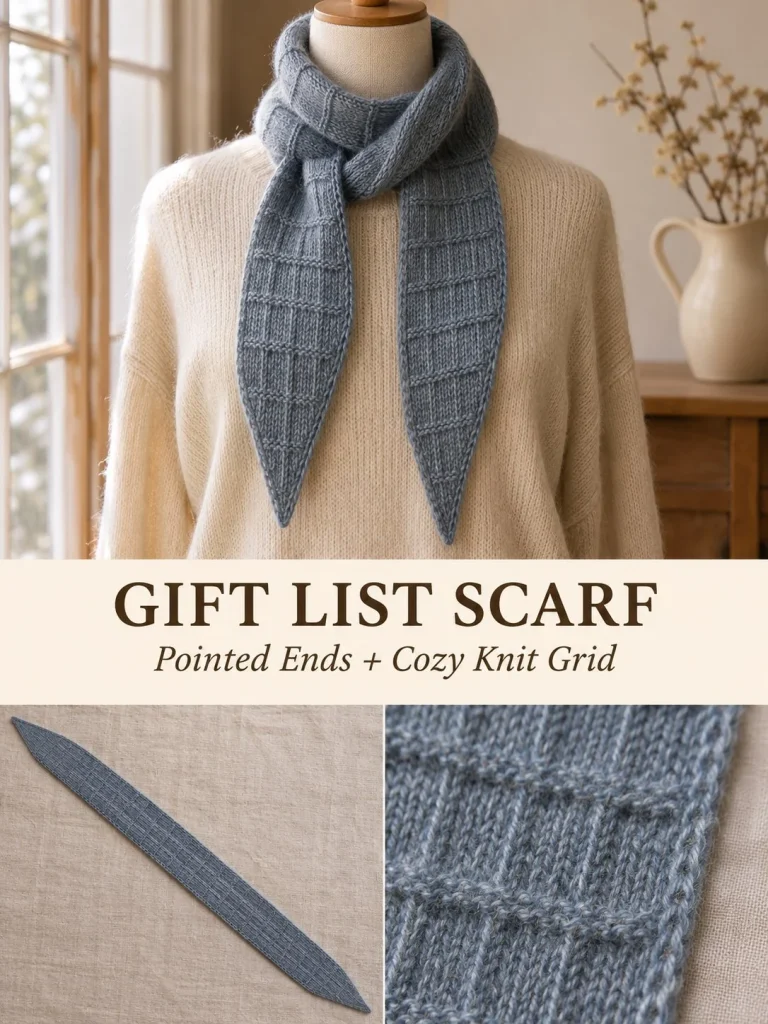
This scarf design features a distinctive pointed-ended construction paired with a cozy grid-textured knit fabric, creating a seamless balance between visual appeal and functional warmth. The grid texture is formed by a slip-stitch selvedge that frames a subtle but rich stitch pattern across the scarf’s wide body. The pointed ends provide a graceful taper, making the scarf lay beautifully when wrapped or draped. The elongated length of the scarf offers versatility in styling and warmth, ideal for cooler seasons.
Constructed primarily in knitting with precise increases and decreases shaping the pointed tips, the piece showcases a combination of traditional knitting skills with contemporary design. The pattern emphasizes the importance of gauge and stitch consistency to maintain the uniform grid texture, particularly important as the piece narrows and widens symmetrically. This style is attractive not only for its warmth and comfort but also for its elegant geometry that complements casual and formal wardrobes.
If you appreciate knitwear patterns that marry practicality with intricate stitch textures, this design beautifully fits that niche. The use of a luxurious DK weight 100% cashmere yarn enhances the scarf’s softness and drape, making it a cherished accessory or gift. For knitters looking to explore textured patterns combined with shaping techniques, this scarf offers a rewarding challenge. There are also similarly appealing projects like the Aran Apple Cozy knitting pattern, which also emphasizes texture and warmth through intricate stitch patterns.
Pattern at a Glance
Skill level: Intermediate knitters familiar with increases, decreases, and slip-stitch techniques
Terminology: Standard American knitting terms
Construction: Worked flat from pointed tip, increasing to full width, then tapping to pointed tip at the end
Finished size: Length customizable, project uses a long specified length for the body
Yarn weight: DK (double knitting) weight
Needles: US 5 / 3.75 mm straight or circular knitting needles
Main stitch: Grid texture using slip-stitch selvedge and a textured stitch pattern
Gauge: As per Purl Soho stitch-by-stitch rows and gauge instructions
Motifs: Continuous grid-texture pattern with slip-stitch borders
Layout: One long rectangular piece with pointed triangular ends
Joining: None (knit in one piece)
Border: Slip-stitch selvedge edges to maintain structure and clean finish
Seaming: Not required
Materials
- Yarn: Approximately 340 yards of Purl Soho Nigh DK, 100% cashmere, in the Ocean Storm colorway. This soft yet durable yarn provides exceptional warmth and a luxurious hand feel ideal for scarves.
- Needles: US 5 / 3.75 mm straight or circular knitting needles. Circular needles may be preferred for comfort when working long rows.
- Notions: A tapestry needle for weaving in ends cleanly after blocking. Optional stitch markers may help track increases and pattern repeats.
Each material is selected to ensure the stitch pattern defines itself crisply and the accessory feels cozy without unwanted bulk. Cashmere’s natural elasticity complements the increases and decreases well, preserving shape without stretching out.
Yarn and Color Notes
Choosing a smooth DK yarn like cashmere highlights the grid texture by producing a clear stitch definition, essential for slip-stitch and textured patterns. Yarns with fuzz or halo may obscure the grid effect, so fiber types such as merino or smooth wool blends are also suitable alternatives. The Ocean Storm color offers a rich, deep blue-gray tone that suits autumn and winter wardrobes well.
Solid color yarns best showcase the repeating grid motif, as variegated or highly tonal yarns could visually interfere with the clean lines created by the slip-stitch edge and texture. When experimenting with colors, tonal variations within the same family can add sophistication without distracting from the stitch detail.
Finished Measurements
The scarf length is adjustable but designed to be long enough for versatile styling—wrapping several times or draping gracefully. Width expands from the initial point increases, culminating in a full grid-texture central body. The pattern results in pointed ends narrowing symmetrically, adding length and visual interest rather than a simple rectangle.
Because dimensions depend heavily on gauge, it is crucial to achieve the specified tension to ensure the intended final size and drape. Length adjustments can be made by knitting the central body section longer or shorter before beginning the final decreases.
Gauge
Adhering to gauge is vital for this project’s neat grid texture and precise shaping. The pattern references the official Purl Soho stitch-by-stitch rows and gauge instructions; following this precisely will ensure proper fit and stitch definition.
Measure gauge after knitting a swatch in the established grid stitch pattern including slip-stitch selvedge edges. This swatch should be blocked similarly to the finished scarf for accurate measurement.
If your stitches are larger than gauge:
- The scarf will be wider and may feel looser in texture, diminishing crisp grid lines.
- The length will also increase if you knit the same number of rows; adjustments may be needed.
If your stitches are smaller than gauge:
- The scarf may become narrower and stiffer.
- It could be too short if the planned row counts are followed rigidly.
Abbreviations
- K: Knit
- P: Purl
- Inc: Increase (made along both sides for shaping)
- Dec: Decrease (symmetrically to form pointed ends)
- Sl: Slip stitch (used for selvedge)
Standard terminology applies throughout, with emphasis on increases and decreases at edges for shaping.
Important Pattern Notes
- The scarf begins by casting on the few stitches required to form the initial pointed tip.
- Increases are made along both edges symmetrically to shape and expand the scarf until reaching the full width of the central body.
- The grid stitch pattern is established after the initial increases and maintained consistently through the central section, with slip-stitch selvedge edges on each side to maintain clean borders.
- After knitting to the specified length, decreases mirror the initial increases, shaping the opposite pointed tip for a balanced finish.
- Ends are woven in securely, and the scarf is gently wet blocked to even stitches and enhance the fabric’s drape.
Special Stitches and Techniques
- Slip-Stitch Selvedge: One stitch slipped at the beginning and end of each row creates a firm, neat edge that reduces curling and provides structure for the pointed shaping decreases and increases.
- Grid Stitch Pattern: Developed through alternating knit and purl combinations, intensified by slip stitches on the edges to produce a tactile grid-like fabric surface.
- Shaping with Increases and Decreases: Made at each side to gradually widen the scarf body from the pointed tip and then taper again symmetrically. The technique requires careful stitch count monitoring.
Understanding the Construction
This scarf’s construction is a single-piece, flat knit process that incorporates shaping at both ends. It starts narrow with just a few stitches forming a triangular point. Increases happen along both edges to expand the width uniformly until the full grid pattern and width are developed for the central body. This middle section is knit to a user-specified length, offering flexibility for personal preference or gifting. After the central length is reached, decreases reduce the stitch count symmetrically to form the matching pointed tip at the other end.
The slip-stitch selvedge runs continuously along both edges, serving as a border that frames and stabilizes the grid texture body. No seaming or joining is required, simplifying assembly and finishing. Weaving in ends and light wet blocking complete the construction, allowing the luxury cashmere yarn to bloom and lie softly.
Full Pattern Instructions
Foundation
Cast on the few stitches required for the pointed tip shape. This small starting point sets the stage for the incremental increases and the geometric tapering that will define the scarf’s ends.
Increasing Both Edges
Work rows increasing a stitch at each edge to widen the fabric gradually. Monitor stitch counts carefully to ensure symmetrical growth. The increases follow the official Purl Soho stitch-by-stitch rows ensuring consistent rhythm. This shaping continues until the foundation width for the grid stitch pattern is reached.
Establishing the Grid Stitch & Slip-Stitch Selvedge
On reaching full width, establish the grid stitch pattern in the center, flanked by slip-stitch selvedge edges on both sides. Maintain the selvedge by slipping the first and last stitch of every row to enhance edge sturdiness.
Maintain stitch count while continuing the grid texture pattern. This section defines the scarf’s main body, showcasing the elegant grid effect in the cashmere yarn.
Working the Central Body
Knit the grid stitch body straight to the specified long length. Length can be customized to preferences, bearing in mind that this section comprises the scarf’s primary wrapping area.
Decreasing Both Edges
Upon completing the main body, initiate symmetrical decreases along each edge, mirroring the increases to taper the fabric down to a final pointed tip matching the beginning.
Decrease one stitch at each edge on selected rows per the stitch-by-stitch instructions. This tapering ensures balanced shaping, producing the signature pointed ends.
Finishing
After the final decrease row, bind off the stitches cleanly. Use a tapestry needle to weave in all loose ends securely.
Wet block the scarf gently to even out stitches and soften the fabric’s texture, enhancing the luxurious feel of the cashmere and allowing the grid texture to stand out uniformly.
Helpful Checkpoints
- After increasing both edges from the cast-on few stitches, your scarf width should steadily grow to the intended full pattern width. Count your stitches to confirm symmetrical increases.
- After establishing the grid stitch pattern with slip-stitch selvedge, your fabric should present a clear, tactile grid texture without gaps or loose stitches.
- Upon completing the central body length, measure your scarf’s length to ensure it meets your desired dimensions before starting the decreases.
- After the final decreases, both tapered ends should align in size and shape, creating the elegant pointed tips defining this scarf’s silhouette.
Assembly and Joining
This pattern is worked in a single piece; there is no assembly or seaming required. Take care in weaving the ends neatly at the final stage for the best professional finish.
Border and Finishing
The slip-stitch selvedge acts as an integral border that prevents rolling edges and preserves the clean shape throughout the wearing of the scarf. Blocking should be done gently to avoid stretching these edges out of shape.
When weaving in ends, tuck them securely along the selvedge edge or within the grid stitch pattern to avoid visible bumps or loose threads.
How to Resize
To adjust length, simply knit the central body section longer or shorter before beginning the final taper decreases. Gauge will affect the resulting length per row, so swatch carefully to anticipate final size.
Width is controlled by the number of increases made from the initial few stitches. To create a wider scarf, increase more times before establishing the grid stitch body—keeping symmetry and slip-stitch edges intact.
Because the pattern relies on symmetrical shaping, any adjustments must maintain balance between both edges.
Useful Variations
- Shorter Scarf: Reduce the central body length for a lightweight neck warmer option.
- Color Blocking: Introduce color changes in the central segment for visual interest while maintaining the textured grid.
- Texture Contrast: Use a plied yarn with slight sheen versus matte for a subtle texture play without altering stitch pattern.
- Alternative Fibers: Substitute DK weight yarns such as fine merino wool or alpaca blends for different warmth and hand feel while preserving gauge.
Troubleshooting
Why Is My Scarf Not Symmetrical at the Ends?
Ensure you are increasing and decreasing exactly one stitch at both edges per the row instructions. Missing an increase or decrease on one side will distort the pointed shape.
Why Is the Grid Stitch Pattern Uneven?
Check stitch counts regularly. Skipping slip-stitch selvedge or mistaking a knit for a purl stitch in the grid can disrupt the texture. Use stitch markers if helpful to track pattern repeats.
Why Are the Edges Curling?
The slip-stitch selvedge generally prevents curling; if edges curl, check:
- Yarn tension (too tight or too loose)
- Check adequate blocking to relax fibers
- Ensure selvedge stitch is slipped properly each row
How Do I Handle Long Rows Comfortably?
Switch to circular needles even when working flat to support the weight, reducing hand fatigue without changing stitch structure.
Frequently Asked Questions
Can I use a different yarn weight?
The pattern is designed for DK weight yarn. Using a thicker or thinner yarn will alter gauge and dimensions significantly. If substituting, swatch carefully and adjust needle size and stitch counts accordingly.
Can I knit this scarf in one color?
Yes, a solid color emphasizes the textured grid pattern best. Multi-color or stripes may obscure the stitch definition.
Is the pattern suitable for beginners?
The scarf requires experience with increases, decreases, and slip stitches. While not extremely difficult, it is best suited to knitters with intermediate skills comfortable tracking stitch counts and shaping.
What needle type should I use?
Straight or circular US 5 / 3.75 mm knitting needles are recommended. Circular needles can improve comfort with long rows without affecting the pattern.
How should I block the scarf?
Gently wet block flat on a towel or blocking mat to even stitches and enhance drape. Do not stretch excessively, especially along the pointed ends.
Can I make this scarf longer or shorter?
Yes, length is adjustable by knitting the central grid section for fewer or more rows before starting the symmetrical decreases.
Optional Related Uses
The same grid stitch texture and pointed shaping technique could be adapted for other accessories such as cowls or triangular shawls by altering length or shape. The distinctive slip-stitch selvedge also provides a clean border ideal for small wraps or warm headbands.
Final Thoughts
This pointed-ended scarf with a grid-texture knit structure offers both style and comfort through its thoughtfully designed construction. Beginning from a narrow tip, it gradually widens with increases framed by slip-stitch edges, then continues as a cozy, textured rectangle before tapering symmetrically back to a matching point. Worked in sumptuous cashmere yarn with attention to gauge and stitch pattern, this scarf is a versatile, wearable knitwear classic that enriches any knitters’ collection with its tactile beauty and elegant form.



