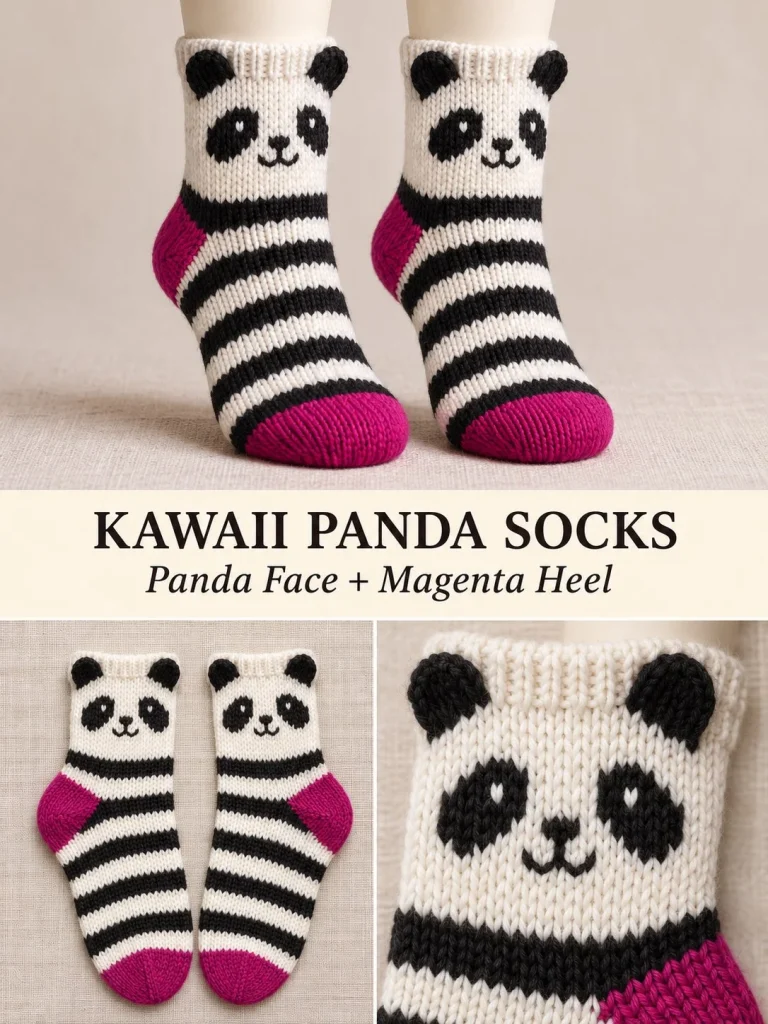
The cozy charm of these socks comes not only from their adorable panda face with delicate details like tiny knitted ears and expressive eye patches but also from skillful craftsmanship ensuring that they’re wearable, comfortable, and stylish. The pattern offers a clever integration of colorwork intarsia for the panda motif, combined with bold magenta accents for the heels and toes that add a playful pop of color while displaying advanced knitting techniques such as the Kitchener stitch for seamless toes. Thanks to a customizable sizing range from older child to adult (XS through XXL), you can tailor these socks for any panda enthusiast in your life.
Beyond their visual appeal, the construction emphasizes comfort and durability. The sock leg and cuff are knit flat initially, managing the intarsia pattern without complicating yarn strands, and then seamlessly joined to knit the foot in the round, minimizing irritation underfoot by avoiding seams beneath the sole. This thoughtful design approach ensures the socks maintain their delightful character without sacrificing practical wearability, making them suitable for everyday use or special occasion wear.
These socks use Yarnsmiths Merino Sock 4-ply yarn—a blend of soft merino wool and nylon for strength and elasticity. This choice supports flexibility and warmth, essential qualities for socks intended for frequent wear. Throughout the pattern, you’ll employ fine US size 1.5 and 2.5 needles suitable for fingering weight yarn, helping achieve a tight, smooth stockinette fabric that showcases the intarsia work clearly.
Knitting these requires some intermediate techniques but also provides handy options such as a duplicate-stitch alternative for the panda’s facial details, making the project accessible for knitters comfortable with colorwork but looking for some customization freedom. If you want to explore similar projects focusing on sock knitting techniques, the Aaron Toe-Up Textured Socks knitting pattern offers an excellent complementary skill set with textured designs and toe-up construction.
Pattern at a Glance
Skill level: Intermediate—requires colorwork intarsia, shaping, Kitchener stitch
Terminology: US knitting terms
Construction: Flat cuff and leg with intarsia, joined in the round for foot, heel flap and gusset shaping, grafted toe
Finished size: Six sizes XS to XXL (older child to adult)
Yarn weight: Fingering / 4-ply sock yarn
Needles: US 1.5 (2.5 mm) straight needles for cuff/leg flat knitting; 2.5 mm double-pointed needles (DPNs) or circular for foot knitting
Gauge: 34 stitches x 44 rows = 4 inches in stockinette stitch
Colorwork layout: Panda face intarsia on leg cuff, black/white striped foot, magenta heel and toe
Motifs: Intarsia panda face and black eye patches with embroidered details, plus tiny knitted ears
Joining: Cuff/leg knit flat, joined to knit foot in the round
Seaming: No seams undersole, toes grafted with Kitchener stitch for smooth finish
Materials
- Yarn: Yarnsmiths Merino Sock 4-ply yarn (75% merino wool, 25% nylon) or any comparable fingering-weight sock yarn
- White: 1 ball (used for main panda background and stripes)
- Black: 1 ball (used for panda face details and stripes)
- Magenta: 1 ball (used for heel flap, gusset, and toe)
- Needles:
- US 1.5 (2.5 mm) straight needles for knitting the cuff and upper leg flat (important for manageable intarsia colorwork)
- 2.5 mm double-pointed needles (DPNs) or long circular needle (with magic loop technique) for knitting the foot in the round
- Other tools:
- Stitch markers to mark pattern repeats and heel gusset positions
- Darning needle for weaving in ends and embroidering facial details
- Gauge tool: Gauge swatch in stockinette stitch to check tension (34 sts x 44 rows = 4 in)
- Sizing: Six sizes available ranging from XS for an older child to XXL for an adult, ensuring a good fit for a wide age range
Yarn and Color Notes
Choosing the right yarn is essential since these socks rely on clear color contrast and durable but soft fabric. The wool-nylon blend in Merino Sock Yarn provides warmth, elasticity, and resilience against wear, which is critical for socks. Avoid overly fuzzy or textured yarns that might blur the sharp intarsia panda face details or make the embroidered features harder to see. Smooth, plied fingering yarns will create the crisp definition needed for the panda’s facial motif.
The three-color scheme is core to the pattern—white for the panda body, black for the face’s eye patches and stripes, and a bright magenta to accent the heel flap and toe. This striking color pop offers a playful modern twist on a classic black-and-white panda theme. You can experiment with other bright accent colors for your own variations, but be sure to maintain strong contrast in the motif areas.
For knitters interested in ear warmers or headbands with similar cuff knitting and textured work, the Cable Headband knitting pattern is a complementary project to explore knitting techniques that involve flat panels and shaping.
Finished Measurements
The socks accommodate six sizes from XS to XXL, designed to fit older children through adults comfortably based on these standardized sock circumferences and lengths:
- Six foot circumferences to ensure the panda face fits well without distortion and the sock hugs the leg softly but snugly
- Adjustable foot length allowing knitters to customize for exact fit, which also affects the number of foot repeats worked before starting heel shaping
- Gauge is integral in maintaining finished size; the pattern’s specified gauge ensures consistent fit across sizes
Exact numeric foot circumferences and lengths correspond to the size labels provided in the pattern, with knitters advised to select their size using source stitch counts and length adjustments to best match their foot measurements.
It’s recommended to measure your foot’s circumference and length before casting on to select the best size, preventing tightness or excessive looseness, especially since knit fabric relaxes after wear.
Gauge
The specified gauge is 34 stitches and 44 rows per 4 inches (10 cm) in stockinette stitch. Achieving this gauge is essential for the socks to fit correctly, especially given the panda face intarsia design and heel/toe shaping.
- Where to measure: Make a 4-inch swatch in stockinette with the yarn and needles called for, preferably in white or lighter color to check stitch definition
- Why gauge matters: Since socks are a fitted garment, small changes in gauge can cause the sock to feel too tight or too loose
- If gauge is larger (fewer stitches per 4 in): Socks may be too loose, slipping on the foot, potentially distorting panda facial design
- If gauge is smaller (more stitches per 4 in): Socks may be too tight, uncomfortable, and difficult to wear
Adjust needle size accordingly to achieve the recommended gauge, and re-measure before starting the main pattern sections.
Abbreviations
The pattern uses standard US knitting terminology with some specialized technique names:
- Sts: stitches
- DPNs: double-pointed needles
- K: knit
- P: purl
- Kitchener Stitch: a grafting technique to join stitches invisibly (used for toe)
- Intarsia: colorwork technique for knitting blocks of color without carrying yarn across wrong side
- Gusset: additional stitches picked up for foot shaping around the heel
- Heel flap: reinforced section of heel worked flat for durability
- Duplicate stitch: embroidery technique to add design details on finished fabric
Important Pattern Notes
- The cuff and upper leg are worked flat on straight needles to simplify intarsia colorwork needed for the panda face. This reduces complication from yarn floats and tangled strands.
- The panda’s face, including black eye patches, can be knit directly from the original intarsia chart provided or by knitting in solid colors and adding the black patches afterward with the duplicate-stitch technique.
- Only the face details specified by the designer should be embroidered for the best effect; avoid adding unnecessary details that may clutter the motif.
- Tiny knitted ears are attached at exact leg positions to complete the panda’s charming character. Careful placement and knitting ensure they look natural and do not distort the fabric.
- After completing the cuff and leg flat portion, join the work to knit in the round for the foot and toe sections, avoiding seams under the sole for comfort.
- The foot has a fun black-and-white striped color scheme continuing the panda theme.
- The heel flap and gusset are worked in contrasting magenta yarn for style and reinforcement.
- The toe is grafted using Kitchener stitch in magenta to create a seamless, comfortable finish.
- The pattern includes six foot circumference sizes and adjustable foot length by following provided stitch counts and row numbers.
- Never place seams beneath the sole to avoid discomfort during wear.
Special Techniques
This pattern incorporates several knitting techniques that may need review depending on your experience:
- Intarsia colorwork: Enables knitting blocks of color without carrying yarn, perfect for detailed facial motifs; involves twisting yarns at color boundaries to avoid holes
- Duplicate stitch: An embroidery technique knitted over existing stitches to add small details or patches as an alternative to intarsia
- Knitting flat then joining in the round: Knit cuff/leg flat for easier intarsia, then seamlessly join to knit the foot in rounds preventing seams on the sole
- Heel flap and gusset shaping: Reinforced heel flap knit flat, picking up stitches for gussets for correct sock shaping around foot
- Kitchener stitch: A grafting method to join live stitches invisibly for a comfortable, smooth toe closure
- Knitting tiny ears: Small shaped knitted pieces sewn or knit into position on the leg for 3D panda ears
Understanding the Construction
The structure of these socks is a practical and well thought out combination of flat knitting, intarsia colorwork, and round knitting techniques, designed to balance visual appeal and mechanical comfort.
- Cuff and upper leg: Worked flat with straight needles to simplify knitting the panda face intarsia pattern. This flat knitting approach avoids the complexity of managing multiple yarns when knitting in the round.
- Panda face motif: Integrated into the cuff and upper leg using intarsia, or optionally with duplicate stitch after base knitting for simpler colorwork.
- Knitted ears: Tiny, shaped pieces knitted and attached at correct points on the leg section, giving the socks their "kawaii" panda character without looking like stuffed toys.
- Joining: After leg knitting, the work is joined in the round, transitioning to circular needles or DPNs for foot knitting.
- Foot: Black and white striped foot continues the panda theme cohesively.
- Heel flap and gusset: Contrasting magenta section worked flat and shaped to hug the heel comfortably while providing a pop of color.
- Toe: Completed in magenta yarn and grafted with the Kitchener stitch for a seamless, non-bulky finish that maximizes wearer comfort.
- Seam placement: Intentionally no seams beneath the sole to reduce friction and allow for everyday wear.
This construction method achieves both visual detailing and a functional sock design suitable for varied foot sizes.
Complete Pattern Instructions
Foundation and Cuff
- Cast on the number of stitches for your chosen size using US 1.5 / 2.5 mm straight needles.
- Work the cuff and leg portion flat in stockinette stitch (knit on right side, purl on wrong side).
- Begin the panda face intarsia pattern according to the original chart provided or choose the duplicate-stitch option to add black eye patches after knitting.
- Embroider only the specified facial details to maintain simplicity and charm.
- Knit the tiny panda ears at the designated positions on the leg sides, using the color and shaping instructions carefully to maintain proportion and placement.
Checkpoint: Your cuff and panda leg section should now be complete, with panda face clearly visible and ears in place.
Joining and Foot
- Once the cuff and upper leg are finished flat, join your stitches in the round on 2.5 mm DPNs or a circular needle.
- Continue knitting the foot in black and white stripes, maintaining a consistent stitch count for your size.
- Adjust the foot length using the instructions provided for your size to ensure proper fit.
Heel Flap and Gusset
- Using the magenta yarn, work the heel flap flat, following the counts exactly to shape it correctly.
- Pick up gusset stitches and decrease as described to form the gusset shape comfortably around the heel.
- Pay attention to stitch counts to maintain a smooth silhouette and ensure the gusset decreases match the wearer’s foot.
Toe
- Finish the toe section in magenta yarn.
- Close the toe with the Kitchener stitch grafting technique to create a seamless, comfortable end to the sock.
- Weave in all ends carefully.
Checkpoint: Check that no seams exist under the sole and the toe graft is smooth and snug.
Assembly and Finishing
- Attach the tiny knitted ears securely on the cuff using yarn ends, positioning as indicated in the pattern.
- Embroider the specified face details using the darning needle.
- Weave in all yarn tails neatly inside the socks to avoid discomfort.
- Optionally, lightly block the socks on a sock blocker or flat surface to relax the stitches and improve drape.
- Check fit again on intended wearer before final use.
Light blocking is enough for fine sock yarn and encourages neat stitch definition without overstretching.
How to Resize
This pattern accommodates six sizes from XS to XXL by varying stitch counts and row lengths:
- Foot circumference: Increase or decrease the number of stitches cast on at the cuff to match the desired circumference as specified.
- Foot length: Adjust the number of foot rounds knit before heel shaping.
- Gauge adherence: Maintain the recommended gauge with swatching to ensure accurate sizing.
- To resize, locate your foot measurements carefully and select the corresponding stitch and row counts from the pattern tables.
- Do not alter the panda face intarsia motif width, as this will distort the design.
- For smaller or larger sizes not listed, consider substituting appropriately weighted yarn or adjusting needle size cautiously, but be aware this may affect motif clarity and fit.
Variations
- One-color panda socks: Knit the entire sock in solid white or black and add all facial details via duplicate stitch for simplicity.
- Different accent colors: Replace magenta with other bright colors like turquoise, mustard, or lavender for personalized flair.
- No ears version: Skip knitted ears for a flatter design better suited for tight-fitting shoes.
- Matching family sets: Knit different sizes for family members using the same color scheme for coordinated wear.
- Striped foot only: Omit the panda face intarsia section, focusing on a bold black-and-white striped sock finished with magenta heels and toes.
Troubleshooting
Why Is My Intarsia Colorwork Bulking Up?
Ensure you twist yarns tightly at color changes to avoid loose floats, and keep yarn tension consistent to prevent puckering.
How Do I Prevent Seams from Irritating the Foot?
The pattern’s method of joining to knit the foot in the round minimizes seams beneath the sole, but make sure stitches are evenly distributed when joining and that the seam line stays on the leg side.
My Panda Face Looks Distorted — What Now?
Check gauge; if stitches per inch are off, the intarsia might stretch or squash the design. Reswatch and adjust needle size if needed.
How Can I Ensure the Tiny Ears Stay Attached?
Use duplicate yarn and secure sewing with a darning needle. Weave in yarn ends twice or three times through ear base for durability.
Why Is My Heel Gusset Too Tight or Loose?
Review stitch counts and heel flap measurements, and ensure you pick up the right number of stitches for gusset shaping. Adjust tension and check fit during knitting.
Frequently Asked Questions
Can I use a different yarn weight?
This pattern is designed for fingering-weight (4-ply) sock yarn; using other weights will affect gauge and fit significantly.
Can I knit these socks toe-up?
The pattern uses cuff-down construction for intarsia ease, but knitters experienced in toe-up intarsia could adapt the chart with caution.
Is the pattern suitable for beginners?
Intermediate knitters with some experience in intarsia colorwork and sock shaping will find this pattern accessible.
How many tiny ears are knitted per sock?
Two ears per sock, positioned symmetrically on each side of the leg for the panda face effect.
Is the duplicate-stitch method easier than intarsia?
Duplicate stitch allows adding patches after knitting the base sock but will add bulk. Intarsia is neater but requires managing multiple yarns.
How should I care for finished socks?
Hand wash with mild detergent and dry flat to preserve shape and yarn softness.
Can I make these socks without stripes on the foot?
Yes, you can knit the foot in a solid color if preferred, substituting black or white as you like.
Optional Related Uses
This knitting technique of combining flat intarsia panels with round knitting for shaping can be adapted for:
- Character arm warmers or mitts with similar panda faces
- Woolly hats featuring small knitted ears and colorwork motifs
- Legwarmers with striped patterns and appliqué details
- Cozy baby booties with cute animal faces
- Ear warmers combining cables and intarsia motifs similar to this sock’s panda face, such as in the Cable Headband pattern
These variations complement the skill set used in this pattern and inspire creative knitwear projects.
Final Thoughts
The socks’ design cleverly balances an eye-catching panda motif with the practical construction necessary for comfortable sock wear. Beginning flat with intarsia facilitates the detailed face and ear knitting, while joining in the round for the foot ensures no uncomfortable sole seams, making these socks both adorable and wearable. The pattern’s comprehensive sizing and adjustable foot length support a perfect fit for a wide audience—from older children to adults.
By carefully following the stitch counts, gauge, and shaping instructions, you’ll create whimsical socks that delight wearers and show off your knitting skills. This pattern is a wonderful way to celebrate creative sock knitting, achieving impressive colorwork and finishing techniques in one charming project.



