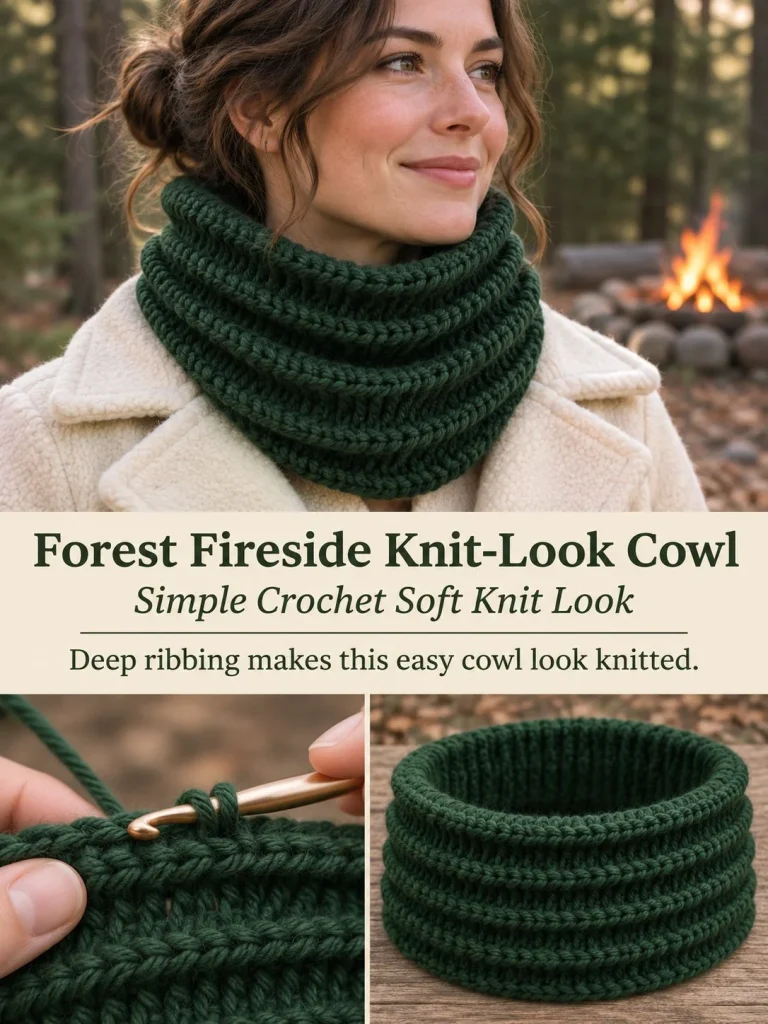
This cozy crochet cowl combines the inviting warmth of worsted weight yarn with a cleverly textured stitch that mimics the refined look of knitting. Crafted in a deep forest green hue, it evokes the serene ambiance of a woodland fireside in fall or winter, making it an ideal accessory to brighten chilly days. The timeless circular design forms a comfortable loop that effortlessly slips over the head and drapes elegantly around the neck, perfect for layering over casual wear or more polished outings.
Central to this cowl’s charm is the distinctive knit-look texture, achieved by working half double crochet stitches into the third loop of each stitch. This subtle adjustment causes the usual “V” stitch top to subtly pop forward, creating pronounced ridges that remind one of ribbed knitting. The fabric formed is both soft and structured, allowing gentle folds that enhance its rustic appeal without stiffness. The continuous round construction creates a seamless, comfortable fit, demonstrating how simple crochet techniques can masterfully replicate knitting textures. If you appreciate the look of knitted accessories but prefer the speed or feel of crochet, this project offers a perfect bridge.
Adding to the cowl’s appeal is its ease of construction, making it suitable even for adventurous beginners comfortable with basic stitches. Yet the final fabric’s sophisticated ribbed effect also satisfies intermediate crocheters looking for a wearable piece with texture and subtle personality. This cowl pairs beautifully with similarly styled pieces such as the bandana cowl that also explore textured crochet neckwear, giving you a cohesive collection to enjoy during cooler seasons.
Pattern at a Glance
Skill level: Easy to Intermediate
Terminology: US Crochet Terms
Construction: Worked in joined rounds, seamless circular tube
Finished size: Approximately 26 inches circumference, 9-10 inches tall
Yarn weight: Worsted weight (#4) yarn
Hook: 6 mm (size J) crochet hook
Main stitch: Half double crochet (hdc) in third loop
Gauge: 12 hdc x 8 rounds = 4 inches square
Motifs: None, continuous stitch pattern
Layout: Continuous round tube
Joining: Slip stitch join each round, chained turns
Border: Optional loose single crochet round
Seaming: None
Materials
To complete this project, you will need:
-
Worsted weight (#4) yarn, approximately 250-300 yards in a rich forest green shade. This amount ensures enough yarn to achieve the intended size and texture without the need for joins or dye lots. Choose a yarn that feels soft against your skin, such as a wool blend or acrylic blend, to maximize warmth and comfort.
-
6 mm crochet hook: This hook size allows you to maintain a relaxed tension while achieving the stitch gauge essential for the knit-like texture and soft drape.
-
Tapestry needle: For weaving in yarn ends cleanly to finish the cowl professionally.
-
Scissors: For cutting yarn at the end of your project.
Selecting quality materials will enhance both the look and durability of the cowl. The forest green color adds a timeless woodland vibe, grounding the accessory in nature-inspired hues that pair well with browns, grays, and neutral outerwear.
Yarn and Color Notes
Choosing the right yarn fiber and color significantly affects the appearance and feel of your cowl. A smooth worsted weight yarn highlights the stitch definition critical for the third-loop half double crochet technique that creates the knit-look ridges. Slightly fuzzy or textured yarns may mute these defined ridges, while very slick yarns can slide and lose structure.
Deep forest green lends a sophisticated, earthy tone, making this cowl a versatile piece suitable for multiple outfits and occasions. Solid colors are recommended here to keep the knit-rib effect visually clear. Variegated or multi-colored yarns can obscure the texture that is central to this design. For yarn substitutions, maintain worsted weight to preserve gauge and drape.
Finished Measurements
When completed according to the pattern, this cowl will have:
-
Circumference: Approximately 26 inches (66 cm) around, suitable to slip easily over most heads while fitting comfortably around the neck without sagging.
-
Height: Approximately 9-10 inches (23-25 cm), providing generous coverage and warmth from the lower neck to just below the chin.
These dimensions depend on maintaining the recommended gauge; alterations in tension or hook size will affect the final measurements.
Gauge
The gauge is critical here and specified as:
12 half double crochet (hdc) stitches by 8 rounds = 4 inches (10 cm) square.
To check your gauge:
-
Use the 6 mm hook and worsted weight yarn.
-
Work a sample swatch using the third-loop half double crochet stitch.
-
Measure 4 inches across and vertically to count stitches and rows.
Maintaining this gauge ensures the texture and overall dimensions turn out as designed. Too tight a gauge will make the cowl smaller, denser, and stiffer. Too loose will enlarge the cowl and risk a floppy fabric lacking the desired ribbed effect.
In projects like cowls that require a fit around the body, matching gauge is important for comfort and appearance.
Abbreviations
- ch: chain
- hdc: half double crochet
- sc: single crochet
- st(s): stitch(es)
- sl st: slip stitch
All abbreviations follow US crochet terminology conventions.
Important Pattern Notes
-
The cowl is worked entirely in joined rounds with a join at the end of each round.
-
Chains at the beginning of rounds count as the first half double crochet unless stated otherwise.
-
The "third loop" half double crochet is the key technique—this means inserting your hook under the third horizontal loop on the stitch, not into the normal ‘V’ at the top.
-
Keep your tension relaxed to allow the fabric to fold softly; tight tension will make the cowl stiff and hamper the knit-like appearance.
-
Do not twist your chain when joining to form the round; the cowl should be a smooth tube.
-
The finishing single crochet round is optional but recommended for a tidier edge.
Special Stitches and Techniques
Third Loop Half Double Crochet
This stitch variation is crucial for creating the knit-look ridges. Instead of inserting your hook under the top two loops (the usual ‘V’), you reach into the horizontal third loop behind the stitch top. This pushes the ‘V’ forward, encouraging the ribbed texture.
How to work it:
-
Yarn over, insert hook into the third loop of the stitch (the horizontal bar behind the normal top loops).
-
Yarn over, pull up a loop (three loops on hook).
-
Yarn over, draw yarn through all three loops on hook to complete the hdc.
This technique creates a raised ridge and a supple but structured fabric resembling knit ribbing.
Understanding the Construction
This cowl is worked in continuous rounds starting from a foundation chain forming the circumference. The round structure ensures no seams, making the accessory comfortable and symmetrical.
First, you construct a 26-inch loop by chaining 78 loosely and joining without twisting. This chain forms the base row stitches.
Round 1 establishes the fabric using regular half double crochet into every chain around.
From Round 2 onward, the stitch placement shifts to the third loop of each hdc, creating the distinctive ribbed texture.
Rounds continue until the cowl reaches 9-10 inches tall, approximately 18-20 rounds, depending on your gauge.
Optionally, finishing with a round of loose single crochet can improve edge stability and appearance.
The deep green yarn color and ribbed texture together create a warm, subtle nod to classic knitted cowls, but crafted quickly with crochet.
Pattern Instructions
Foundation
Chain 78 loosely using your 6 mm hook and worsted weight yarn. Be sure not to pull the chain tight to maintain the intended circumference.
Join the chain with a slip stitch to the first chain, making sure the chain is not twisted. This creates a round measuring approximately 26 inches.
Round 1
-
Chain 2 (counts as first half double crochet).
-
Work one half double crochet (hdc) into each chain stitch around (77 hdc).
-
Join with a slip stitch to the top of the starting chain 2 to close the round.
You now have a complete round of 78 stitches.
Rounds 2 and Onward
-
Chain 2 (counts as first half double crochet).
-
For each stitch around, work 1 half double crochet into the third loop of the stitch below.
The third loop is distinct from the normal top ‘V’ of the stitch; inserting here pushes the ‘V’ forward, creating ribbing.
-
Join each round with a slip stitch to the top of the starting chain 2.
Continue working these rounds until the cowl measures approximately 9-10 inches tall. This will generally require about 18-20 rounds but check your gauge.
Optional Final Round
For a slightly finished edge, work one round of loose single crochet stitches around, maintaining the relaxed tension from the body.
Finishing
Fasten off your yarn securely.
Use a tapestry needle to weave in all ends neatly on the inside of the cowl.
Make sure the fabric has formed soft folds and does not stand stiffly.
Checkpoints
-
After the foundation chain and join, your stitch count should be 78 around.
-
After Round 1, confirm there is one hdc in each chain, maintaining 78 stitches.
-
From Round 2 onward, ensure that each hdc is placed into the third loop of the stitch below, not the usual top ‘V’.
-
Measure the cowl’s height regularly; stop when it is 9-10 inches tall, preserving the softness of your tension.
-
At pattern’s end, the cowl should be a seamless circular tube with visible deep knit-look ridges running vertically.
Assembly
No assembly is required since the cowl is worked in a continuous loop.
Simply finish by weaving in ends as noted, and block lightly if desired to even out stitches and folds.
Finishing
-
Weave in all tails with a tapestry needle to avoid snagging.
-
Optionally block the cowl by gently wetting and shaping it flat on a towel, allowing slow drying to help set the soft folds.
-
Avoid heavy blocking that stretches the fabric out of shape or flattens the ridges.
How to Resize
To alter the circumference of the cowl:
-
Change the starting chain count in multiples of 1 stitch to maintain stitch count integrity.
-
Keep the stitch multiple consistent with the pattern’s 78 stitch foundation, adding or subtracting chains evenly.
-
Make sure not to twist the starting chain when joining.
To adjust the height, simply work more or fewer rounds of the third-loop half double crochet stitch, aiming to keep the fabric’s relaxed drape.
Larger or smaller sizes may require a gauge swatch recalibration to maintain proportions.
Useful Variations
-
Two-color version: Alternate rounds of forest green with a complementary color to highlight the ribbing.
-
Longer cowl: Increase the number of rounds to create a double-loop cowl for extra warmth.
-
Chunkier yarn: Use a bulky weight yarn with a larger hook for a thicker, warmer cowl, adjusting foundation chain and rounds to maintain size.
-
Different edging: Replace the final single crochet round with a picot or shell stitch for a decorative border.
For other textured neckwear styles, explore patterns like the ribbed high neck shoulder cowl, which also utilize vertical ribbing but with different shaping.
Troubleshooting
Why Is My Cowl Too Tight or Small?
-
Check that your starting chain is not pulled too tightly; it should be loose enough to join without distortion.
-
Verify your gauge with a swatch; using a smaller hook will tighten the fabric.
Why Are My Ridges Not Very Pronounced?
-
Confirm you are inserting your hook into the third loop of each stitch from Round 2 onward.
-
If yarn is fuzzy or multicolor, the ridge effect may be less obvious.
Why Does My Fabric Feel Stiff?
-
Relax your tension while crocheting, aiming for a soft, pliable fabric.
-
Using the specified 6 mm hook helps maintain the intended openness.
Why Is My Cowl Not Lying Flat?
-
Ensure your chain was not twisted before joining.
-
Blocking can help the cowl lay more evenly by softening folds.
Frequently Asked Questions
Can I use a different yarn weight?
You can, but you will need to adjust the hook size and starting chain length to maintain the intended circumference and gauge.
Can beginners make this cowl?
Yes, the stitches are basic half double crochet; mastering the third-loop insertion is the main learning step, which is well-explained above.
Can I make the cowl longer or shorter?
Absolutely. Add or reduce rounds after Round 2 to adjust the height to your liking.
How should I wash and care for this cowl?
Care depends on your yarn choice—follow the yarn label’s recommendations. Wool blends typically benefit from gentle hand washing and flat drying.
Is the cowl reversible?
Yes, the two sides show slightly different textures, but both look attractive. The ridging is subtle on the inside.
How do I identify the third loop on stitches?
Look for the horizontal bar behind the stitch top ‘V’; inserting your hook under this bar creates the characteristic ridge.
Optional Related Uses
The third-loop half double crochet stitch is versatile for other accessories such as hats, cuffs, or shoulder warmers, giving any project the appearance of knitting with crochet speed.
Try combining this technique with other patterns like the alias bandana cowl to build a cozy accessory set for cold seasons.
Final Thoughts
This cowl exemplifies how subtle stitch placement in crochet can mimic knitting textures while preserving crochet’s ease and flexibility. Its simple round construction and rich rib-like fabric make it an inviting project to both wear and create. By focusing on the third-loop half double crochet and maintaining relaxed tension, you will produce a beautifully textured cowl that feels like a warm embrace around your neck on chilly days. Whether worn solo or layered with other neck accessories, it brings a touch of woodland charm and handcrafted elegance to any outfit.



