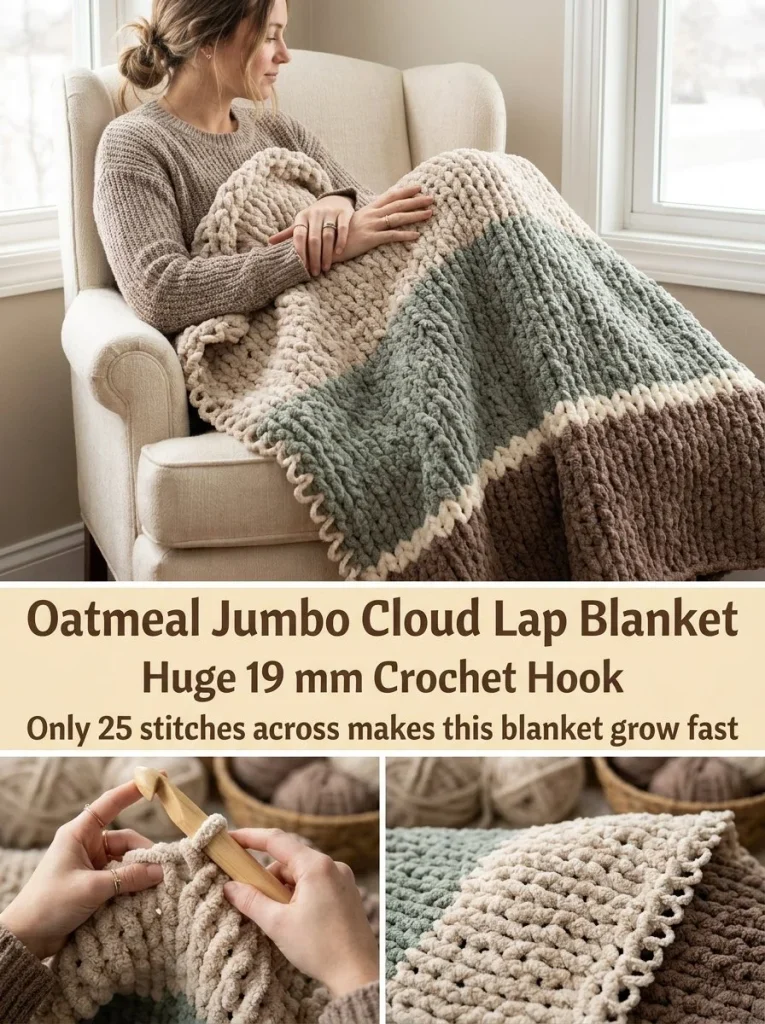
This cozy lap blanket is crafted with jumbo #7 chenille yarn, resulting in an irresistibly soft and thick fabric perfect for curling up on chilly days. Its elongated rectangular shape and subtle block color stripes create an inviting, cloud-like appearance, blending muted earth tones that complement any décor. The stitch pattern, worked entirely in single crochet, ensures a dense, plush texture, providing warmth without excessive weight. This simple yet elegant design is an excellent choice for crocheters seeking a gratifying project that blends practicality with visual charm.
The blanket is constructed in rows and features a distinctive decorative looped edge formed by consistent turning chains along one side. This unique edge detail adds a subtle finishing touch that elevates the overall look without requiring complicated techniques. The pattern’s use of jumbo chenille yarn with a large 19 mm hook accelerates progress, making it an ideal project for quick gratification or last-minute gifting.
This design also offers an accessible approach to working with bulky yarns, encouraging crafters to explore the benefits and challenges of super bulky textures. For those interested in exploring similar projects with a comparable soft color palette and cuddle-worthy fabric, you might enjoy browsing inspiring crochet patterns like the easy two-stitch oatmeal chunky lap throw, which utilizes a similar cozy yarn weight.
Pattern at a Glance
Skill level: Beginner to Intermediate
Terminology: Standard US crochet
Construction: Worked flat in rows, using single crochet
Finished size: Approximately 31.5 inches wide by 60 inches long
Yarn weight: Jumbo #7 chenille yarn
Hook: 19 mm jumbo crochet hook
Main stitch: Single crochet (sc)
Gauge: 3 sc and 3 rows = 4 inches
Motifs: Solid color blocks in rows
Layout: Rectangular fabric striping color blocks horizontally
Joining: Not applicable; worked as one piece
Border: Decorative looped edge from consistent turning chains
Seaming: None required
Materials
To create this sumptuous lap blanket, you will need jumbo #7 chenille yarn in four complementary colors:
- Approximately 145 yards of oatmeal (main neutral color)
- Approximately 70 yards of muted sage (calming green tone)
- Approximately 50 yards of cocoa (rich brown tone)
- Approximately 25 yards of warm cream (soft off-white accent)
In addition, use a 19 mm (size P/Q or US 35) crochet hook appropriate for jumbo yarn to ensure the stitches are properly sized without being too tight. Finally, a jumbo tapestry needle is necessary to weave in the bulky ends securely due to the thickness of the chenille yarn.
These materials collectively create a plush, dense fabric that is wonderfully soft to the touch and visually pleasing with its natural color harmonies.
Yarn and Color Notes
When choosing yarn for this project, consider plush chenille fibers that offer softness and a slight sheen. Chenille’s velvety texture enhances warmth and visual interest but can sometimes be challenging to crochet with due to its fluffiness, especially using thick yarn weights. Working with smoother or less fuzzy yarn may affect the tactile quality and drape of the blanket.
The selected color palette includes oatmeal as the dominant neutral base, balanced by accent stripes in muted sage, cocoa brown, and warm cream. This balanced arrangement of colors yields a calm and inviting aesthetic. Solid color blocks in this pattern emphasize the yarn’s texture and thickness rather than intricate stitch details.
For a variety of yarn colors and textures with similar cozy appeal, consider exploring additional color-blocked patterns such as the oatmeal foot-pocket lap blanket, which also features jumbo yarn and soft muted hues.
Finished Measurements
The completed blanket measures approximately 31.5 inches (width) by 60 inches (length). This size is comfortable as a lap throw, perfect for draping over knees on a couch or chair. Finished dimensions are based on the specified gauge and yarn thickness.
Due to the nature of jumbo chenille yarn, small variations in stitch tension and yarn thickness can affect final measurements. Adjustments can be made by modifying the total number of rows worked while maintaining the stitch count for width.
Gauge
The gauge for this project is 3 single crochet stitches by 3 rows = 4 inches using the oatmeal yarn and 19 mm hook. Gauge is critical to achieving the intended blanket size and fabric density.
Measure gauge as follows:
- Lay a ruler or gauge tool flat on the fabric.
- Count how many single crochet stitches fit within a 4-inch horizontal space.
- Count how many rows fit within a 4-inch vertical space.
If your gauge results in more stitches or rows per 4 inches, your fabric will be denser and potentially smaller, requiring fewer rows to reach desired length. Conversely, fewer stitches or rows per 4 inches result in a looser, larger fabric needing more rows.
While exact gauge is less critical for household items like blankets than fitted garments, maintaining gauge consistency ensures predictable sizing and balanced texture.
Abbreviations
- ch = chain
- sc = single crochet
- sl st = slip stitch
- yd = yard(s)
Important Pattern Notes
- The initial foundation chain is worked in the oatmeal color only.
- Each row begins with a turning chain of 3 chains, which is not counted as a working stitch. This turning chain creates the distinctive decorative looped edge along one side of the blanket.
- Each row maintains exactly 25 single crochet stitches worked into the stitches of the previous row.
- Color stripes are made by changing yarn color after completing the designated number of rows.
- The blanket is worked entirely flat in rows; no joining of pieces is needed.
- Yarn ends should be woven deeply through multiple stitches using a jumbo tapestry needle to secure the thick chenille yarn.
- The final row is finished with a chain of 1 and a loose slip stitch across all 25 stitches to provide a soft edge.
Special Techniques
The pattern primarily uses basic single crochet stitches, with a simple turning chain edge that creates a decorative looped border:
- Decorative turning chain loop: The 3 turning chains at the start of each row are intentionally left unworked to form looped edging along one side. This requires no additional finishing to create a subtle textured border.
- Color changes: Switching colors between color blocks involves finishing the last stitch of one color before starting the new color in the next row to keep clean lines.
No advanced crochet stitches are required, making the project beginner-friendly while delivering a polished finished object.
Understanding the Construction
This lap blanket is worked flat in rows from the foundation chain up, creating a rectangular panel made up of horizontal color blocks. The width is fixed at 25 stitches with turning chains maintaining the side edge loops consistently.
The color sequence and number of rows for each shade are preset to create a balanced striped look:
- 14 rows of oatmeal
- 2 rows of warm cream
- 10 rows of muted sage
- 2 rows of warm cream
- 14 rows of cocoa
Altogether, the blanket features 42 total rows, with emphasis on soft earth tones and a naturalistic flow. Each row is worked in single crochet across the same number of stitches, maintaining fabric uniformity and creating a dense, cozy texture.
The blanket ends with a loose slip stitch row followed by weaving in all ends securely.
Full Pattern Instructions
Foundation
Start by chaining 25 using the oatmeal yarn.
Note: The foundation chain length sets the width of the blanket at approximately 31.5 inches, matching the stitch gauge.
Setup Row (Row 1)
- Chain an additional 3 chains (ch 3). These chains do not count as stitches but serve as the turning chain to create the decorative looped edge on the side.
- Single crochet (sc) into each of the original 25 foundation chains.
- Turn your work.
At the end of this row, you will have 25 single crochet stitches plus the 3 turning chains along the side.
Following Rows (Rows 2 through 42)
For every row after the setup row:
- Chain 3 (turning chain), which remains unworked to maintain the side loop border.
- Work a single crochet stitch into each of the 25 stitches across from the previous row.
- Turn your work.
Maintain exactly 25 working stitches per row throughout the entire blanket.
Color Sequence and Row Counts
Work rows in the following color order:
- 14 rows with oatmeal yarn
- 2 rows with warm cream yarn
- 10 rows with muted sage yarn
- 2 rows with warm cream yarn
- 14 rows with cocoa yarn
This amounts to 42 rows total.
If your gauge or yarn thickness varies, you may adjust only the number of rows in each color segment to achieve the desired length. Do not change the stitch count per row, as this will alter the width and edge appearance.
Final Row
After completing the 42 rows:
- Chain 1.
- Work a loose slip stitch (sl st) across all 25 stitches of the row.
- Fasten off the yarn.
This slip stitch row gives a soft, flexible finishing edge to the blanket.
Weaving in Ends
Use a jumbo tapestry needle to weave all yarn ends deeply through multiple stitches. This secure finish prevents unraveling and ensures the bulky chenille yarn stays neatly in place.
Finished Size
The blanket will measure approximately 31.5 inches wide by 60 inches long. This size is well-suited as a lap blanket for warmth and comfort.
Checkpoints
- After the Setup Row, confirm you have 25 single crochet stitches plus your turning chain of 3.
- After completing each color block section, check the length to ensure you are maintaining the intended size. Adjust future rows if needed.
- At the end of Row 42, the blanket should measure close to 60 inches in length.
- The decorative looped edge created by the turning chains should run evenly along one side, with loops consistent in size and shape.
Assembly and Joining
No assembly or seaming is required for this project since the entire blanket is worked as a single rectangular panel.
Simply weave in all ends and perform any gentle blocking if desired to shape the fabric.
Border and Finishing
The small decorative looped edge formed by the 3 turning chains at the beginning of each row functions as the blanket’s edge border. This creative use of turning chains forms a subtle yet elegant loop detail without additional work.
To maintain the freshness of this looped border:
- Avoid pulling the loops too tight while working.
- Weave in ends gently along the edge to preserve shape.
- Optionally, you can lightly block the blanket by steam or gentle damp pressing to help the loops settle into shape.
How to Resize
To make the blanket wider or narrower, adjust the initial foundation chain in multiples of one stitch and maintain the same turning chains at the start of each row. For example, increasing or decreasing by 5 stitches adds or subtracts roughly 6 inches of width, considering the gauge.
To make the blanket longer or shorter, modify the total number of rows worked in each color block proportionally while keeping the stitch count constant. Maintaining consistent stitch tension and gauge ensures the design remains balanced.
Useful Variations
- Single color option: Work the entire blanket in oatmeal or any preferred single color for a minimalist, monochromatic look.
- Different color schemes: Substitute your favorite colors for the oatmeal, sage, cocoa, and cream blocks to match seasonal themes or home decor.
- Shorter lap throw: Reduce total rows to make a smaller blanket suitable for babies or chairs.
- Coordinating accessories: Use the same stitch pattern and yarn for matching cushions or scarves.
For further inspiration on similar chunky blanket designs that mix ease and comfort, check out this cozy foot-pocket lap blanket pattern featuring complementary yarn choices.
Troubleshooting
Why is my blanket uneven in width?
Ensure your chain foundation has exactly 25 stitches and that you do not count the turning chains as stitches. Missing or adding chain stitches alters width and edge shape.
Why are my edge loops inconsistent?
The 3 turning chains form the decorative loop edge. To keep loops uniform, maintain consistent tension on the chains without pulling too tightly or leaving them too loose. Practice turning chain tension before continuing rows.
Why does my fabric feel too tight or stiff?
If your gauge is smaller than 3 sc x 3 rows = 4 inches, try relaxing your stitch tension or using a larger hook size if possible. Chenille yarn can be dense, so crocheting loosely helps maintain drape.
Why do my color changes look messy?
Finish each color section by completing the final stitch before switching yarns. Begin the new color yarn in the next row’s first stitch to keep color stripes crisp.
How do I weave in chenille yarn ends neatly?
Use a jumbo tapestry needle to thread ends through multiple stitches inside the fabric bulk. This secures ends and hides them within the plush fibers.
Frequently Asked Questions
Can I use a different yarn weight?
This pattern is designed for jumbo #7 chenille yarn. Using a lighter or heavier weight will change the finished size and texture significantly. Substitute cautiously, adjusting hook size and row count accordingly.
Can beginners attempt this pattern?
Yes, this pattern uses only single crochet stitches and basic techniques like turning chains and color changes, making it suitable for adventurous beginners familiar with these skills.
Is this blanket reversible?
The decorative loop edge is only on one side, so while both sides are lovely, the looped border side offers unique texture, making the blanket slightly asymmetrical.
How should I care for this chenille blanket?
Hand wash or use gentle machine cycles in cold water. Lay flat to dry to preserve chenille fibers and maintain shape.
Can I make this blanket longer?
Yes, simply add more rows proportionally to each color section while maintaining the stitch count of 25 to extend length while preserving design balance.
Is blocking necessary?
Blocking is optional but can help settle the stitches and smooth edges, especially the delicate looped border.
Optional Related Uses
The soft, plush texture and simple rectangular construction of this blanket lend themselves well to related projects such as:
- Chunky crocheted pillows using the same stitch and yarn for coordinated décor
- Large scarf or shawl for extra warmth using this stitch pattern gained from the same gauge
- Baby blankets or throws by reducing row count and customizing colors
These ideas leverage the same easy single crochet fabric and decorative looped edge for versatility.
Final Thoughts
This lap blanket beautifully combines chunky chenille yarn’s luxurious softness with straightforward single crochet stitch work to yield a warm, inviting piece. Its rectangular shape, balanced stripes, and unique looped edge provide visual interest while remaining beginner-friendly. Working in color block segments keeps the project manageable and engaging. The elegant simplicity of the design makes it a perfect gift or personal indulgence to add cozy softness any time of year. With thoughtfully chosen materials and the memorable looped border, this project offers both tactile pleasure and classic style in one satisfying crochet undertaking.



