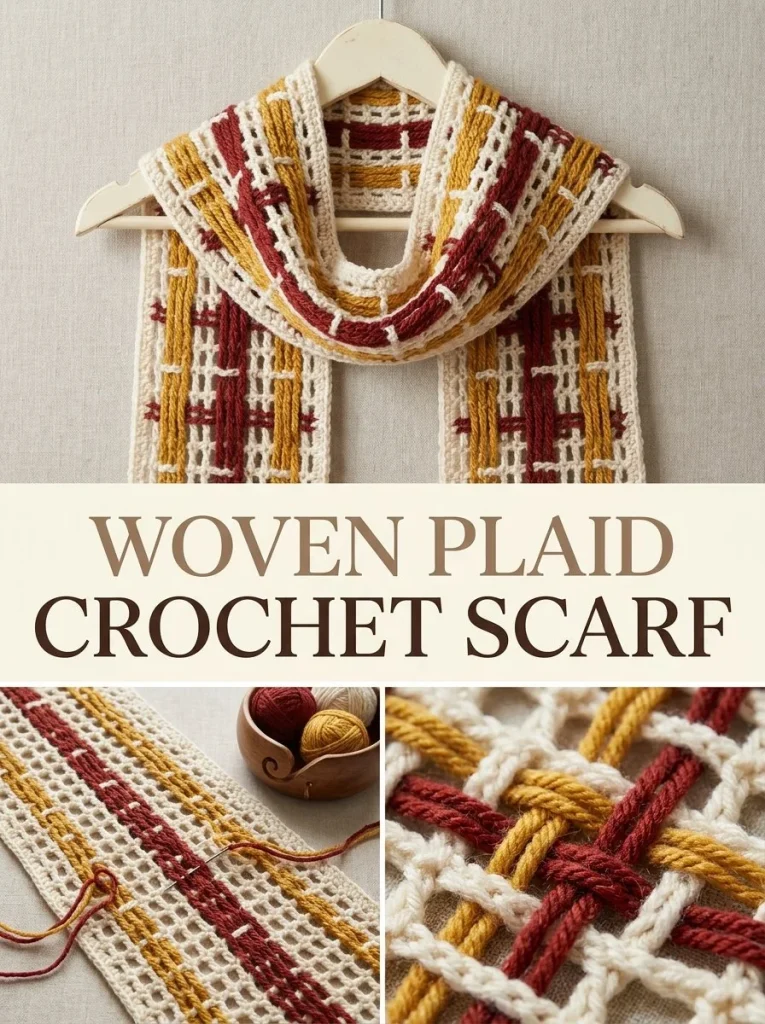
Creating a textile accessory that echoes the charm of traditional plaid while showcasing the versatility of crochet offers a unique blend of classic and crafty aesthetics. This project involves crafting a woven plaid scarf using a mesh grid technique combined with an intricate weaving method to achieve the distinctive plaid effect. The scarf’s structure leverages a mesh of double crochets and chain spaces that establish a foundation for weaving color strands vertically, delivering a sophisticated two-dimensional texture and interplay of colors. The technique highlights how crochet can mimic woven fabric phenomena, making it of particular interest to those fascinated by texture and design layering in fiber arts.
The base grid uses three striking colors—burnt red, creamy white, and mustard—that offer both warmth and vibrancy. The striped mesh layout is formed row by row, providing a rhythmic structural foundation. Once the grid is established, the process shifts to an innovative weaving stage, where doubled yarn strands are intertwined in an over-under pattern through the vertical chain columns, effectively creating the plaid overlay. This assembly of fabric and weaving presents an engaging technique that broadens one’s crochet skills from simply constructing fabric to integrating multi-layered textile crafting.
This project appeals especially to those looking for a scarf pattern that mixes lightweight openness with visual density and color interplay. The finished piece has a dimension approximately 12 inches wide by 68 inches long, a comfortable yet stylish size for everyday wear. In addition, the woven texture provides a tactile quality that outfits can benefit from in both casual and more refined settings. You might also find it interesting to explore similar scarf creations that integrate unique constructions and colorwork, such as this blue edge collar crochet scarf which employs a distinct technique for an added stylistic feature.
Pattern at a Glance
Skill level: Intermediate (due to weaving technique)
Terminology: US crochet terms
Construction: Flat mesh grid crocheted first, then woven strands interlaced vertically for plaid effect
Finished size: Approximately 12 inches wide x 68 inches long including fringe
Yarn weight: DK (Double Knit) weight
Hook: 3.25 mm crochet hook
Main stitch: Double crochet mesh (double crochet with chain spaces)
Gauge: Approximately 13 double crochets and 13 chain spaces x 15 rows = 4 inches
Motifs: None (overall mesh and weave)
Layout: Rectangular strip, long and narrow
Joining: Not applicable (single piece)
Border: Fringe created by twisted looped yarn ends after weaving
Seaming: None
Materials
For this project, you will need:
- DK weight yarn in three colors: about 110 yards (35 grams) of burnt red, 470 yards (153 grams) of creamy white, and 540 yards (196 grams) of mustard color. These yardages are approximate and sufficient for the complete scarf including fringe.
- A 3.25 mm crochet hook, suitable for the DK yarn to achieve the specified gauge and fabric density.
- Two yarn needles of different sizes: a small needle for neat weaving and finishing, and a large needle to handle thicker yarn strands during the weaving of vertical strands.
- Scissors for cutting yarn ends cleanly.
- A ruler or measuring tape to check gauge, width, and length of your piece as you work.
Each tool and material plays a vital role: the yarn colors define the plaid motif; the hook size achieves the mesh gauge; the needles facilitate tidy weaving and finishing touches; measuring tools ensure consistent sizing.
Yarn and Color Notes
Choosing the right yarn for a project that involves both crochet and weaving is crucial. A smooth, slightly firm DK yarn works best here because it maintains stitch definition for the mesh grid and supports the structural integrity when weaving strands through the open chains.
- Fiber: A wool blend or acrylic DK yarn with a smooth finish is recommended to prevent fuzziness, which can obscure the neatness of woven plaid patterns.
- Color selection: Solid yarns in distinct colors enhance the visual impact of the weaving method. The combination of burnt red, creamy white, and mustard offers a warm, autumnal palette, creating a classic plaid vibe.
- Variants: Avoid variegated yarns or highly textured yarns, as they can disrupt the clarity of the plaid effect and complicate the weaving process.
If you desire alternative palettes, this technique can be adapted with other color combinations. For inspiration on combining colorwork with crochet scarf designs, consider checking out the burgundy hooded crochet scarf with rectangle hood, which showcases color interplay in functional scarf design.
Finished Measurements
Your completed scarf should measure approximately:
- Width: 12 inches
- Length: 68 inches including the fringe
Keep in mind these measurements include the fringe created by twisting the looped ends after the weaving is complete. The actual mesh fabric before fringe will be slightly shorter.
These dimensions suit a traditional scarf length that comfortably wraps around the neck with enough drape. Because the project is constructed with a mesh grid, the width remains consistent along the length, without narrowing or flaring.
Gauge
The gauge for this pattern is:
- Approximately 13 double crochets and 13 chain spaces across
- By 15 rows vertically
- Resulting in a 4-inch by 4-inch square measurement
To check gauge, measure over several repeats of the double crochet and chain space mesh pattern. Proper gauge ensures:
- The scarf width and length remain as intended.
- The woven strands align correctly with chain space columns.
If your gauge is larger (looser), the scarf may be wider and more open, potentially overstretching with wear. If smaller (tighter), the scarf will be denser and narrower; weaving strands might be more challenging to insert evenly.
Adjust tension or hook size accordingly if your gauge does not match.
Abbreviations
- ch = chain
- dc = double crochet
Only basic crochet stitches are used; no special abbreviations for this pattern.
Important Pattern Notes
- The pattern uses a mesh of double crochets and chain spaces: each row consists of alternating dc and ch stitches creating a grid.
- The starting chain counts both dc and chain spaces: ch 85 yields 41 chain spaces and 42 double crochets across.
- Chains count as the mesh “holes” where vertical weaving strands will later be inserted.
- The work is flat and worked in rows, not joined rounds.
- Color changes occur in stripes during the mesh grid construction. The exact stripe sequence follows the original source pattern and is essential to achieving the plaid layout.
- Finished scarf edges are straight with no shaping.
- No joining or seaming is needed, as it is worked as a single rectangular piece.
- The finished texture relies heavily on the weaving technique applied after the mesh grid is complete.
Special Techniques
Mesh Grid Construction
The core fabric is a long, striped mesh grid built with double crochet stitches and chain spaces. This use of chain spaces instead of full stitches creates an airy grid that lays the groundwork for the plaid weaving.
Plaid Weaving Method
After the grid is crocheted, doubled and color-matched yarn strands are woven vertically through the chain-space columns in an alternating over-and-under method. This weaving mimics a woven plaid fabric, creating color blocks and intersections by layering yarn strands over the open mesh.
Fringe Finishing
Long looped strand ends are twisted to create a stylish fringe at both ends of the scarf, enhancing visual interest and texture.
Understanding the Construction
The scarf’s construction is divided into two main stages:
-
Mesh Grid Stage:
You begin by crocheting a long rectangular mesh using double crochet stitches interspersed with chain spaces. This mesh alternates colors in stripes (creamy white, burnt red, and mustard) according to a precise row-based sequence. This stage sets the scarf’s overall width and length and creates vertical columns of open chain spaces perfect for weaving. -
Weaving Stage:
After the scarf’s mesh is completed, vertical strands of doubled yarn (matching the scarf’s color palette) are woven through the scarf’s chain spaces in columns. These strands are manipulated in an alternating over/under pattern that crosses over the horizontal stripes to create a visually complex plaid effect. The weaving strands are twisted at both ends to form a neat fringe.
This method combines crocheting with fabric weaving, lending the scarf a rich texture and unique aesthetic that’s quite different from traditional all-crochet fabric.
Complete Pattern Instructions
Foundation Chain
- Begin with the creamy white yarn.
- Chain 85 stitches. This number creates 41 chain spaces and 42 double crochet stitches across the width.
Row 1
- Start the first row with the designated color (creamy white as per the source).
- Work 1 double crochet in the 5th chain from the hook (counts as a double crochet after three turning chains).
- Ch 1, skip 1 chain, 1 double crochet in the next chain stitch; repeat from * to * across until you reach the last ch.
- Work 1 double crochet into the last chain.
- Turn your work.
Check that you have 41 chain spaces and 42 double crochet stitches across as expected.
Rows 2 to 197
-
Repeat the mesh grid pattern as established in Row 1: working double crochets and chain spaces alternately across each row.
-
Follow the stripe color sequence exactly as per the original source. The colors alternate in rows of creamy white, burnt red, and mustard creating horizontal stripes.
Note: The original pattern carefully alternates stripes to achieve color balance for the plaid weaving, so it is important to adhere closely to this sequence.
-
Continue until you complete 197 rows (approximately 68 inches of length including fringe).
Weaving the Plaid
-
Prepare the weaving strands doubled in thickness for strength and visual weight.
You will need:
- 19 white doubled strands
- 18 mustard doubled strands
- 4 burnt red doubled strands
-
Using a large yarn needle, weave each strand vertically through the mesh scarf’s chain-space columns.
-
Alternate the weave going over one chain space, then under the next, creating an over-under checkerboard look.
-
Follow the pattern to arrange the colors in the weaving to match the plaid effect desired.
Tip: Weaving with doubled strands requires attention to tension to avoid distorting your mesh base.
Fringe Finishing
- After weaving all strands, twist the long looped ends at both scarf ends to form a loose but tidy fringe.
- Secure the twist with a knot if needed.
- Trim fringe ends evenly.
Useful Checkpoints
-
After completing the foundation chain and first row, confirm that the stitch count is consistent:
41 chain spaces and 42 dc across. -
As you make stripes, monitor color changes and maintain consistent tension to prevent puckering.
-
When weaving is halfway complete, ensure the strands alternate perfectly over and under the mesh grid columns without gaps or tension issues.
-
When finishing fringe, confirm that both ends of the scarf have an equal number of strands and similar fringe length for balance.
Assembly and Joining
This scarf is constructed as a single continuous piece. No assembling or seaming is required. The plaid effect arises solely from the woven strands added to the crocheted mesh.
Ensure weaving is firm but not tight to keep scarf dimensions accurate and wear comfortable.
Border and Finishing
The scarf’s edge consists of the straight-edged rectangular mesh without additional borders, relying on the fringe to provide the decorative finish.
Tips to maintain a neat edge:
- Weave in the ends of stripe color changes promptly and securely.
- After weaving is complete, gently straighten the scarf by hand before twisting the fringe.
- Optionally, hand block lightly to settle the mesh and weave without flattening the texture.
How to Resize
To customize the scarf size:
- Width: Adjust the starting chain in multiples of 2 to maintain the mesh grid pattern (each chain gap plus one dc equals 2 chains).
- Length: Add or subtract rows from the total 197 rows, remembering this will also change the amount of yarn for weaving and fringe.
Gauge testing is essential when resizing to maintain proportion and ensure the woven strands fit neatly through chain spaces.
Useful Variations
- Use a single-color mesh with woven contrasting stripes for a bolder plaid.
- Create a longer or shorter scarf by adjusting the number of rows.
- Experiment with different yarn weights, adjusting the hook size accordingly for a firmer or softer scarf.
- Try alternative color palettes like cool blues or greys for seasonal variations.
- Incorporate different types of fringe styles, such as braided or knotted ends.
Troubleshooting
Why Is My Mesh Too Tight to Weave Through?
If the chain spaces are too small:
- Check your hook size; try a slightly larger hook to loosen your mesh.
- Maintain consistent tension; avoid pulling stitches too tightly.
- Ensure you are making only one chain between double crochets, as extra chains will widen mesh unnecessarily.
Why Does My Scarf Curl at the Edges?
This is common with mesh crochet:
- Blocking the scarf gently can help flatten edges.
- Holding your tension consistently while crocheting prevents tight edges.
- Avoid unnecessary increases or decreases unless resizing, as they may cause curling.
Why Do My Colors Not Align After Weaving?
- Ensure that weaving strands follow the exact column of chain spaces.
- Maintain uniform tension when weaving; too tight or loose strands will distort placement.
- Verify color order and placement before weaving to avoid accidental strand misplacement.
How Can I Prevent the Fringe from Tangling?
- Twist the loops firmly and secure the ends by knotting.
- Separate fringe strands before twisting.
- Trim any uneven or fuzzy ends after twisting.
Frequently Asked Questions
Can I use a different yarn weight?
While you can experiment with yarn weights, this pattern is specifically written for DK weight yarn to ensure the mesh has the right openness for weaving. Using thicker yarns will create larger mesh spaces but require adjustment to hook size and tension.
Can I substitute a different fiber?
Yes, smooth wool blends or acrylic yarns work well. Avoid highly textured or fuzzy yarns as they can obscure the woven effect and complicate weaving.
Can I make the scarf wider?
Yes, increase the foundation chain by multiples of two chains per desired additional column, keeping the mesh stitch pattern consistent.
Is this pattern suitable for beginners?
This is better suited for an intermediate crocheter comfortable with double crochet and color changes, plus ready to try simple weaving techniques.
How do I finish the color changes smoothly?
Carry the yarn along the wrong side or cut and weave in ends securely during color changes to maintain clean transitions.
How should I wash and care for the scarf?
Hand wash gently in cool water, reshape, and dry flat to preserve the woven structure and fringe integrity.
Optional Related Uses
The mesh and weaving technique applied in this scarf can inspire other projects such as lightweight shawls, table runners, or woven bags where visual texture is desired. This method highlights how crochet can simulate woven fabric structures for a unique craft dimension.
Final Thoughts
This scarf project combines the elegance of plaid with the versatility of crochet through an inventive two-step process: first, building an airy mesh grid of double crochets and chain spaces, then weaving vertical strands to form a classic plaid pattern. The final textured fabric stands out with color interplay and woven complexity not often seen in simple crochet accessories. Whether for personal use or gifting, mastering this pattern broadens one’s skills into the domain of combining crochet and weaving techniques, opening new creative horizons in fiber arts.



