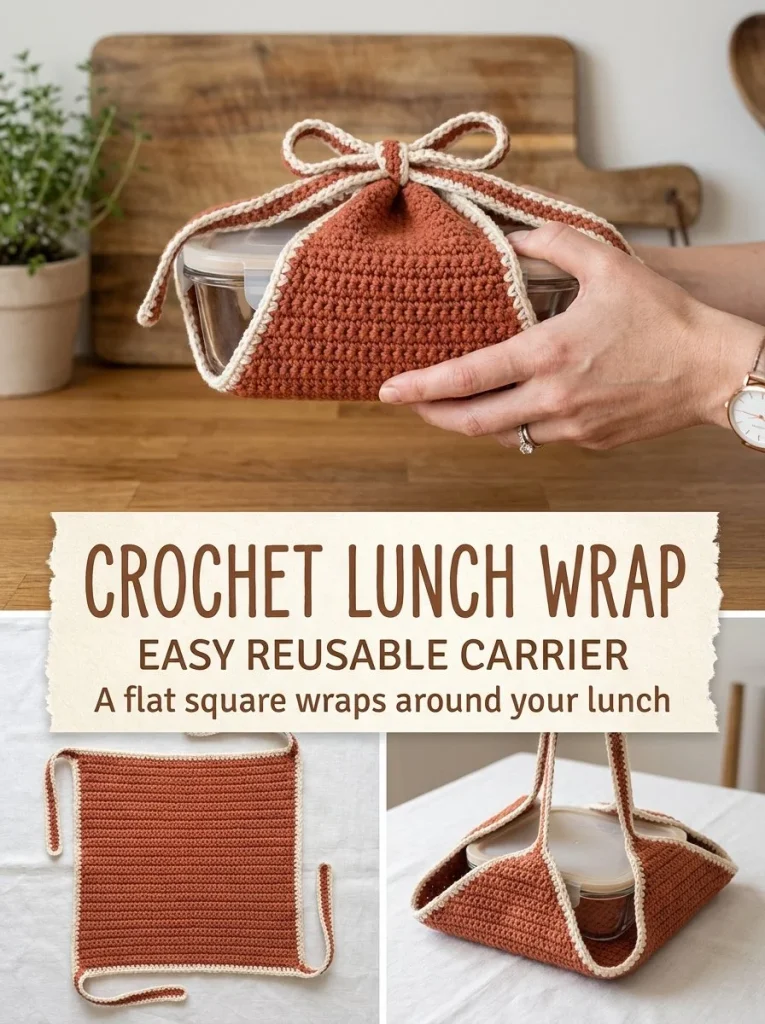
Crafted from sturdy worsted-weight cotton yarn in a warm terracotta shade and accented with cream, this reusable crochet lunch wrap is a practical and eco-friendly solution to carrying your food containers. Its square shape, approximately 16 by 16 inches, creates a versatile outer carrier that folds neatly around a container, secured by four corner ties. Created entirely with basic crochet stitches using a 5mm hook, the design offers an accessible project for crocheters seeking functional handmade items.
The wrap is constructed flat as a solid square panel using rows of half double crochet stitches that provide a firm yet flexible fabric structure. After completing the square, a contrasting cream border of single crochet stitches frames the edges for a polished look, with extra stitches at the corners to maintain smooth, square corners. The corner ties are worked separately on each corner, using chains and slip stitches to form sturdy cords that hold the wrap securely closed when folded.
This project shines not only in its simplicity of construction but also in its usefulness as a sustainable alternative to disposable wrapping or plastic bags. While it functions as an outer carrier only, requiring food containers to be sealed and leak-proof, it adds a charming handmade touch to lunch transport. This pattern aligns well with other eco-conscious home crochet accessories, similar in spirit to the mocha pocket shawl wrap that beautifully combines utility and style.
Pattern at a Glance
Skill level: Beginner
Terminology: US crochet terms
Construction: Worked flat in rows to create a square panel, then joined with a round of single crochet border and attached corner ties
Finished size: Approximately 16 inches square
Yarn weight: Worsted-weight #4 cotton yarn
Hook: 5mm crochet hook
Main stitch: Half double crochet (hdc) for the square; single crochet (sc) for border and ties
Gauge: Not specifically provided; approximately 16 inches width for starting chain to work with hdc rows
Materials
- Worsted-weight #4 cotton yarn in terracotta: This forms the main body of the wrap. Cotton is an excellent fiber choice here for its durability, washability, and ability to protect contents without stretching excessively.
- Cream cotton yarn: Used for the border and corner ties, this contrasting color frames the wrap and provides a functional element with sturdy seam and ties.
- 5mm crochet hook: Ideal for working with worsted cotton, the 5mm hook yields a fabric that holds its shape well while avoiding too much stiffness.
- Tapestry needle: For weaving in ends securely at the end of the project.
All materials are commonly available and beginner-friendly. Using cotton makes the wrap machine washable and suitable for everyday use.
Yarn and Color Notes
Using cotton yarn ensures a wipeable surface and good structure. The terracotta color provides a rustic, natural aesthetic that complements cream highlights nicely. Using solid colors rather than variegated yarn will emphasize the simple yet elegant construction of the square panel and border. For a subtler effect, both colors can be tonal shades of one color family.
Choosing cotton also avoids pilling or fuzziness, which helps keep the wrap looking clean despite frequent handling. Other natural fibers like bamboo or linen blends may also work well but may require adjusting hook size.
Finished Measurements
The finished wrap is approximately a 16 x 16 inch square before adding the corner ties. This dimension is designed to accommodate most standard lunch containers. The length of each corner tie is approximately 45 to 55 chains, worked back with slip stitches, which are long enough to cross and tie securely over the folded wrap.
Since this project is for an outer carrier, the sizing ensures that standard sealed containers fit comfortably at the center with fabric to fold around without being too bulky.
Gauge
Although no explicit gauge is provided, the starting chain is made to reach approximately 16 inches in width. The fabric is worked in half double crochet rows until a square of about 16 inches length is achieved.
Measuring your gauge by making a small swatch first may help if you want precise control over finished size. For this project, slight variation in gauge will not significantly impact functionality, but staying close to the recommended hook size and yarn weight will keep the wrap proportional to the intended container size.
Abbreviations
- ch = chain
- hdc = half double crochet
- sc = single crochet
- sl st = slip stitch
Important Pattern Notes
- When chaining for foundation, allow the chain to reach approximately 16 inches in length. The exact stitch count is flexible with the width goal.
- Each half double crochet row maintains the stitch count, worked across the whole length of the chain foundation.
- The border is a single round of single crochet stitches placed evenly around all four edges, with 3 single crochet stitches worked into each corner to keep the corners square and prevent curling.
- Corner ties are worked from the corners after the border round is complete, using chains and slip stitches to produce sturdy cords.
- Ties should be long enough (45–55 chains) to cross and securely tie the wrap when folded around the container.
- Food safety note: The wrap is an outer carrier only. It should only be used to carry sealed, leak-proof containers and not directly in contact with unpackaged food or liquids.
Special Stitches and Techniques
This project uses basic crochet stitches accessible for beginners:
- Half double crochet (hdc): Provides a dense yet flexible fabric with a slightly taller stitch than single crochet.
- Single crochet (sc): Used for border for a firm, neat edge, and for corner ties to build sturdy cords.
- Slip stitch (sl st): Used to return along the chain in the corner ties to create strength and reduce stretch.
These simple stitches combine to create an effective and durable fabric without complicated techniques or specialty stitches.
Understanding the Construction
The lunch wrap begins as a flat square panel worked in rows of half double crochet. You start with a foundation chain wide enough to measure about 16 inches, then hdc stitches across that chain. Continue working rows of hdc until your piece measures a 16 x 16 inch square. This panel will serve as the main body of the wrap.
After the square is complete, switch to a contrasting cream yarn to work a single crochet border all around. This one-round border is worked evenly on all sides, with 3 sc in each corner to allow the wrap to lay flat and prevent curling.
Once the border is finished, you add corner ties. These are made by joining cream yarn at each corner, chaining 45–55 stitches, then slip stitching back along those chains to form a sturdy tie. These ties are essential for securing the wrap closed around your lunch container.
To use the wrap, place a sealed, leak-proof container at the center of the panel, fold opposite edges upwards around the container, then fold the remaining edges, and tie the respective corner cords above. The wrap functions purely as an outer carrier — it is not intended to be in direct contact with unpackaged food.
Complete Pattern Instructions
Foundation
Chain enough stitches to create a foundation chain approximately 16 inches wide. The exact number depends on your yarn tension and hook size but aim for the length first.
Row 1
- Half double crochet (hdc) in the second chain from the hook, then continue hdc across every chain stitch to the end of the row.
- Turn your work.
Subsequent Rows
- Chain 1 (does not count as a stitch), then hdc in each stitch across the row.
- Continue working these rows until the fabric measures approximately 16 inches in length, forming an even square.
Border Round
- Join cream yarn with a slip stitch at any edge stitch.
- Work one round of single crochet (sc) evenly around all four sides of the square.
- At each corner, work 3 sc in the corner stitch to ensure flat corners and prevent curling.
- Join with a slip stitch to the first sc of the round.
- Fasten off and weave in ends.
Corner Ties
- At each corner stitch, join cream yarn again.
- Chain 45 to 55 stitches depending on desired tie length.
- Slip stitch back along the chain to the corner, reinforcing the tie and making it sturdy.
- Fasten off and secure the end.
- Repeat for all four corners.
Usage Instructions
Place a sealed, leak-proof food container in the center of the wrap. Fold opposite sides upward around the container, then fold the remaining sides over. Tie the corner cords securely above the container to close the wrap.
Important Safety Note
This crochet wrap is an outer carrier only. Do not use it in direct contact with unpackaged food or liquids.
Checkpoints
- After completing hdc rows, your square should measure approximately 16 x 16 inches.
- The border single crochet round should lay flat, with smooth corners formed by the 3 sc clusters.
- Each corner tie should be long enough to comfortably tie over the wrapped lunch container, approximately 45 to 55 chains in length.
- Ensure all yarn ends are securely woven in for durability.
Assembly
Assembly is minimal, as the wrap is crafted as a single piece. Joining is only required at the foundation of the border round and attaching safety corner ties at each corner.
Confirm that the border is attached evenly around the edges and that ties are securely anchored so they don’t pull loose during use.
Finishing
- Weave in all loose yarn ends carefully with the tapestry needle.
- Consider blocking your finished wrap by gently wetting and shaping it flat to 16 x 16 inches on a blocking surface to smooth edges and even stitches. Use rust-proof pins if needed.
- Allow it to dry completely before use. Blocking can help prevent curling and give a professional finish.
How to Resize
To resize the wrap for larger or smaller containers:
- Adjust the length of the starting chain to your desired width. Use a measuring tape to chain enough stitches so that your foundation chain measures the width you want.
- Continue hdc rows until the square matches your preferred size, maintaining the stitch count per row equal to your starting chain and working until length equals width.
- Adjust corner tie length proportionally to the overall size, ensuring ties are long enough to securely close the wrap.
This resizing technique keeps the pattern proportional without changing any stitch types or border construction.
Useful Variations
- One-color version: Make all parts with a single dough shade for a minimalist look.
- Two-tone color swap: Reverse which color is main and border for contrast.
- Longer ties: Add extra stitches in corner chains for larger containers or bulkier wraps.
- Colorful border: Use a multicolor or variegated yarn for the border to add visual interest without complicated pattern changes.
- Eco-liners: Consider adding a fabric lining or waterproof layer beneath for additional spill protection (not part of original pattern but a valuable customization).
For related ideas on homemade practical crochet accessories, check out the terracotta crochet draft stopper pattern, which also features cozy cotton textures for home use.
Troubleshooting
Why Is My Wrap Not Lying Flat?
Curling edges can happen if your tension is too tight or if the border stitches are uneven. Make sure to work 3 sc in each corner during the border round to prevent curling corners, and keep your stitch tension consistent.
Why Are My Corner Ties Too Short or Too Long?
If the ties feel too short to tie securely or too long and cumbersome, adjust the initial chain length for ties before slip stitching back. Test tie length by wrapping around a container during construction to confirm fit.
Why Does My Fabric Feel Too Stiff or Too Loose?
Check your hook size relative to your yarn weight. For worsted-weight cotton yarn, a 5mm hook typically produces nice drape and stiffness balance. If fabric is too stiff, try a slightly larger hook next time; if too loose, a smaller hook may help.
How Do I Prevent Color Bleeding Between Terracotta and Cream?
Prewash yarn or test a small swatch to ensure colors don’t bleed when washed. Cotton tends to hold color well, but some dyes may run.
Frequently Asked Questions
Can I use a different yarn weight or fiber?
You can substitute a similar worsted weight yarn in natural fibers like cotton blends or bamboo. Avoid highly fuzzy or elastic fibers, as they may not hold shape as well.
Can I make the wrap larger to fit bigger containers?
Yes, simply increase foundation chain length and continue rows accordingly for a bigger square, following the resizing guidance above.
Is this pattern suitable for beginners?
Absolutely. The stitches used are basic and the construction is straightforward, making it an ideal beginner project.
Do I need to know any special techniques?
No special stitches beyond half double crochet, single crochet, and slip stitch are used.
Can the wrap be machine washed?
Cotton yarn usually handles gentle machine wash well, though check your yarn label. Lay flat to dry to maintain shape.
Can I use the wrap in direct contact with food?
No, only use the wrap as an outer carrier around sealed containers for hygienic reasons.
How can I customize the length of the corner ties?
Chain more or fewer stitches before slip stitching back along the chain to adjust tie length.
Can I add pockets or other features?
Yes, pockets or additional wraps could be added inspired by other accessories like the mocha pocket shawl to enhance functionality.
Optional Related Uses
The simple square construction with corner ties can inspire other useful carriers such as:
- Small gift wraps or bags
- Portable snack holders
- Book or tech device wraps
- Sandwich wraps with a liner
- Picnic utensil rolls with ties
Experiment with yarn choices and sizes to adapt the basic design for many eco-friendly homemade accessories.
Final Thoughts
This terracotta crochet lunch wrap showcases how simple crochet stitches can create highly practical items. Starting with a straightforward half double crochet square, the wrap gains character and function from its contrasting edge and secure corner ties. Perfect for sustainable lunch carrying, it’s quick to make, beginner friendly, and easy to customize. The project demonstrates that with just a few thoughtful steps, you can craft attractive and purposeful crochet wrap solutions for everyday use.



